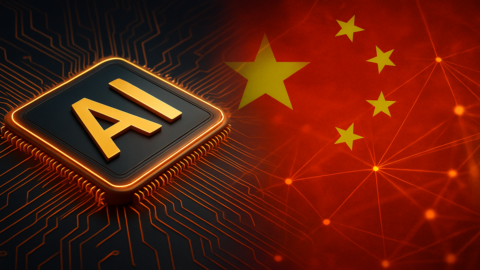
In the crowded and increasingly competitive world of generative AI, China raises the bar. And he does it with Kimi K2, the advanced language model signed Moonshot AI, a Chinese startup founded in 2023 by three former engineers from Google, Meta, and ByteDance. The name is new but is rapidly gaining popularity. attracting attention of developers, researchers and companies globally for a very specific reason.
If while OpenAI presents to the world ChatGpt-5 – evolved, refined, built as a perfect assistant – Kimi K2 imposes itself, in fact, as the free, powerful and strategic alternative, designed for everyone. Unlike many Western competitors, the model is completely open source, accessible, documented, and designed from the beginning for be scaled outside China as wellA sign that global technological leadership is no longer exclusive to the West.
Kimi K2 vs ChatGpt-5: Two Approaches, Two Worlds
If ChatGpt-5 is a highly regulated intelligence, which aims at precision, security and personalization of the user experienceKimi K2 chooses the path of radical openness. The model is available online for free, without a VPN, and is also accessible in Italian. But above all: is downloadable, customizable, integrable. An open source program, packed with the power of a trillion-parameter LLM..
The architectural structure is that of the new “Mixture of Experts”: a sort of modular brain in which only the necessary parts are activated on every request. This allows Kimi K2 to maintain a power comparable to Gpt-4 or Claude 3.5, with a much lower resource consumption. And there's more: his Context window reaches two million tokens, a huge increase compared to GPT-128.000's 4. In practice, Kimi can read and understand the equivalent of an encyclopedia in a single pass.
One platform for everyone
Kimi K2 comes in two versions: Base, oriented towards academic research, and Instruction, designed for practical applications, content generation, technical or business support. It is accessible through the website kimi.com or can be integrated into apps or software via API. Both are open, both are documented. And already capable of tackle complex tasks, multimodal interaction (text + images), deep reasoning, and automatic planning. Kimi K2 isn't just theory, and the data confirms it: The model outperformed Gpt-4.1 in key benchmarks, including SWEbench Verified (65,8% vs. 54,6%), MATH-500 (97,4%), and LiveCodeBench.
But the crucial point is another: the costsWhere OpenAI charges premium rates, Moonshot offers ultra-competitive pricing: $0,15 per million tokens input, $2,50 outputA policy designed to quickly conquer startups, emerging countries, small businesses, schools, and all those entities that struggle to access cutting-edge Western models.
An industrial project, not an experiment
Unlike many open models developed in the West, Kimi K2 was not born as an experimental project. It's a strategic platform, strongly supported by Chinese investors such as Alibaba and Tencent, and designed to scale quickly. The three founders of Moonshot AI—Yang Zhilin, Zhou Xinyu, and Wu Yuxin—have backgrounds in American big tech, but are now at the heart of China's new AI innovation hub.
Their goal? Propose a solid, scientifically traceable, but also practical alternative for everyday use, capable of carrying out complex reasoning, interacting multimodally, planning tasks or discussing long and detailed documents.
The challenge to DeepSeek (and ChatGpt)
Kimi K2 is not the first Chinese LLM to attract attention. Already DeepSeek had demonstrated that China can produce models at the level of GPT-4. But there was no accessible platform, stable and translated. Kimi solves all this by being ready to use, even for a non-technical audience.
In comparison with ChatGpt-5, the differences are more ideological than technicalOn the one hand, OpenAI refines its architecture with a neural router that decides in real time how to reason, introduces configurable personalities, ensures more secure request handling, and advances on the path to AGI. On the other, Kimi K2 prioritizes accessibility, adaptability and user autonomy, offering similar performance but with more freedom of use.
The geopolitics of artificial intelligence: what is Europe doing?
Kimi K2 is, after all, also a geopolitical messageArtificial intelligence is not just a technical issue: it is a lever of influence, a platform on which to build alliances and dependencies. At a time when US models impose limits, licenses and costs, the China offers an open alternative, powerful and decentralized.
In emerging countries – Africa, Asia, South America – where access to GPT is limited by licenses, costs or infrastructure, Kimi comes as digital emancipation tool. This is where Moonshot aims to gain ground, offering computing power at a bargain price, on independent on-premises or cloud infrastructures.
In this race for better and more accessible AI, the European Union remains a spectatorContinental projects exist, but they don't yet have the scale or the vision to truly compete. And while the AI Act is being discussed, a shared infrastructure, adequate funding and an industrial plan are still missing. The risk? Moving from an American dependence to a Chinese one, without ever building an autonomous alternative.
Is Kimi K2 the Sputnik of AI?
In 1957, the launch of Sputnik forced the West to rethink its scientific strategies. Kimi K2 could have the same effect on artificial intelligence. It's not (yet) Agi, but it's concrete proof that technological leadership is not just an American monopoly.