It's the day Italy got back up. It's the day it was reborn and in which an entire people said “no” to dictatorship and “yes” to the future. Today, April 25, 2025, theItaly celebrates the 80th anniversary of the Liberation from Nazi-Fascism. It was, in fact, April 25, 1945 when the National Liberation Committee of Northern Italy (Clnai) proclaimed the general insurrection against the German occupation and the Italian Social Republic. That day was the beginning of the end for the fascist regime, but above all the beginning of a free, democratic Italy, founded on civil courage and popular will.
La Liberation Day It therefore not only marks the end of the Second World War on Italian soil, but also the dawn of the Republic, the moral and political rebirth of the country.
This year the anniversary is intertwined with an extraordinary event: the National mourning (of 5 days) for the death of Pope Francis. The government has therefore invited us to celebrate April 25th “with sobriety”, a choice that immediately raised questions and controversy.
Milan, April 25: the day of the revolt
The April 25 1945 it wasn't an improvisation. It was the culmination of a long path of armed resistance and civilian began after September 8, 1943, when Italy signed the armistice with the Allies.
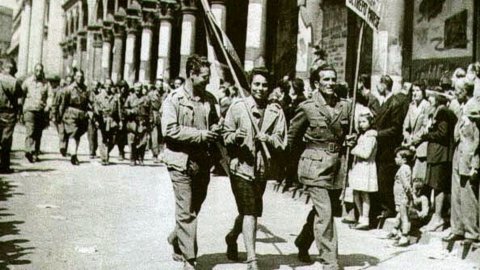
Milan was the heart of the insurrection and from there it startedorder to rise up against the oppressor. That day, the CLNAI – composed of representatives of the anti-fascist parties, including Ferruccio Parri and Sandro Pertini – assumed civil and military power “in the name of the Italian people”. The population responded with strength and dignity: workers, women, students, priests, entire families joined the partisans in their thousands. It was a popular uprising which led to the city's liberation even before the arrival of the Allies.
The Nazi-Fascist command received a a clear and unequivocal ultimatum"Surrender or perish!“. The German response came with the progressive surrender of all the main cities: Bologna was liberated on April 21, Genoa on the 23rd, Turin and Venice on the 28th. The definitive surrender of the German troops in Italy was formalized on April 29 in Caserta and became effective on May 2, 1945. A decree was issued that provided for the death penalty for fascist leaders, including Mussolini, who however managed to escape. He was captured on April 27 in Dongo and executed the following day.
Curiosity: the original recording of the CLNAI announcement was broadcast via clandestine radio. The voice was that of the partisan Riccardo Lombardi, future leader of reformist socialism.
The Birth of Liberation Day
The date of April 25 was symbolically chosen in 1946 to represent theentire liberation struggle. The proposal came from the De Gasperi government and it was approved by Umberto II, the last king of Italy. The law that made April 25 a stable national holiday was approved in 1949.
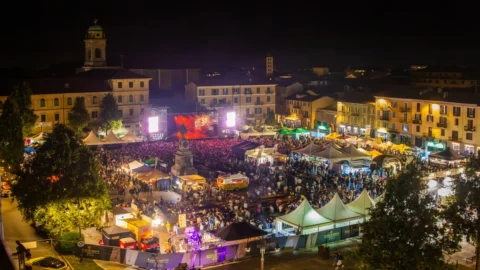
Liberation Day is one of the few Italian holidays to maintain a strong civil and political character, celebrated by all institutions, but also felt by the grassroots, with parades, concerts, public readings, artistic performances and youth demonstrations.
Curiosity: in 1945, the first spontaneous Liberation concert in Milan was improvised by a partisan orchestra in Piazza della Scala. Among the songs, the most sung anthem was Bella Ciao, which is known throughout the world today.
April 25, 2025: Italy finds itself
Today, April 25, 2025, to celebrate the eightieth anniversary of the Liberation, demonstrations are planned throughout the country. official ceremonies, parades, cultural events and free admission to state museums. But the anniversary will inevitably be marked by the passing of Pope Francis, died on April 21st inlthe age of 88 years. In recent days the Council of Ministers has, in fact, declared five days of national mourning: “all ceremonies are permitted of course, taking into account the context and therefore with the sobriety that the circumstance imposes on each one”, specified the Minister for Civil Protection, Nello Musumeci. Official celebrations but which will be experienced with a deeper sense of recollection and reflection.
The president of the Republic, Sergio Mattarella, as always, will make Homage to the Unknown Soldier at the Altar of the Fatherland in Rome. In many cities there will be demonstrations organized by Anpi and local institutions.
In Milan, the procession will start at 14.30 pm from Porta Venezia to reach Piazza Duomo, where institutional representatives and civil society will speak. The official poster, Entitled "Long Live Liberation!“, was created by the inmates of the Artemisia Laboratory in Bollate prison, to symbolize an idea of freedom that also speaks of reintegration and social justice.
A Rome, the day will begin with a tribute to the Fosse Ardeatine and continue with a Liberation March through the popular neighborhoods that were protagonists of the Resistance. In the San Lorenzo neighborhood, the “Festa della Resistenza” will offer over 80 free events including concerts, exhibitions, debates and screenings.
Cultural initiatives are also underway in Emilia Romagna and Lombardy, where the Region has financed 21 projects that combine history and new technologies: podcasts, graphic novels, immersive installations in places of memory.
A celebration, a commitment, a Constitution
The 80th anniversary comes at a time when the memory is called to not be only commemoration, but an exercise of civil conscience. And then, as the Anpi recalls, April 25 is the mother of the Republic and the Constitution. The Italian constitution, born from the sacrifice of the resistance fighters, continues to be the compass of fundamental values: freedom, equality, solidarity, work, dignity, peace: values that today are being put to the test by growing inequalities, populisms and authoritarian temptations. For this reason, the 80th anniversary is not only a celebration, but a call to responsibility.
Curiosity: Article 1 of the Constitution – “Italy is a democratic Republic founded on work” – was drafted by Giuseppe Di Vittorio, a former farm worker from Puglia and partisan commander, later secretary of the CGIL.
Today as then, the freedom is a value to be defended every day because it can never be taken for granted. Celebrating April 25 means honoring those who fought, those who suffered, those who gave everything for a free Italy. But it also means taking responsibility for the present, to build a future worthy of the sacrifices of the past. The task of memory is to teach us to recognize the shadows of the present with the same lucidity with which, eighty years ago, Italians chose the light. We are sons and daughters of the Resistance. And every time we defend the Constitution, every time we choose peace, every time we fight hatred and indifference, we honor that dawn of April 1945.