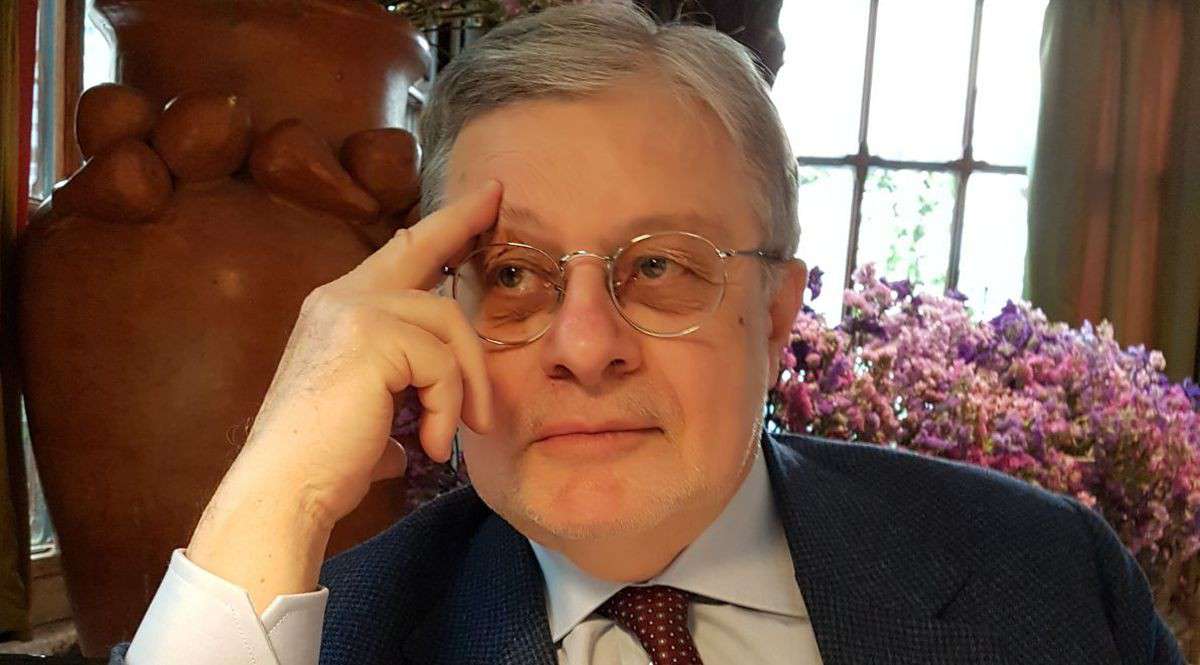
Be careful not to constantly cry wolf about inflation: we risk losing sight of underlying trends. Indeed, the latest inflation data are dampening the alarm bells, and wage growth remains subdued. Despite the ups and downs in oil prices due to the alternating wars between the US and Iran, and the price increases for its derivatives following Ukraine's military successes, the energy shock remains much more contained than in 2022. Central banks' intentions to raise interest rates are also linked to an improving growth outlook. Investors' flight from government bonds, with the resulting boom in yields, reflects these intentions and this motivation. This is the counter-current opinion of economist Luca Paolazzi, former editorialist for Il Sole 24 Ore and Director of the Confindustria Research Center, now an advisor to Ceresio Investors and co-author of Lancette dell'economia.
Paolazzi, the most recent issue of the Lancette dell'economia, published on FIRST online last July 11th, it was titled like this: “Inflation is no longer scary”Did we get the headline wrong, or has the macroeconomic picture changed in less than two months? Doesn't the escalation of the US-Iran conflict, with its consequent impact on oil prices and the sell-off in government bonds worldwide, as well as the worried remarks of the new Fed Chairman, Kevin Warsh, in Jackson Hole ("Inflation remains too high"), suggest that the shadow of inflation is once again looming over the Western macroeconomic landscape?
In this era of enormous uncertainty created by geopolitics, the macroeconomic picture is also becoming chaotic. Since February, the price of oil has moved like a yo-yo: up, down, up, down, and now up again. However, so far the most threatening and feared scenario, that of the worst energy shock in history, with crude oil expected to exceed $200 a barrel, has not materialized because the global system has circumvented the Hormuz barrier in various ways, affecting additional supply, energy conservation, and substitution with other primary sources. And it is also true that two months ago, the reopening of the Strait seemed certain, with which crude oil was destined to fall towards $60, also due to the significant defections from OPEC; and not even this expectation has materialized, both due to the Iran-US tug-of-war over the conditions of the reopening and the navigation regime and, and this is a new development again originating from geopolitics, due to Ukraine's success in decommissioning the Strait. Russian refineries and thus reduce the availability of derivatives. Therefore, more expensive (but not extremely expensive) oil and derivatives are a variable that pushes up costs, both directly and indirectly (think of shipping and air freight rates). That said, the latest inflation data surprised with their weakness, due to the absence of second-order effects. Furthermore, wage growth, which ultimately is the main factor determining the inflation rate, remains subdued, although moderately up from the lows of the first half of the year.
Whatever the actual inflation trend in America, Europe, and Italy, as revealed by upcoming economic data, the ECB and the Fed are making no secret of their intention to raise rates by 2026: is this a sign that the macroeconomic scenario is pushing for a restrictive shift in monetary policy on both sides of the Atlantic?
The real innovation that justifies the central banks' hawkish anti-inflation stance is the resilience of economic systems to this new shock, after the 2025 tariffs (not to mention the previous ones). Fed Chairman Kevin Warsh painted a macroeconomic picture of full employment and referred to the boom in AI investments. A year ago, his predecessor, Jerome Powell, said there was a conflict between the goal of containing inflation and that of maximum employment, because the US labor market had weakened significantly. Now Warsh has an additional degree of freedom and is also using it to increase his credibility as a central banker appointed by a President who had promised, demanded, and pressured (even with legal threats, which resulted in criminal proceedings against Powell) for lower rates. The ECB finds itself in the same situation, given that the Eurozone (including Italy) grew more than expected in the first half of 2026 and the latest signs point to an acceleration. In short, the real economy is in health and does not need the crutch of low (Eurozone) or lower (US) interest rates. This is also what the bond markets are saying, pushing up long-term rates. This increase may end up lowering growth and therefore prove excessive.
The Italian government is preparing its final budget package before the 2027 general elections. Rather than curbing debt and inflation, is it inevitable that politicians will focus on attracting consensus with welfare spending that is unproductive and, ultimately, typically populist?
And what government wouldn't? The political-electoral cycle has been analyzed by economists for decades now, and it's one of the reasons why monetary policy has been established as independent. For us, this is doubly so, given that interest rates are set in Frankfurt and not in Rome by the Bank of Italy (which participates authoritatively in those decisions). Otherwise, the pressure on the Via Nazionale could become unsustainable. That said, Italy is honoring its commitments under the new Stability Pact, which has remedied many of the previous one's flaws and creates a barrier against reckless (American-style) policies. This is evident from the spread, which has remained contained despite the rise in interest rates. Despite the fact that the Meloni government could have used the little room for maneuver much better, avoiding consensus-grabbing measures, for once the concern about public debt isn't only or primarily about Italy: think of the US, where there's explicit talk of unsustainability and a possible crisis, or France, where fantasy risks taking power with the upcoming presidential elections. The ball is in the air. long-term interest rates are once again in the hands of governments, and let he who is without populism cast the first stone."