"Trump brandishes American military superiority As the ancients believed, Jupiter wielded his thunderbolts, so that everyone would know that opposing his will (unless you are a nuclear power) is risky and perhaps futile. One does not oppose the whim of divinity.
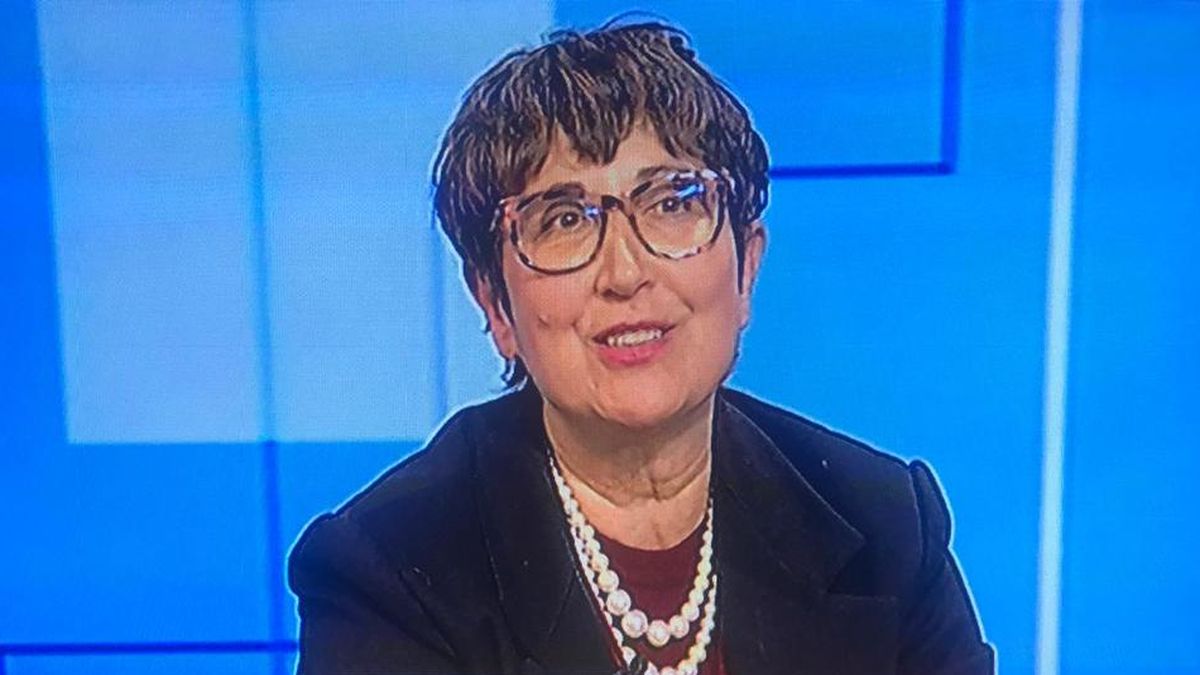
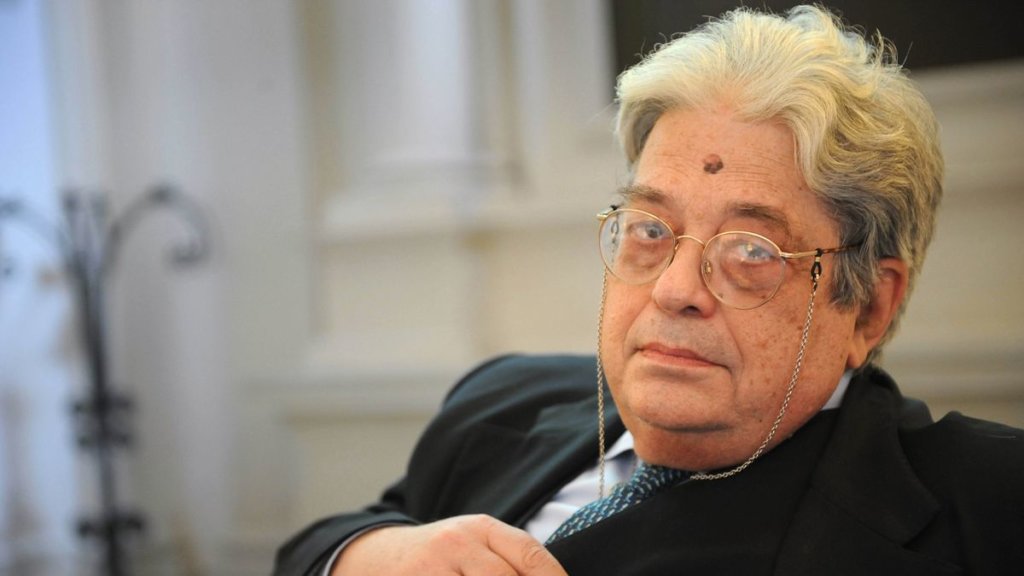
This is the professor's opinion. Stefano Silvestri, a great expert in geopolitics and military history, former president of the IAI (Institute of International Affairs), one of the most acute scholars of the American “empire” and commentator for specialized magazines and newspapers.
Of course, this isn't the first time the US has interfered "with boots on the ground," that is, directly with its military, in another country's affairs. There have been numerous American interventions in Latin America, from the Bay of Pigs to the Dominican Republic, Haiti, Honduras, to the coups in Bolivia and Chile. How does this differ from what happened in Venezuela?
Today, the situation is different. American support for El Salvador's President Nayib Bukele or Argentina's Javier Milei is motivated by domestic US politics. But there may be more to it. It all begins with support for the America First doctrine: anything that threatens the industrial, technological, and economic growth of the United States must be fought. Among these threats is that of new synthetic drugs, such as fentanyl. But beyond this official motivation, there also seems to be an emerging interest in increasing control of the global energy market, from major producers (like Venezuela, but also Russia...) to major trade and distribution routes, such as the South China Sea and the Taiwan Strait, explicitly cited, for this reason, among America's strategic priorities in the recently published New Strategic Doctrine.
You need to describe this New Doctrine to us, Professor. But first I wanted to ask you: this energy route thing seems like something out of the 70s, when the oil crises forced us to abandon our cars and walk. But wasn't oil doomed? Weren't we supposed to be in the era of renewables and clean nuclear power?
But we Europeans thought this, and perhaps still do, not Trump, nor the Chinese or Russians. Trump doesn't even believe there's a climate change problem, while the Chinese and Russians make massive use of fossil fuels for their industrial development. Moreover, if the push for renewables has waned everywhere, even in our parts, it's also because we've realized that the development of new technologies is exponentially devouring energy. Bottom line: oil, with all its attendant benefits, is still the future, not the past.
And now we come to the new American security doctrine: what does Trump have in mind?
In reality, it is a 'deeply unserious document,' as a close observer of American affairs has defined it, full of contradictions, distorted and specious readings of the facts, and incomprehensible ambiguities and gaps. Thus, for example, while harshly attacking the very allies he claims to absolutely need, he ignores the strategic threat from China, which had been a leitmotif of the Trump Administration and the subsequent Biden Administration. Indeed, he hopes to establish a fruitful economic relationship with Beijing (while criticizing a similar attitude from the Europeans). The document doesn't even mention the existence of North Korea, despite that state's growing involvement in the war in Europe, while calling for greater military contributions from Japan and South Korea.
Everything and the opposite of everything, as Trump has accustomed us to?
"Yes and no. A cornerstone of this new American security policy exists, but we should at least go back to Europe's sacred imperialist selfishness, and paraphrase Lord Palmerston's well-known statement, according to which today the United States no longer has permanent friends or permanent enemies, but only interests. Really?"
And then there is the rediscovery of the Monroe Doctrine…
This deserves a separate discussion. When it was conceived (in the 1820s) by President Monroe, it was actually an agreement between Washington and London, which put an end to long-standing American ambitions to take over Canada, but left the US free rein in Latin America to profit from the disintegration of the Spanish Empire, preventing the intrusion of new European colonial powers. Today, Trump seems to be claiming a sort of exclusive sphere of influence that will have to contend with the sovereign will of long-independent countries. The first test could be in Venezuela. But many other countries in the Americas reject such an idea, sometimes quite forcefully, for example in Canada and Brazil.
And what about traditional allies? What role do they play in the strategic document?
"The profound transformation in relations with allies is becoming clear. They will have to acknowledge a drastic shift in the motivations driving Washington's decisions. There is no longer any reference to the defense of shared values, but exclusively to American economic interests. Thus, for example, the confirmation of America's commitment to the defense of Taiwan is solely tied to the economic importance of chip production. Likewise, only economic interests guarantee America's commitment to freedom of navigation in the South China Sea."
In this regard, perhaps the initial reactions after Maduro's arrest, which suggested a green light for the Chinese on Taiwan, were exaggerated if not downright wrong?
"That energy route is crucial for the Americans; I doubt they'll leave it to the Chinese. I could be wrong, but I don't see Beijing giving any green light on this issue."
And what about Europe? What does the New Doctrine say?
We find a kind of double track. On one side, the European Union is under frontal attack, not only because it meddles in American affairs, but because it sucks the lifeblood out of sovereign European nations, which should regain their full sovereignty as soon as possible, perhaps by relying on far-right movements. On the other side, there is NATO, which—according to the document—had the good sense to accept the target of 5% of GDP dedicated to security and defense spending, and thus receives American praise. But unfortunately—the document continues—that's not enough, because the current European governments are obsessed with their rivalry with Putin, preventing peace between Ukraine and Russia. So the Americans will have to take care of it.
From the overall picture, it seems more than clear that the hope is for the US to abandon its involvement in Europe. Is that true?
It certainly seems so. It's true that the document says nothing about maintaining deterrence, but it's clear to everyone, from Brussels to Moscow, that this administration, while not abandoning the Alliance, would like to significantly reduce its European commitment and, to this end, also seek a swift end to the war in Ukraine. According to the "peace plans" currently circulating, more or less credible as they may be, this would seem to require a substantial defeat for Ukraine and therefore also for NATO, which supports it. In other words, through a loss of credibility for the Alliance.
It seems incredible. This despite the economic and military weight the US has in Europe...
"To date, the Americans, in addition to selling their European allies a significant quantity of high-tech weaponry, maintain between 80,000 and 100,000 soldiers in Europe, mostly Army and Air Force, providing the bulk of the rapid response forces, guaranteeing strategic nuclear coverage and other key functions such as offensive cyber capabilities, intelligence, space support and many other capabilities generally defined as "enablers" (which make possible the use of other military resources that would otherwise be difficult to deploy), such as high-altitude ballistic missile defense. In the event of war, NATO currently plans to bring to Europe a division and a corps staff, up to four air force "wings," as well as the 2nd and 6th fleets. And to lead this massive military effort, American officers hold key posts within NATO. So, how will all this be unraveled?"
What scenarios can you imagine?
All the 'scenario artists' are busily developing a series of variously graded scenarios, which foresee every possible variation in the current situation, from the most superficial and irrelevant to the disappearance of NATO, and possible countermeasures. It is therefore important to immediately clarify some fixed points, which no scenario can ignore. First, it is clear that no European effort will ever be able, in the short to medium term, fully compensate for a significant American withdrawal from Europe: certainly not in the field of nuclear deterrence, but also in the field of conventional forces and hybrid warfare. Therefore, whatever the American decisions, it is in the interest of European allies to maintain the availability of as many of these capabilities as possible, under whatever form.
Second, while it may seem tempting, in the event of a NATO crisis, to unify the entire defense system under the aegis of the EU, this would be a grave mistake, both because the EU is institutionally and politically unprepared to handle such a responsibility and because it would create unnecessary obstacles to defense cooperation with key countries such as the United Kingdom, Canada, Norway, and Turkey. The only possible path is to strengthen NATO through the commitment of willing and able countries. After all, this is already the path to strengthening Europe's defense. In the longer term, the issue of nuclear deterrence will also need to be addressed, but at this stage, it could prove a source of strong internal division in Europe and needlessly complicate the debate.
And now, what needs to be done immediately?
In the immediate future, however, before addressing any future changes in NATO's structure, all of which remain to be defined and clarified, it will be necessary to focus on the war in Ukraine. Every scenario and every proposed countermeasure will be heavily influenced by the course of this crisis. If it were to see a progressive abandonment of European support for the Ukrainian resistance, or worse, a substantial Russian victory at the negotiating table, the consequences would be disastrous for both NATO and the EU.
For this reason, it seems essential to maintain firm focus on active support for Ukraine and, at the same time, participate as much as possible in the ongoing negotiation process to avoid any politically disastrous conclusions: this implies the need to maintain a good dialogue with the American Administration, whatever the provocations of the new doctrine."
What Italy seems to be doing…
"Of course, but our Prime Minister should take a step forward to give Italy a greater voice in Europe. To be clear, she should be more active, to honor the authority of our history. We are one of the founding countries of the EU; we should never forget that. Therefore, the salvation of Europe concerns us more closely than other capitals. To do this, however, the President would have to definitively break free from the "nation first" constraint that is part of her deepest history. She could succeed; after all, she has abandoned any desire to leave Europe, one of the values of the right. Another small step, a little more courage, and Italy could become the driving force of the Union."