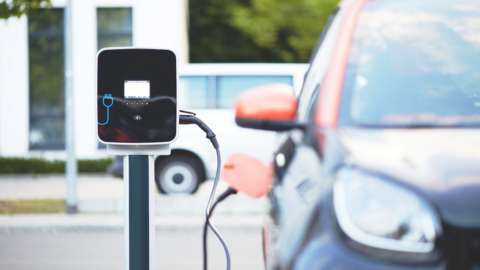
It was announced last year and now it has become reality: the iconic electric city car Smart EQ Fortwo it will no longer be produced and now for lovers of the genre there is no other solution than to settle for stock in dealerships or used ones.
Smart EQ Fortwo, which has churned out three generations of models, it is the second best-selling electric car in Italy according to UNRAE data published for the month of September 2023.
But why stop production?
Although production is underway for other types of Smart models, the features of the Smart2 remain irreplaceable and Smartina lovers will perhaps be satisfied within a couple of years. But in the meantime we wonder why the producers decided to suspend its production. There are different hypotheses from industry experts. On the one hand there is one financial question: the costs of a mini-car, in the public perception, must be low. But for companies, a machine of this kind is still expensive, starting from the battery, and therefore they find themselves with margins that are too narrow. On the other side there is a more technical topic, linked precisely to the electrification of a car that was not natively electric. Smart EQ weighs just over 1.000 kilograms with that type of battery. It is true that Smart is a city car but it is a little too "energy intensive" compared to the current standard of electric versions. But the project remains successful and it is to be expected that a Fortwo will return enjoying new technologies which, with the same dimensions, will allow weight to be lowered and autonomy to be increased.
The hypotheses on the new Smart
To try to understand what the small car will look like, at least on an aesthetic level, the sector media referred to the rendering published by the German specialized magazine AutoBild, which took inspiration from the latest model of the two-seater Smart, adapting it to the design of the Smart 1 and 3. The new arrow-shaped headlights stand out in particular, complete with a central LED strip connecting both. The front grill, however, could have the classic honeycomb design already seen on the EQ fortwo and the dimensions should also be more or less the same. The external mirrors, according to AutoBILD, could be offered as options, perhaps present in the classic configuration for the basic version and replaced by cameras in the "premium" one. The doors appear very round and seem to be inspired by the “vision smart EQ fortwo” shown in 2017, but are not fully glazed. Production will take place in China at Geely's platform.
In 25 years two revolutions that have stunned the market
Certainly it can be said that the Smart in 25 years has revolutionized the market of cars at least twice. The first when it came out in 1998, astonishing with its size. The second in 2020 when it was the first to come out with an electric motor.
The Smart brand was born from an idea of the inventor ofSwatch wristwatch, Nicolas Hayek. He wanted to build a simple and economical city car, initially with the help of VW. But then Mercedes-Benz stepped in and Hayek dropped out. Mercedes launched the car in 1998 under the Smart brand. But in 1998 no one had ever seen such a small car and perhaps the public had not even immediately understood its "philosophy" of use, so accustomed to larger traditional cars.
The first model, exactly 2,5 meters long (later becoming 2,7 metres), lasted around nine years and also survived variants such as the traditional four-seater Forfour and the Roadster. Initially Smart was the name (and brand) of the model and not of the manufacturer, which was instead known by the acronym MCC (Micro Compact Car). Since 2002, Smart has become a real brand.
And then the second epochal turning point in 2019/2020: Smart was the first 'traditional' car manufacturer to announce the abandonment of combustion engines to embrace only electric mobility: a model with an 82 horsepower electric motor mounted above the rear axle. The 17,6 kWh battery was placed between the two axles and allowed a range of approximately 160 km.
Meanwhile, Smart is building the "Smartones" in its Chinese factories: the Smart #1 and the Smart #3, the crossover number 1 and the SUV coupé number 3, two cars very distant in philosophy and size from the original Fortwo.