While the first female Prime Minister wants to be called with a male title, her colleagues are divided over the feminization of elected offices: women on the left want to be called ministers, those on the right ministers, but the Italian language doesn't work like that, and policemen and policemen do the same job.
The circulars of Palazzo Chigi and gender dysphoria
Since 22 October, we Italians too have marked an important milestone in the fight for gender equality, because finally there is a woman at the head of the government. Indeed, no.
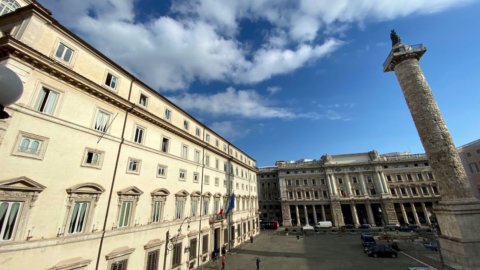
"For appropriate information, we inform you that thetitle to be used for the Prime Minister is: 'Mr. President of the Council of Ministers, Hon. Giorgia Meloni'”, reads one official note of Palazzo Chigi. Shortly thereafter, the astounding circular was corrected with a request to remove the words "Mr", but without prejudice to the rest.
Someone joked that we were dealing with a case of gender dysphoria, but in reality the use of the masculine for high office was predictable: an ideological battle has been going on between women in politics for some time , so during centre-left governments we speak of the "Minister of Health" (Rosy Bindi) and in centre-right governments of "Minister for Youth" (Giorgia Meloni herself).
The female president who shelled the Swiss
In truth, it wasn't always a war between women alone, since often the other half of the sky was also shelled.
I remember an embarrassing episode of real rudeness that occurred years ago at the Italian Cultural Institute in Brussels, during a conference on theuse of the Italian language in administrative documents: there were the president of the Accademia della Crusca, various representatives of our institutions, various very silent exponents of the cantonal government of Ticino, and then the European officials, in particular those employed by the Commission's translation service.
One of them introduced the lady recently called to preside over the Italian Cultural Institute according to the norms of the internal manuals: since it was a woman, she said "the president" and she, freshly appointed by the Berlusconi government , she answered all piqued: "So, since we're here to talk about Italian, let's speak this Italian well, I'm THE president, not THE president".
The victim hurried to change the subject, but in his heart he must have wondered what he had done wrong: the manual supplied with him said that, since the The word "president" is a present participle and as such ends in -And, it's good for both male and female, so you have to avoid the suffixed form “presidentessa” and merely grant the article based on the gender of the person holding the office. The wretch had zealously complied with an indication of common sense, and in response he had seen himself furiously scolded by one whom he wanted to be called as if she were a man.
When the policemen were "vigilesse"
He can seem strange that the matter should be regulated, it doesn't matter if through a manual for internal use by Italian translators or on the basis of a circular from the Presidency of the Council of Ministers, since the issue has been (almost) resolved by the community of speakers. The fact is that it has not always been so, and still there are those who linger in strange distinctions, as we have seen. So let's take a step back in time.
That for equality is a long march, not yet concluded today and passed through symbolic stages such as women's suffrage in 1946, the abrogation of the crime of adultery in 1968, the law on divorce in 1970, the reform of family law in 1975, the law on abortion of 1978 and again the abolition of the "honor killing" in 1981, the year in which our legislators, seized by a sudden revolutionary outburst, thought that after all whoever murdered his wife, daughter or sister for behavior contrary to the honor of family did not deserve to be rewarded with extenuating circumstances and reduced sentences.
In all this time the women began to carry out jobs and professions which they had hitherto been the prerogative of men, sometimes creating a initial embarrassment, even linguistic. Suddenly seeing women in the uniform of a traffic policeman, or dressed up in a lawyer's or judge's gown, for example, induced that part of male population that she felt dispossessed a coin terms such as "vigilessa", "lawyer" and "judicalist", to which we can add "syndachess", in an anthology of superfluous feminizing suffixes that lend themselves to more than one suspicion of sexist teasing.
No need for "it"
in its own way, even “president” is a bit questionablefor the reason explained above. Do you say "the learner, the teacher, the attendant" or "the learner, the teacher, the attendant"? And what effect does this second series have on you, if not that of a driving license taken for a ride?
Of course, in Italian we have "professor" and "dottoressa", which have been part of current language since we remember and have no mocking aftertaste, but the fact remains that, according to the rule of -e stated above, "vigile" is an adjective that applies to both sexes, such as "strong, agile, weak, inclined, inclined", and therefore the same use can be apply when such adjectives are substantiated: after all, we all say "the guilty one", not "the guilty one".
Well, “judge” functions as “policeman”, always second the rule of –e, and after all I think no one escapes the caricatural intent of the word "giudichess", modeled on "syndachess" but whose true profound allusion are the grotesque and fabulous "ogress" (the ogre's wife) and "dragoness" ( the female dragon). If we then consider that once upon a time, among the visitors to taverns, it was common to refer to allegedly authoritarian wives with military ranks such as "the sergeant" or "the captain of the dragoons", it becomes clear that “Judge” is a subtle way to dispute, in strictly male circles where an extra glass has been emptied, the authority of the role of judge when covered by a woman.
The question is only apparently more intricate for a minority of words.