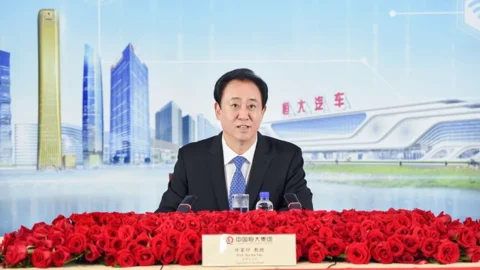
Il founder of Evergrande, Xu Jiayin, also known as Hui Ka Yan, was sentenced to life by a Chinese court for a series of financial crimes related to the management of the real estate giant. The Shenzhen Intermediate People's Court also ordered the confiscation of all his personal property , lifelong deprivation of political rights.
The ruling represents the most dramatic turning point in the story of the entrepreneur who, for several years, was considered Asia's richest man. It comes at the end of the long decline of Evergrande, once China's largest real estate company and now a symbol of the sector's crisis. The group, burdened with over $300 billion in liabilities, was placed into liquidation after becoming the world's most indebted real estate developer.
Evergrande, why Xu Jiayin was sentenced to life imprisonment
Xu Jiayin pleaded guilty in April. The charges include illegal collection of deposits from the public, fraud, appropriation undue of corporate resources and corruption In the corporate sphere. According to the findings of the judges and reported by CCTV, between 2016 and 2021, Evergrande, Evergrande Real Estate, and Xu allegedly inflated assets and concealed liabilities through "continuous and large-scale" financial fraud. The founder also allegedly used bribes to gain control of financial institutions and allow Evergrande to illegally obtain credit and insurance funds.
The mechanism of the proceedings also emerged real estate pre-sales, which was crucial to the group's growth. Evergrande sold unbuilt homes, collecting buyers' money upfront. A portion of those funds, instead of being used to complete the properties already sold, were transferred to new projects. This model fueled the group's expansion for years, but it entered a crisis when the giant no longer had access to the necessary financing. The bankruptcy left hundreds of unfinished construction sites and involved millions of people who had purchased unfinished homes.
The ruling also affects the group's companies. Evergrande Group was condemned to pay 8,82 billion yuan, while the real estate subsidiary Evergrande Real Estate, known as Hengda Real Estate, was fined fine of 7 billion yuan: a total of approximately $2,35 billion. These are some of the largest fines ever imposed by a Chinese court on companies involved in criminal proceedings. The first instance also found five more executives sentenced high-level Evergrande, with sentences ranging from 18 months to six years in prison.
Evergrande: What Happened to the Chinese Real Estate Giant? From Boom to Bust
Founded by Xu Jiayin in 1996, Evergrande expanded rapidly by using extensive debt to acquire land and finance new residential developments. The company became China's largest real estate developer, with a market capitalization exceeding $50 billion. The model entered in crisis in 2020, when Beijing introduced stricter rules to limit real estate developers' indebtedness. With access to credit becoming increasingly difficult, Evergrande gradually lost the ability to finance its operations and began selling homes at deeply discounted prices to raise cash. By 2021, it was no longer able to meet its financial commitments.
The collapse of Evergrande, which had accumulated more than $300 billion in liabilities, has become a symbol of China's broader real estate crisis, impacting banks, investors, suppliers, and homebuyers. The group said: bankruptcy in August 2023 and in January 2024, a Hong Kong court ordered its liquidation. Meanwhile, the authorities had already sanctioned Xu: in March 2024, he was fined $6,5 million and banned for life from China's capital markets after it emerged that a company in the group had overstated revenue by approximately $78 billion. The value of Bag Evergrande had meanwhile collapsed by 99% and in August 2025 the actions have been removed from the Hong Kong Stock Exchange, after more than fifteen years of trading.