Eni raises the curtain on its new 2026-2030 plan, confirming the Petroleum and gas as a pillar of the business, but also accelerating on renewable e biofuelsThe company aims to increase production to 850 barrels per day by 2030, while Fullness ed enilive drive green growth. The investments will be slightly more contained than in the previous period, but cash flows will continue to grow, guaranteeing shareholders a dividend on the rise and a program of buyback flexible, with extra incentives if Brent goes above $90 per barrel. The market appreciates: after the plan the stock accelerates to Business Square (+ 2,5%).
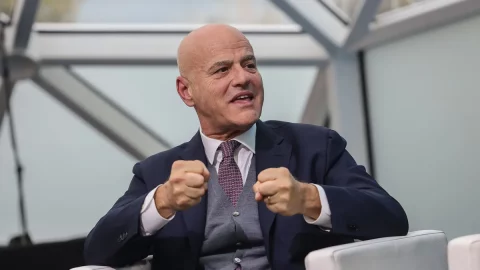
For the ad Claudio Descalzi The key to success remains consistency: "Our exploration capacity, project quality, advanced technologies, and a defined financial strategy are the pillars that fuel growth, guarantee resilience, and provide an attractive remuneration policy for shareholders. Energy markets change rapidly and are not always predictable, but our strategy is highly predictable and allows us to grow as promised," he added during the plan presentation.
The shareholders' meeting, called for May 6, 2026, will have to approve the 2025 budget and renew the company's top management, with the Descalzi's confirmation as a CEO now taken for granted.
Upstream: Oil remains a strategic pillar
The sector Exploration & Production remains the heart of Eni's business. The strongest and most diversified project portfolio in the company's history should allow it to reach 850 thousand barrels of oil equivalent per day by 2030, with annual production growth estimated at 3 to 4%.
Since 2014, Eni has discovered over 11 billion barrels of oil equivalent, of which 900 million in 2025. The start of 2026 is positive, with exploration opportunities in West Africa, North Africa, Eastern Mediterranean, Norway and Southeast AsiaThe company is also focusing on FLNG technologies and the development of the entire value chain, including production commercialization. The reserve replacement rate is estimated to exceed 140% for the next decade.
Among the main projects of 2026 are the development of the North Kutei Basin in Indonesia in joint venture with Petronas, with the new company Searah, created to combine selected upstream assets and expertise in Malaysia and Indonesia, strengthening regional energy security and creating long-term value. "Searah is optimally positioned to supply key LNG markets and has significant exploration potential," explained Descalzi. The transaction is expected to close in the second quarter of the year. The project in Argentina with YPF and XRG completes the LNG portfolio. The LNG business will generate a pro forma EBIT of approximately €1 billion in 2026.
Energy Transition: Plenitude and Enilive as Growth Drivers
At the same time, Eni continues to develop businesses related to the energy transition. Fullness e enilive They represent autonomous and self-financed assets, with a total value recognized by investors exceeding 23 billion.
Plenitude, which had 5,8 gigawatts of renewable capacity at the end of 2025, aims to reach 15 gigawatts by 2030 and serving more than 11 million customers after theacquisition of Acea EnergiaOperating profit (EBITDA) is expected to be €1,3 billion in 2026 and over €2,5 billion in 2030.
enilive, specializing in biofuels and sustainable aviation fuels, aims for 5 million tons by 2030, with a current capacity of 1,65 million tons and another 2 million tons under construction. EBITDA is expected to increase from €1,1 billion in 2026 to approximately €3 billion in 2030, with a return on investment exceeding 15%.
To support the growth of Plenitude, Eni has launched a shareholder reorganization with Ares Management and Energy Infrastructure PartnersThe company will move to a shared control and it will be deconsolidated According to Eni's accounts. The transaction includes a €1,5 billion capital increase, of which at least €1 billion will be subscribed by Ares. After the increase, Eni will retain approximately 65% of the company and will continue to direct its key decisions.
Investments under €6 billion, cash flows growing until 2030
The plan provides annual investments under 6 billion euros, approximately €2 billion less than in the previous period. Taking into account the effects of portfolio transactions, net investments will decline to approximately €5 billion per year, while gross investments are expected to reach €7 billion by 2026, equivalent to approximately €5 billion net.
Il Cash Flow From Operations (Cffo) per share will grow at an average annual rate of return (CAGR) of 14% until 2030, with an estimated total cash flow of around €71 billion. Free cash flow generated between 2026 and 2030 will be between €40 billion and €45 billion, thanks in part to the contribution of portfolio transactions. The expected return on investment (ROACE) is expected to reach 13% in 2030.
Thanks to a solid financial structure, Eni will maintain its debt-to-equity ratio (gearing) between 10% and 15%, at historic lows. The company will also increase its shareholder distribution range, from 35-40% to 35-45% of operating cash flow.
Eni: Dividend increase and extra buyback if Brent exceeds 90
For 2026, Eni proposes a dividend of 1,10 euro per share, growing by 5% compared to 1,05 euros in 2025, and launches a new program of buyback of own shares for 1,5 billion euros, with the possibility of reaching up to 4 billion if operating cash flow exceeds the forecasts in the 2026-2030 strategic plan. In total, up to 303 million shares, approximately 10% of the share capital, can be purchased, primarily to remunerate shareholders and support the 2026-2028 Long-Term Incentive Plan. The purchases will follow the rules of regulated markets and can be cancelled by July 2027 without reducing the share capital.
Eni also confirms a “upside” mechanism: if he Brent remains up to $90 a barrel, 60% of the incremental cash flow will be allocated to the buyback; if the price it exceeds 90 dollars or gas and refining margins exceed forecasts by 50%, the entire additional flow will be distributed to shareholders including dividend extraordinary in the last quarter. "The dividend distribution is a property of Eni, which confirms its intention to share the entire operating cash flow with shareholders," the CEO reiterated. Claudio Descalzi and Francesco Gattei, Chief Transition & Financial Officer, during the presentation -. The assessment of the annual scenario and the possible payment of extraordinary dividends will be made in the third quarter, with a single payment scheduled for the fourth quarter,” Gattei explained.
International Opportunities, on Hormuz: "The Impact Isn't That Great"
During the presentation he also spoke Guido Brusco, Chief Operating Officer Global Natural Resources of Eni, on the topic of opportunity international: “In Venezuela "There are opportunities in gas. We recently signed an agreement, which also includes the opportunity to export a significant portion of this gas," Brusco said, indicating Eni's concrete interest in reviving projects in South America. Regarding the country's oil sector, he added: "Perla is a gigantic reserve, and we produce a small portion, so there's a lot of room for improvement. The new laws offer growth opportunities here too. We have a positive outlook on the country and will certainly have other opportunities in the future."
On the chemical front, Adriano Alfani, CEO of Versalis (the group's chemicals company), confirmed that the division has faced some difficulties and that a mitigation plan is underway, with the aim of moving the EBIT break-even point one year later than expected.
Finally, on the international context, Descalzi also commented on the situation in the Strait of Hormuz and the Persian Gulf"We have marginal positions, between 2-3% of our production, and in terms of cash flow and EBIT, we have more projects under development than in production. The impact is not that great, and we don't have cargo ships stuck in Hormuz."
Last updated Thursday, 19, 2026, at 16:00 PM