Nissan is desperately looking for a way out to avoid financial collapse. With $5,6 billion in debt expiring in 2026 and with increasingly fragile economic prospects, the Japanese car manufacturer has developed a extraordinary plan for raise over 1.000 billion yen (about 7 billion dollars). The operation, according to confidential documents seen by Bloomberg, provides a complex mix of issuance of securities, divestments and guaranteed financing.
The core of the plan includes the issuance of bonds and convertible instruments up to 630 billion yen – including high-yielding dollar and euro issues – and a syndicated loan from 1 billion pounds guaranteed by UK Export Finance, a British government agency that supports exports.
But it doesn't end there. In parallel, Nissan is evaluating the sale of part of its holdings in Renault of which he still owns 15% – and in the former subsidiary AESC Group, a battery manufacturer. Production facilities in the region will probably also be sold. South Africa and Mexico, in addition to being placed on the market, in sale and leaseback, of the headquarters of Yokohama and other properties in the United States. Nissan is in a “painful phase of restructuring,” in a context marked by global semiconductor crisis, From US tariff pressure and from the competition of Tesla, BYD and Hyundai, increasingly aggressive in the electric segment.
Il new nissan ceo, Ivan Espinosa, who took office in April, has reportedly outlined the plan to the board of directors, with the goal of obtaining the first tranche of funds by June 30. However, final approval by the board is still pending.
Nissan: Headquarters out to save the engine
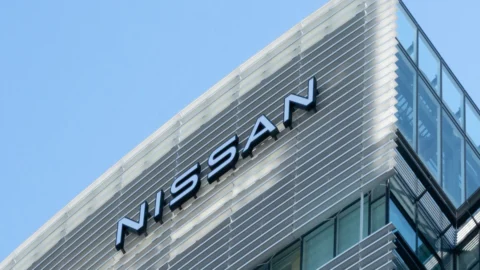
Among the most symbolic hypotheses is the Nissan Global Headquarters in Yokohama to be sold, an iconic building overlooking Tokyo Bay, emblem of the company's 2009 relaunch under the leadership of Carlos Ghosn. Today that glass and steel structure could become a expendable asset: sold and then leased back with the "sale and leaseback" formula, in exchange for a valuation that is around 700 million dollars. The operation is not new in the environment and has already been tested by other groups in the sector such as Ford Renault e General Motors.
Closures, layoffs and the end of alliances
The mega financial plan comes in parallel with a deep industrial restructuring. In mid-May, Nissan announced a 20.000 job cuts by 2027, circa il 15% of the global workforce, and the 7 out of 17 factories closed, including two plants in Japan (Oppama and Hiratsuka) and others located in South Africa, Mexico and Asia.
All this after closing the Fiscal 2024-2025 and a net loss of 671 billion yen (over 4 billion euros) – the worst in the history of the group – and after the merger talks with Honda fail, interrupted due to disagreements over cost-cutting plans.
On the industrial front, the group has chosen to drastically reduce production, review the entire model catalogue and concentrate resources on new electric and hybrid technologies. A strategy summarized in the plan “The Arc”, which aims to launch 30 new models by 2027, Of which 16 electrified.
The heart of the relaunch: e-POWER, batteries and production in the UK
The new course, strongly desired by Espinosa, is based on technology e POWER, a hybrid system in which the internal combustion engine recharges a battery that powers the electric motor, offering a “full electric” driving experience without the need for external charging.
In parallel, Nissan continues to invest in solid state batteries, autonomous driving e connectivity. The strategic hub will still be Sunderland, in the United Kingdom, where an investment is underway by 2 billion pounds to expand the production of electric vehicles. The project is also supported by UK Export Finance and British National Wealth Fund.
From here Nissan could export to the United States benefiting from the new UK-US trade agreement, a lifeline in a context marked by 25% tariffs imposed by Donald Trump on all imported cars.
The crisis of confidence and the severance pay problem
On the reputational front, Nissan also has to deal with internal discontent. Ahead of the shareholders' meeting on June 24, it has emerged that the group will pay severance pay of 646 million yen (almost 4 million euro) to four former managers, including the former CEO Makoto Uchida – who resigned last March – the former head of the brand Asako Hoshino, and technical managers Kunio Nakaguro e Hideyuki Sakamoto.
A decision that has raised criticism, especially considering the context: ongoing cuts, collapse in profits, downgrading of the rating to “junk” by the agencies and negative cash flow. According to Bloomberg, Nissan still has 2,2 trillion yen in unused reserves and credit lines, but without new capital inflows, the liquidity could run out by March 2026.
The future of the group therefore remains uncertain and hanging by a thread. The objective declared by Espinosa is bring Nissan back to profitability by the end of the 2025-2026 fiscal year. But the manager will have to demonstrate that he can regain the trust of investors, markets and customers, and that he can still play a credible role in the mobility of the future. "We have solid foundations in terms of liquidity," Espinosa assured in an interview with Bloomberg TV. But it will be the concrete results – and not the promises – that will tell if this will really be the case.