

The effect of duties on international economic growth has become an almost marginal topic. However, the next few months of data collection will be the real test of the health of the new system of business global, especially for the European economy, which is grappling with many open questions, starting from the deep crisis of automotive sector. Furthermore, the future of the Eurozone is weighed down by concerns linked to the hypothesis that the China, due to American tariffs, could shift its industrial overcapacity to the European market, with all the consequences that this entails for a continent committed to reorganizing its industrial presence in the world.
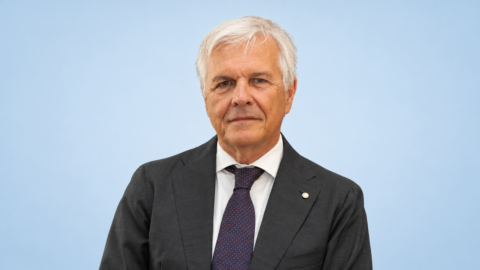
We talked about the increasingly complex variables that could influence economic growth in 2026 with Warwick J. McKibbin, director of the Center for Applied Macroeconomic Analysis (Crawford School of Public Policy) at the Australian National University in Canberra and Senior Fellow of the Peterson Institute for International Economics.
Will tariffs substantially change the balance of global trade?
The imposition of tariffs and increased trade uncertainty will have significant economic impacts in 2026. In our research for the Peterson Institute for International Economics (see https://www.piie.com/publications/working-papers/2025/global-economic-effects-trumps-2025-tariffs), we find that the effects on inflation emerge as early as the first year, while changes in economic activity will be most evident in 2026 and beyond. The process of reallocating the engines of global economic growth, already underway over the past decade from the United States and Europe to the emerging world, particularly Asia, will accelerate significantly as a result of U.S. trade and economic policies.
So, how will international economic relations realign in the near future?
Many countries are already forming new trade alliances. The benefits of trade are well documented by the post-World War II global experience, characterized by growing commercial integration and strong economic expansion. US isolationism could lead to a segmentation of the world into spheres of influence or foster greater global integration, but with a diminished US role. I expect the latter scenario: however, much will depend on how China, India, and Russia respond to the rapidly changing global order underway.
In the short term, what is the main risk to the global economy?
There are numerous global factors that could trigger an economic crisis, partly due to the erratic policies of the United States and partly due to the accumulation of various imbalances. In particular, rising government debt levels, especially public debt, combined with slowing economic growth, could cause a crisis of confidence. Stock markets are also already positioned in a "bubble" zone. It should be noted that the most optimistic forecasts on the effects of artificial intelligence are already incorporated into the ratings of the so-called 'Magnificent 7'.
China is preparing significant countermoves on tariffs, commodity exports, and capital market movements. But Beijing no longer wants to limit itself to being just the "world's factory"...
While responding to US tariffs, China continues to publicly proclaim the importance of an open trading system. At the same time, the need for Chinese domestic demand to become a driver of economic growth has become clear, as has the need to address imbalances in the real estate market, reducing reliance on global trade as the primary driver of development. I expect growth to rebalance toward domestic consumption, while maintaining support for the trading system.
The galaxy of medium and large powers that gravitates around the BRICS project is certainly something more than what was once called "non-aligned countries." Your vision?
Demographic trends suggest that the emerging world will remain the epicenter of future global demand growth. This is provided, however, that these countries can strengthen their institutional stability and allow markets to allocate capital based on economic performance, rather than political patronage. Declining immigration to the United States, with net migration declining as early as 2025, points to an accelerating decline in their relative dominance. The loss of human capital that would previously have flowed to the United States, but which will now be redirected to other countries, will further reinforce long-term trends toward a rebalancing of global economic leadership in favor of the emerging world.
Could the tightening of trade relations between the US and the EU somehow bring Europe closer to China?
“It is difficult, in my opinion, to imagine that the political interests consolidated in Europe would behave substantially differently from those of the United States towards China.”
From Australia, how do you see the future of the European Union? Will it, as Jean Monnet said, find the strength to pursue integration in times of crisis?
Will European countries be able to coordinate their actions? Historical experience suggests this is unlikely in the absence of a major shock. Perhaps the war in Ukraine, and the weakening of US support for Kiev, could act as a catalyst for greater European cooperation. The recent decision to guarantee funding to Ukraine for two years demonstrates Europe's willingness to act as a financier of last resort for Ukrainian defense. A positive step for European integration.
What idea does the world outside Europe have of this new commercial and power order that is emerging after Trump II?
"Most countries are rapidly seeking to strengthen their trade relations beyond the United States. This is particularly evident in Asia, with countries like Singapore and Australia, which are heavily dependent on open global markets, taking a leading role."
We've talked about international relations without mentioning India. When will Indian power fully enter major global issues?
"From a demographic perspective, India has the potential to play a key role in the global economy in the coming decades. However, translating this economic potential into geopolitical influence remains highly uncertain."
Could the centrality of the “American model”—in economics, currency policy, and soft power—be declining unexpectedly rapidly?
The United States is isolating itself from the global system that previous administrations helped build. While globalization has produced clear benefits for the United States and the world, it has also generated significant costs, particularly due to the inadequate management of the resulting inequalities. The lesson that will emerge, once the costs of the current Administration's policies become apparent, is that the main problem with the American model before 2024 lay not in the development of institutions, markets, and trade openness to stimulate growth, but in the lack of policies capable of accompanying the inevitable structural adjustments resulting from trade and technological progress.
We have not yet mentioned the effects on the economic balance resulting from the new technological frontier...
This last point will become even more relevant if the predicted impacts of artificial intelligence materialize. US policymakers will not be able to blame foreigners if the United States finds itself isolated from the rest of the world and faces profound structural change due to technological transformations. On the contrary, access to global markets would help make the transition caused by major technological shocks more gradual and less traumatic.