I winds of war dominate the geopolitical picture. The Russia continues to attack Kiev and Ukraine while theattack threatened by Iran on Israel could take place before Thursday. Israel expanded evacuation orders in Khan Younis in the southern Gaza Strip overnight, forcing tens of thousands of Palestinian residents and displaced families to move.
In this climate of concern and emergency i markets have now learned to coexist although they remain under observation after last week's strong volatility, motivated by concerns about the risk of recession in the US economy and the consequences of the increase in the value of the yen. This morning the debut of the Asian markets is currently substantially positive. South Korea's exports recorded double-digit growth in the first 10 days of August, thanks to strong demand for semiconductors and locally produced automobiles. But the prices need a recovery phase to allow volatility sellers to recover. return to reappear on the markets.
Volatility slows down the recovery
Until the volatility will remain high the risk that a small negative data could compromise recovery remains. Better therefore to hope for one rather than an explosive rally gradual healing. The markets should (using the conditional is always prudent) have neatly digested the drastic closure of the carry trade positions on the Yen, getting back on track and above all maintaining a bullish underlying position. The rapid return of volatility bears witness to this. THE'VIX volatility index (so-called of fear) closed on Friday at 20,409 points, forty-five lower than Monday morning's peak. The decrease in volatility is a necessary condition for the rebalancing of the financial markets.
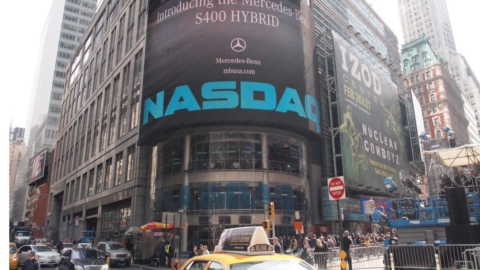
Lo Nikkei itself, the epicenter of the crisis, lost an “ordinary” -2,50%. On Wall Street the S&P500 recorded an unchanged weekly balance (-0,1%), Nasdaq -1,3%, Dow Jones -0,7%.
There was no shortage of positive surprises: the Eurostoxx 50 grew by 0,8%, Hong Kong +0,9%, Taiwan Taiex +0,4%. Above all, the Bovespa index which gained almost 8%, the best week of 2024, reaching the highest levels since February. The Brazilian stock market has closed part of the deep gap accumulated since the beginning of the year compared to the rest of the world (-13% since the beginning of 2024).
Our FtseMib (31.782) finished with a modest -0,7%, positioning itself slightly above the first discriminating threshold at 31.617 points and still far from the level that could start a reversal of the bullish trend at around 29 thousand points.
This will be the strategy adopted by central banks. The first appointment is for Wednesday 14 August when the inflation data for July will be published. On an annual basis, a general figure is expected to remain unchanged at +3% and a "core" figure to slow down slightly to +3,2% from +3,3%, further moving towards the annual target of +2% set by the Fed A reading showing only modest cooling might allay fears that the Fed sent the economy into a tailspin by leaving rates high for too long. On the contrary, too weak a data could increase recessionary concerns, triggering new market volatility.
Among the macroeconomic data expected this week, the second estimate of the Eurozone's GDP should be observed on Wednesday, while on Thursday it will be the turn of the GDP of Japan and the United Kingdom. Also on Wednesday, inflation estimates in the United States and Great Britain for July will be released.
The bills arrive from China
This week i quarterly data di Tencent, Foxconn e Alibaba, which will be released between Wednesday and Thursday, will provide a snapshot of the Chinese economic landscape: In the quarterly monetary policy report, released on Friday, the People's Bank of China once again addressed the risks associated with bond-based asset management products . The 10-year yield this morning is at the highest level of the last three weeks.
Il Japan's stock market is closed for holidays. The BSE Sensex index in Mumbai is down 0,5%: the data on inflation in India is released this afternoon.
I futures on Wall Street and the futures on the Eurostoxx 50 anticipate a rise of 0,5%. The key appointment is set for the 28th, when the data will be announced Nvidia.
Also worth following are the accounts of UBS and Cisco (Wednesday) and Walmart (Thursday).
She is expected at the event on Tuesday Made by Google, of the Mountain View company's new products, starting with the new Pixel 9 smartphone. The event takes place earlier than the traditional mid-autumn event, probably with the aim of anticipating Apple's announcements.
America next November will choose between pro-growth policies and redistributive policies, with the possibility of a draw whose outcomes are difficult to predict. In this context, the Federal Reserve is moving cautiously. Equity earnings, for their part, come out mostly good, but not always up to the market's very high expectations. The Magnificent Seven are confirmed to be growing, but at a slowing rate. In addition to this, the profits from technology continue to owe a lot to the consolidated components, while Artificial Intelligence, on which the stock market has been betting for a year and a half, drains enormous resources which it only partially returns as revenues.
It's time for the big rotation
In the first half of the year, the best performance was achieved by those who aggressively focused on the simple choice of patent bondsi, of credits and titles related to Artificial Intelligence. From here on out everything gets complicated, As a consequence, it will be good reduce the risk profile. But it's too early to take refuge in cash. The basic scenario is still that of good growth and almost normalized inflation.
According to a survey conducted for the Financial Times and the University of Michigan's Ross School of Business, 42% of US voters trust Kamala Harris more on economic matters than the 41% who trust Donald Trump (Axios).
In a post on Truth, Donald Trump announced that today will be interviewed by Elon Musk.