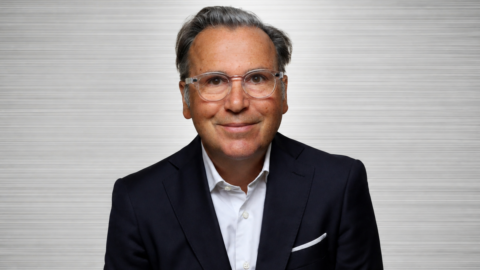
The stone guest at the negotiating table of today, December 10, as of the previous ones, on the fate of the Italian ex-Whirlpool factories is the Koç family, more precisely Mehmet Omer Koç, the 60-year-old president of the Holding who, among other things, was in Italy in July.
Everything is decided in Istanbul even though top managers, from Hakan Bulgurlu to Ragip Balcioğlu, have also met in Italy since April 2023 with the government, trade unions and local authorities. And the continuous and participatory employee demonstrations factories – not just those at risk of closure – form the dramatic backdrop to a long-announced but neglected crisis from those who should have done so, having had the means to do so.
For some time now, therefore,the Meloni government was aware of the heavy reality and the even heavier future of Italian factories. Obviously, one of the longest and deadliest crises in sales of majap made in Europe that has ever happened, which compromises and will compromise the future of the entire European manufacturing industry, accomplice. In addition, on Italian factories It is good to know that they would require huge resources to sustain competitiveness, funds that had been in demand for a long time because the surprise that Whirlpool found in the aftermath of the Indesit acquisition, in 2014, was that the hubs were already largely obsolete.
The most important ones date back to that period recovery plans of the American multinational with regard to the Emea branch thanks to the far-sighted vision of both the Corporation and European top management, a happy period that ended with the financialization of the entire group. The lack of investment in the entire Italian sector also determines the current and future crises. With one exception: the Italian plants of Electrolux, always technologically updated, as Boris Tuzza, aerospace engineer, certifier of the plants and products of the time told us.
Behind the numbers
If we carefully analyse the data that the Italian spokespersons transferred to their counterparts, word for word, on Wednesday 20 November, with great transparency, it is, in short, a heavy halving and of an obvious downgrading of the European centrality of the ex-Whirlpool-ex-Indesit.
First of all, the halving of investments announced immediately after the joint venture: from 250 to 110 million euros. And then halving of the Settlements (2 out of 4) and of the employees: About 2 thousand out of 4.480. And of the employees, the category that is most unlikely to find re-employment, as many as 1 in 2 has to leave.
With a pilot plant downgrade of what was the European headquarters of Whirlpool, the closure of the European R&D center in Cassinetta. With thezeroing out production of washing machines, dryers, refrigerators and freezers (except for marginal quotas) remain the spare parts and reconditioning center of Carinaro, plus a strengthening of the hub of Melano, in the Marche, which will become, with Cassinetta, the European production center of cooking. In Bolu in Turkey the free standing kitchens remain, in a factory built in its time with Italian equipment. The day before the meeting of the 20th at Mimit, Paolo Lioy, general manager of Beko Italia and vice president of Beko Europe, had resigned from all positions with a statement on Linkedin.
A zero-cost joint venture?
The agreement between Whirlpool and Arcelik has never been clear on the figures. The joint is obviously a contribution of assets in different ways and quantities. But the assignment to Beko of 75 percent of Whirlpool Emea is a actual transfer. The only number given during the presentation to US shareholders and investors was published by FIRSTonline, around 700 million euro, a payment that, in the light of subsequent checks, has never been validated. And this would confirm the fact that US multinationals have always sold, even free of charge, companies and factories that needed to be closed, to a partner who will do it for them.
The agreements between the two big names actually date back to before the end of 2022, that is, to the first stormy signs of a consumer crisis after the excellent post-Covid rebound. The Chinese of Midea or Haier? A decoy perhaps.
How much is Whirlpool-Indesit really worth?
The only transfer of millions of euros had occurred before, in August 2022, with the 250 million given in part by Arcelik to Whirlpool for the Russian factories (ex-Indesit). And then for the 20 million euro transaction regarding the acquisition of Whirlpool MO and Africa. A question is a must: What value has been attributed to Whirlpool Emea anyway? Whirlpool had paid, for Indesit, to the Merloni family around 900 million euros; how not to evaluate the current Whirlpool+ group
Indesit at least two billion?
Whirlpool's entire EMEA business recorded sales of over $5 billion last year. The company has devalued approximately 1,5 billion of dollars its EMEA business in the fourth quarter, blaming “supply chain disruption.” Marc Bitzer’s investor report states that “the transaction is expected to generate over $750 million in net present value of future cash flow value, as well as unlock $200-300 million of incremental free cash flow in 2025.” Explain that to me….
Whirlpool, a long history
The history of Whirlpool is full of innovations, acquisitions but also closures of major hubs. At the first signs of market difficulties and the need to make investments, the multinational tends to eliminate the problems: on the one hand with colossal relocations in Asia and from another with large factory closures, in the US and Europe (five in total).
Going back to review the funding – several hundreds of millions of euros – provided by theEurope and from individual states to multinationals and European companies, it can be deduced that in reality heavy divestments and relocations have been financed which have, on the one hand, weakened the Italian, German and French hubs and on the other transferred them to Poland especially most of these resources and factories. Since joining in 2004, Poland has received net funding on average equal to 2% of GDP per year with a planning and spending capacity that minimized the loss of opportunities and funds.
Warsaw has been the largest beneficiary of EU structural and investment funds, having received over 100 billion euros in the period 2014-2020. This is almost exclusively because Germany strongly wanted it, since Poland is the privileged terrain of German relocations and the pro-German market par excellence. Let us not forget that the BSH group has benefited handsomely from these loans which have produced decades of profits. Much of these funds from European taxpayers have actually led to increasingly lavish profits. Furthermore, the EC has never wanted to address with courageous interventions, due to the iron hostility of Northern Europe and England, the dumping practiced by the Koreans and the Chinese as well as the Turks. Which still continues because almost everything imported into Europe is manufactured mostly in China or Vietnam, and very little in Korea. It should be noted that Samsung recently reduced the production of washing machines in the Polish factory in Lodz, acquired by the Polish company Amica, from 1.400 thousand machines to 600 thousand, importing washing machines produced at very low prices in China, in order to gain further market shares through obvious dumping.
Funding to close hubs
The first factory closed by Whirlpool was the freezer and refrigerator factory.the Trento but it was a good deal because 1,8 million euros arrived from the European Globalisation Adjustment Fund (EGF) and 1,3 from Italy. However 608 workers out of work including those of the related industries. For the washing machine factory of Naples Invitalia had assigned 10 million euros to the multinational that should have gone to the Carinaro (CS) plant which, by closing, had laid off workers 800 workers. As regards all the other Italian factories acquired by multinationals, there has been a constant reduction in employees over the years with numerous redundancy payments and financing that have favoured the balance sheets of the multinational to the detriment of public finances and families.
European industries on the attack
BusinessEurope, which brings together 41 national business associations, representing over 20 million European companies, has recently launched a decisive information and pressure operation against many choices made by the European Commission that penalize manufacturing activities, employment and also the future of Made in Europe. And that are favoring the unfair and aggressive penetration of extra-European competitors. "We strongly fear that Ursula von der Leyen wants to give the future of Europe an even greener imprint- Paolo Falcioni declares to FIRSTonline, General Manager of Applia Europe - without taking into account the dramatic problems of companies, which have long been burdened by the very high costs of energy, raw materials and labor, and by an increasingly invasive bureaucracy. In the last five years, for example, the regulatory burden imposed on companies by the European Commission has reached an unsustainable number, well 14 regulations versus Biden's 3.500".
As we have already highlighted on other occasions, some of these green regulations such as the Digital Product Passport (Dpp) requires companies in the sector to provide full and detailed tracking of the design and production of imported steel tools, leaving them completely free to import into Europe household appliances manufactured with "dirty" steel which costs much less, thus favouring non-European producers.
Here's How Many Washing Machines Leave European Hubs
To clarify how much of the manufacturing from the 80s and 90s remains in Europe, here are some data which, in summary, indicate that it is less than half of the original potential. In Poland, with European funding, the production of 5,7 million washing machines has been relocated. Beko has 1,2 million, BSH and Electrolux 900 thousand, Samsung 1.700 thousand e LG 1 million. In Slovenia Hisense manufactures 500 thousand household appliances, inherited from the acquisition of Gorenje. In Romania, Beko manufactures 1,6 million washing machines and in Slovakia 1,4. Honey has moved its production from Germany to Poland (500 thousand devices). However, they are the refrigerators to record the collapse of production in European factories with a halving between 2008 and 20020. This significantly corresponds to the very heavy fall in market shares with the Koreans in first place followed by the Chinese.