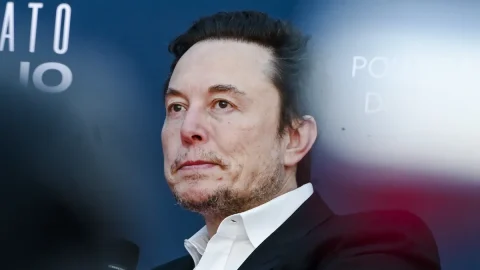
The first financial statements from US big tech companies have finally arrived. Microsoft and Meta were the first to publish their quarterly results, which were both very good: Microsoft increased revenue by 17% and diluted earnings per share by as much as 60%, while the Facebook company even beat forecasts with a net profit of $22,768 billion, equal to +9%. Tesla is doing badly though, which also released its accounts yesterday.
Microsoft's accounts
Specifically, the key figures for Microsoft are as follows: Revenues totaled $81,3 billion, up 17% (+15% at constant exchange rates). Operating income reached $38,3 billion, up 21% (+19% at constant currency). Finally, GAAP diluted earnings per share (EPS) was $5,16, up 60%, while non-GAAP EPS was $4,14, up 24% (+21% at constant currency).
Overall, both revenue and net profit beat estimates. This, however, didn't satisfy investors, who—at least at the start of after-hours trading—pushed the stock by selling. According to Barron's, one hypothesis is that the growth of the group's cloud computing was not considered sufficientAzure grew 39% compared to the same period last year. But the entire segment—Microsoft Cloud—rose 26%. These are speeds that, given the massive investments in infrastructure to support the development of artificial intelligence, appear insufficient. At least for those ready to sell, or buy, in the aftermarket.
The accounts of Meta
Meta, for its part, posted the following numbers: revenues amounted to 59,89 billion in the fourth quarter and 200,97 billion for the whole of 2025, with an increase of 24 and 22% respectively on an annual basis. At constant exchange rates, turnover would have risen by 23% in the fourth quarter and 22% for the full year 2025. Total costs and expenses, for their part, amounted to €35,15 billion in the fourth quarter and €117,69 billion for the full year 2025, up 40% and 24% respectively on an annual basis. Finally, net profit amounted to €22,768 billion (+9%), a figure that exceeded expectations.
Which, unlike Microsoft, pleased investors, so much so that the stock soared in the after-hours trading—even though the company confirmed its investment acceleration. The group has indicated capex of $135 billion in 2026, a level about 20% higher than expected and nearly double the investments made in the previous year. This is a turnaround that the market, the Wall Street Journal notes, appears to have welcomed, unlike twelve months ago, when shareholders had reacted more cautiously, demanding greater visibility on the returns of the most expensive plans.
Tesla's accounts
As for Elon Musk's company, total revenues for the fourth quarter were $24,9 billion, down 3% year-on-year: On an annual basis, revenue was the worst since 2022. GAAP gross margin improved significantly, reaching 20,1%. In the fourth quarter, 418.227 vehicles were delivered, a 16% decrease compared to the same period in 2024. For the full year 2025, total deliveries were 1,63 million (-9% compared to 2023). The Energy Storage sector, however, set a record with 14,2 GWh distributed in Q4 (+29% year-over-year). Robotaxis and AI: Tesla has begun testing driverless robotaxis in Austin. and plans to begin mass production for the Cybercab in the first half of 2026. A $2 billion investment in xAI (Elon Musk's AI company) was also announced.