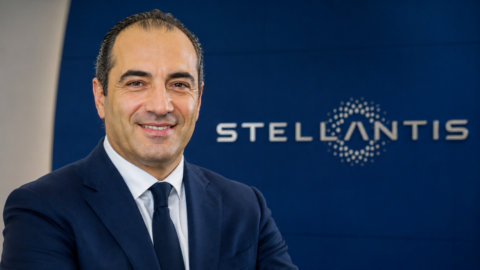
Stellantis returns to positive territory in the second quarter of 2026, but the the market does not reward the turning point in the accounts. The title of the automotive group opened in the red Business Square and in the early trading phase, it fell more than 8% before partially paring its losses. Investors' reaction reflects caution about future prospects and, above all, the comparison between actual results and market expectations.
The company headed by Antonio Filosa closed the April-June period with a Net income of 293 million euros, returning to profit after the loss of 1,87 billion recorded in the same quarter of 2025. The ricables grew by 13% to 43,5 billion euros, while theadjusted operating profit (Aoi) has more than tripled, going from 213 to 773 million euros. The operating margin rose to 1,8% from 0,6% previously, and the industrial free cash flow it returned to positive territory by around 1 billion euros.
A clear improvement compared to last year, but not enough to fully satisfy investors. Net profit was in fact below analysts' expectations, which indicated a result close to 718 million euros. Revenues, while growing, also fell slightly short of consensus. It is precisely this gap between the recovery in revenues and market expectations that weighed on the stock's reaction.
Stellantis: Financials recovering, but profitability still under pressure.
In detail, Stellantis recorded a clear improvement in financial performance.adjusted operating profit According to some reports, it stood at around 800 million euros, with a margin of 1,8%, an improvement of approximately 120 basis points compared to the second quarter of 2025.
The most positive data comes from the cash generationIndustrial free cash flow returned to positive territory by approximately €1 billion, an improvement of the same magnitude compared to the same period last year, despite approximately €300 million in outlays related to charges accounted for in the second half of 2025.
The solidity also remains financial position of the group, with available industrial liquidity of 44,1 billion euros, equivalent to 27% of revenues for the last twelve months, within the target range indicated by the company between 25% and 30%.
The market, however, is looking beyond the recovery in quarterly numbers: Stellantis has reversed course after a difficult 2025, but it still needs to demonstrate that the improvement is structural and not just a temporary rebound.
North America leads the recovery, Europe remains the weak point
The recovery is supported above all by the North America, returned to being the main driver of growth. Revenue in the region increased 32%, while sales grew 6%, marking the fourth consecutive quarter with higher volumes than the previous year.
In the United States, Stellantis outperformed the market, which declined 0,3% during the period, bringing its share to 7,4% (up 40 basis points year-over-year). Growth was driven by the relaunch of models such as the Jeep Grand Wagoneer (+43%), the Ram 1500 and Dodge Durango (+9%), and the Chrysler Pacifica (+7%). Ram also performed well, with sales up approximately 11% in the United States. Positive signs also came from Mexico, where registrations grew 17% (up 19% including Leapmotor), marking the country's second-best quarter ever.
However, the situation remains more complex in EuropeSales in the EU30 markets increased by 3% and 7% including Leapmotor, but profitability continues to be negativeThe region closed with an operating margin of -0,6% and a loss of approximately €94 million. Market share fell to 16%, while the group continues to struggle with high manufacturing costs, price pressure, and underutilized production capacity.
Outside the two main markets, the group maintains a strong position in South America, where it remains the leader with a 19,1% share, revenues up 6% and a good performance by Ram in Brazil (+10% in the quarter and around +30% in June). Middle East and Africa Stellantis has shown resilience, limiting the decline in sales to 6% in an even weaker regional market. The situation is more difficult in Asia-Pacific, where sales fell by 29% (-22% including Leapmotor), penalised above all by the weakness of the Peugeot 408.
Tariffs and investments: the impact could reach €1,2 billion
Stellantis has financial targets for 2026 confirmed, but attention remains high on the impact of duties commercial. The group estimates an annual net cost between 1 and 1,2 billion eurosIn the first half of the year, the impact of the tariffs was limited to approximately 300 million euros, also thanks to 400 million euros in tariff refunds obtained in the United States.
Furthermore, approximately €2 billion in cash outlays related to extraordinary expenses recorded in 2025 remain, while capital expenditure and research and development will remain between 6,5% and 7% of net revenues.
FaSTLAne 2030 and Cost Cutting: The Challenge of Relaunching
CEO Filosa highlighted the group's progress: “The second quarter was characterized by continued progress, led by North America and supported by contributions from all other regions.”
La FaSTLAne 2030 strategy is now underway and Stellantis claims to be ahead of the curve on the Value Creation Program, the 6 billion cost-cutting plan euros by 2028. Around 40% of the planned initiatives should be completed by the end of the year, with estimated benefits on operating profit of around 2,4 billion euros as early as 2027.
A central role in the future strategy will also be played by Leap motor, whose sales increased approximately sixfold compared to the same quarter of 2025. The aim is to strengthen its presence in electric vehicles and in the Asian markets, in a sector where competition from Chinese manufacturers is increasingly intense.
Stellantis is under pressure on the stock market: the stock has lost more than 45% since the beginning of the year.
The negative reaction of Piazza Affari comes after a very difficult period for the Stellantis stockSince the beginning of the year, shares have lost more than 48% and are trading near historic lows of around 5 euros, compared to around 26 euros in March 2024. The stock's weakness reflects the difficulties faced by the group in recent months: declining profitability, uncertainties related to the electric transition, record write-downs, and the suspension of dividends in 2026.
The conductor itself can take various shapes, in bare or tinned copper, with or without insulation. In some cases, a preferential bend can also be applied to the joint so that it operates exactly as designed. rating agencies they showed greater caution. Moody's lowered its rating on Stellantis to Baa3 with a stable outlook, while S&P Global Ratings S&P raised its rating to BBB-, the lowest level before speculative, with a negative outlook. According to S&P, the main risks include increasing competition, pressure on electric vehicle margins in Europe, a slower-than-expected recovery in volumes, and possible higher costs in North America.
The real test for Filosa will come in next few monthsThe second half of the year, and especially the fourth quarter, will have to confirm that the improving financial situation can transform into a stable and lasting recovery.
Comparison with other European giants: BMW slows down, Renault accelerates
The comparison with other large European groups highlights divergent dynamics. bmw closed the second quarter of 2026 with a sharp slowdown, with net profit fell by 35% at 1,2 billion euros compared to the same period of the previous year and revenues down from 34 to 31 billion euros. The results come at a delicate time for the German group, following rumors circulating in recent days about a cost-cutting plan in Germany With approximately 8.000 exits through voluntary redundancies by 2027, as part of the challenge of maintaining competitiveness with Chinese rivals. A challenging start for the new CEO. Milan Nedeljkovic, called upon to manage pressure on margins, the electric transition and an increasingly competitive environment.
The performance of Renault, which in the first semester is started growing again with revenues up 9,5% to 30,2 billion euros and a net profit of 705 million, compared to the heavy loss recorded in 2025. The French group benefited from the strengthening of electrified models, with sales of pure electric cars increasing by 47,6%, and from growth in international markets such as India, Turkey, Morocco and Brazil. Renault also 2026 objectives confirmed, aiming for an operating margin of around 5,5% and an Automotive free cash flow close to one billion euros, supported by the new futuREady strategic plan.
Despite the improving accounts and the confirmation of the 2026 objectives, the title Renault recorded a slight decline, losing 0,4% on the Paris Stock Exchange. Instead, the Bmw title reacted positively, with a rise of 1,26% in Frankfurt.