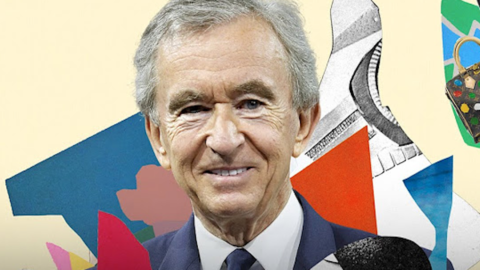
In the kitchens of Bernard Arnault you are looking for the best recipe for one stew, which could have served the international luxury giant lvmh. Things are not going so well these days for the 76-year-old executive who built his empire by riding the stellar rise of the luxury sector when global wealth was skyrocketing: now it is going through what is probably the worst period of its 36 years at the helm.
With the rapid decline of the luxury goods sector personal, which is worth a total of 364 billion euros, some of its rivals such as Hermès, bag manufacturer Birkin, or Compagnie Financière Richemont, Owner of CARTIER, have been shown in the data to be more resilient, clearly revealing the LVMH's weaknesses.
Everything suggests that the situation may not improve, at least in the short term. Insiders, investors, and close observers of its activities have repeatedly highlighted problems with the brand. Dior and in the division Moët Hennessy alcoholic beverages, and even rumors of problems at the mega-brand Louis Vuitton. On the other hand, observers also highlight that some of LVMH's difficulties are due to its very nature: a series of acquisitions, so much so that his rivals have given Arnault the nickname of “wolf in cashmere, left her with over 75 brands, making it unwieldy and difficult to manage, while the lack of a clear succession plan is making investors nervous.
It is from here that analyst and people close to the company support the opportunity of spin off, for example the wines & spirits division or some smaller brands, or a ipo of non-core assets such as Sephora
The stock has lost 25% since January, halving from its 2023 peak.
The stock has lost 25% since the beginning of the year. and it is almost halved compared to the peak ofApril 2023, losing approximately 221 billion of euros from its market value. LVMH is no longer among the top three stocks most important in Europe, nor is it the most valuable French company – a distinction now ironically held by rival Hermès, a company Arnault once tried, unsuccessfully, to acquire secretly. About a year ago, Arnault was at the top of the billionaires list of the Bloomberg Billionaires Index, the first person outside North America and the only consumer magnate to reach the pinnacle. His . net reached the peak of $231 billion in March 2024, surpassing that of Elon Musk and Jeff Bezos. The same year, LVMH also stole the show from the Paris Olympics. Now Arnault looks much less Olympian and his wealth has shrunk to around $150 billion, due to the collapse of LVMH shares.
That said, the the group's financial situation is solid. The debt-to-equity ratio, or gearing, fell to about 13% last year from 20% in 2021 and the operating cash flow Libero reached €10,5 billion in 2024, up more than a quarter from the previous year. Furthermore, the Arnault family – which at the end of last year held 49% of the company's capital and 65% of the voting rights – has embarked on a series of share purchases during the precipitous collapse of LVMH shares.
Wines & Spirits is the first candidate for a spin-off
If the problem is the colossal and varied structure of the group, some analysts hypothesize the possibility of spin-offs or partial divestments. And the wines and spirits division is the first candidate. In recent years the margins of Moët Hennessy they collapsed for the slowdown in demand, Excess inventory and errors in pricing strategy. So much so that the business went from generating around 1 billion euros in cash in 2019 to consuming as much as 1,5 billion in 2024. Some analysts Amber, including Luca Solca, argue that the wine & spirits division should be sold because it has become marginal compared to the rest of the group. “Today it generates profits more than ten times lower compared to fashion & leather goods and has very different operating logics, based on wholesale distribution, innovation limited to packaging and highly regulated communication, elements that have little synergy with LVMH's business model". Furthermore, they argue, the group's presence in the alcohol sector keeps many investors away, especially those who are careful about ESG criteria, hindering the achievement of the “absolute blue chip” status enjoyed by other luxury giants.
Experts from Amber indicate two possible paths to follow. A spin off with distribution to shareholders of the shares of the wine & spirits division, following the model of what was done by Richemont with tobacco, or the sale direct transfer of the majority share to Diageo, which already owns 34% of Moët Hennessy. "The spinoff would avoid a sale at currently depressed sales volumes and maintain French ownership, while the sale to Diageo would be quicker but would pose challenges related to price, the financial complexity of the transaction, and the risk of losing control of a historic asset," analysts say.
In turn Diageo has its own problems. Just yesterday he decided to replace the CEO Debra Crew After two unhappy years that undermined the distillery's strategy of trying to persuade consumers to switch to more expensive drinks, the British company's shares have fallen 43% since Crew took control in June 2023, a period that saw whisky maker Johnnie Walker abandon a long-standing sales target, issue a profit warning, and contend with trade tensions sparked by US President Donald Trump.
They could also end up in the crosshairs smaller fashion houses, considered less strategic and less relevant to profits, but which still absorb managerial resources. It's no coincidence that the 24S marketplace was recently closed and that underperforming brands like Off-White and Stella McCartney were sold in the past.
Sephora cosmetics: better inside or outside?
The global cosmetics giant is also in the crosshairs. “Even Sephora, which is probably non-essential, may not make sense in the long term,” says Erwan Rambourg, analyst at Hsbc which sees a business model different from that of luxury fashion houses: retail management, lower margins, and operational logic closer to large-scale distribution than haute couture. Moreover, rumors report that Sephora had already been evaluated for a listing in Amsterdam in 2021. Analysts disagree on this point. Amber“I don't think it makes sense to separate Sephora, given the synergies with the perfumes & cosmetics division,” observes Luca Solca.
Legal Problems: The Loro Piana and Dior Cases
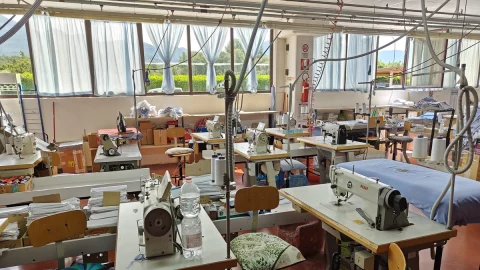
Arnault's problems also reach the legal sphere. A Milan court has subjected the subsidiary Loro Piana under special surveillance for a year, arguing that the company failed to prevent subcontractors from exploit migrant workers. According to prosecutors, in some Italian factories, working hours exceeded legal standards, employees slept on production floors and were paid less than the Italian legal minimum, and that Loro Piana failed to carry out due diligence checks. The high-end cashmere company confirmed that it had been notified by the Milan court and will cooperate fully with the authorities, stating that it severed all ties with the affected supplier within 24 hours of being informed of the existence of subcontractors. Also Dior It ran into trouble in Italy last year after some of its subcontractors were accused of exploiting undocumented workers to reduce costs. The brand resolved the matter last month, but not before a strong negative publicity campaign.
And then there is the "anagraphic" issue of the patron
Meanwhile, LVMH's operational concerns are loomingelephant in the room: la succession. Of course, compared to the 90 years he just turned Giorgio Armani, the seventy-year-old Arnault looks like a kid. At this year's annual general meeting, Arnauld was awarded theextension of the age limit for the CEO from 80 to 85 years old. Unlike the heads of other dynasties, Arnault has managed to keep his children – Delphine, Antoine, Alexandre, Frédéric, and Jean – involved in the company, even masking some disagreements between them. With his children still in their early stages, last year Arnault chose Stephane Bianchi as his deputy. At the company since 2018, Bianchi said at the annual general meeting that LVMH has medium-term succession plans and plans in the event of an "unexpected" event.