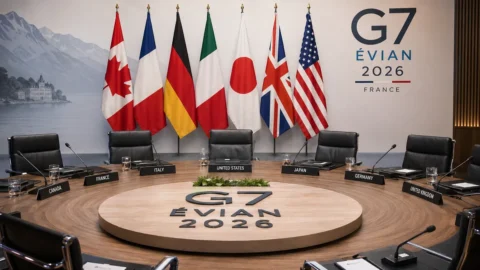
Fifty-one years after the first meeting of the G7 in Rambouillet, twenty-three years after the 2003 G8 summit, also in Évian, and seven years after the Biarritz summit, the summit of Evian will bring together the leaders of the G7 countries starting tomorrow to focus on the main current challenges in a climate of war (Middle East and Iran) and global macroeconomic imbalances.
The heads of state and government of what were once called the West's most industrialized economies are preparing to approve declarations on issues ranging from healthcare to critical minerals, while geopolitical discussions will be addressed in a separate statement from the French presidency.
But in the end, what should we expect? from this summit? The ambassador responds Michele Valensise, former Secretary General of the Farnesina, now president of the Institute of International Affairs. "This," says Valensise, "is a G7 that is falling into a time of crisis and trying to survive as a format for dialogue between like-minded countries. But the dominant factor in determining its success lies in the attitude of US President Donald Trump. It will depend on him whether the emphasis will be on constructive exchange with Europeans or on criticism of our side of the Atlantic."
Yet it seems that the French president Macron has done everything to prepare the ground for constructive dialogue, removing from the discussion issues that could appear divisive. "Certainly," observes the IAI president, "Macron, even as president of the G7, aims to strengthen the elements of dialogue and put critical aspects on the back burner. At this stage, it is important to maintain consultation at the G7 level to sustain the vitality of the group, even if scaled down compared to the past, as a format that retains its significance as a forum for liaison between like-minded countries with the same values."
Trump, Iran, and Ukraine: The Topics on Leaders' Table
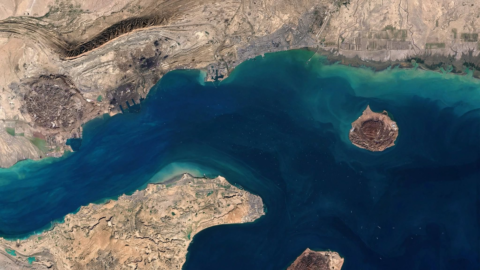
Much will also depend on the outcome of the last peace talks for Iran and how the solutions for overcoming the energy crisis caused by the blockage of the Strait of Hormuz will be discussed. "Trump," says Valensise, "has criticized the Europeans for not helping him during the crisis with Iran. American positions are wavering. Lastly, Trump criticized the Europeans, but then he slightly corrected his position, saying that such help could come in the future. The fact remains that in the current situation, a connection between the United States and Europe is important, and Évian could mark a step forward in bringing their respective positions closer together. We'll see how Trump reacts."
Macron certainly tried skillfully not to get caught up in two thorny issues, namely the China , Russia"Yes," the IAI president continues, "this is especially true for China because there's no desire to delve too deeply into the issue of dependence on critical Chinese minerals, especially since the shadow of a US-China G2 that relegates other Western countries to the margins still looms over Europe. Regarding Russia, Macron, like his European partners, maintains support for Ukraine and uses available leverage to push the Russians into serious negotiations, avoiding a mechanical reiteration of the conditions of four years ago. The new sanctions package against Russia is not inconsistent with the goal of realistically fostering the prospect of a negotiated settlement, provided Russia begins to show some signs of willingness."
Macron seeks unity, Meloni aims for dialogue with Washington.
The Évian summit will probably also see a moment of clarification between the Italian Prime Minister Giorgia Meloni and the American president after the exchange of mutual accusations on our lack of involvement in the Iranian crisis. "The statements of Trump "These measures against Italy have not been lighthearted," Valensise observes, "and the Italian side has clearly defined the limits of our action. It's possible that the Americans have now realized that we have rules and priorities to respect, but we continue to consider dialogue with the United States essential."
Now it will be up to the leaders of the seven "big" countries to agree not on a final statement, but rather on various declarations on fair and sustainable growth to reduce global macroeconomic imbalances; on strengthening the value chains of critical minerals; on creating a safe digital environment for minors; and on reducing the risk of investments in fragile countries. But discussions on the Middle East crisis, the blockade of the Strait of Hormuz and the war in Ukraine will only find space in a declaration from the French presidency.