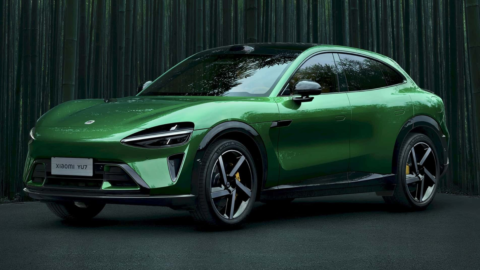
Le Chinese cars have conquered Italy. In the last two years the Italian automotive market has in fact witnessed a rapid and structural growth of cars of Chinese origin. An expansion that it's not just about electric anymore, but it involves also traditional and hybrid models, driven by an ever-expanding offering and aggressive industrial strategies. Brands born and developed in China, global brands controlled by Chinese groups, and European operators specialized in importing and rebranding have progressively occupied space in the Italian price lists, transforming what until a few years ago was a niche into a now stable segment of the market.
In this scenario they move consolidated companies such as BYD, protagonist with a wide range or Mg, present since 2021 and capable of exceeding one hundred thousand registrations in four years. Alongside the large manufacturers, there is also room for companies with a hybrid identity and strategy, such as cirelli, an Italian brand in appearance, but with models entirely of Chinese origin, part of the trend of importers who adapt and distribute cars designed in Asia.
From import to relaunch: brands already on Italian roads
Alongside the large manufacturers, the Italian market has progressively populated with brands who make the import and adaptation of Chinese models their business model. This trend includes Dr Automobiles ed You c, which have built an industrial identity based on the localization of vehicles developed in Asia and re-branded under a European brand. This formula has given rise to a veritable ecosystem of parallel brands, from SUVs to models more geared towards off-roading or sporty styling.
Alongside these companies are brands directly linked to large Chinese conglomerates. D is already present in Italy with a wide range of products and also covers the premium segment through Voyah, while Dfsk covers a more pragmatic area of the market, including SUVs, commercial vehicles and plug-in hybrid solutions. The same scope includes FORTHING, a brand of Dongfeng Liuzhou Automobile, landed in our country via TC8, a company of the FTH Group.
The strategy is different Chery, who chose a direct and structured entrance: Omoda&Jaecoo It is already operational in Italy and represents the foundation for further expansion of the group's network. This positioning aims to build brand recognition without rebranding.
A separate chapter concerns Leap motor, which combines Chinese origin and European governance thanks to at the entrance to the Stellantis perimeter, a factor that strengthens its commercial solidity and credibility in the eyes of the distribution network.
On the front of the large groups, Geely has instead chosen to combine the strong indirect presence – guaranteed by controlled European brands such as Volvo, Polestar, Lotus and Lynk&Co, in addition to the participation in Smart – with a direct debut with the electric EX5. To complete the picture there are Maxus, specialized in work vehicles, and XPeng, already present with two electric models, confirming a Chinese offering now transversal to all segments of the Italian market.
New arrivals and models on the launch pad
Il 2026 will mark a further turning pointSeveral manufacturers are preparing to launch or expand their ranges with models specifically designed for Europe, both in terms of price positioning and technical features. Among the most anticipated debuts is the Leave, new brand of Chery, which will open with the L8 crossover to then expand the range with more compact models, while the iCaur, Jetour and Exlantis brands, focused on electric and a more adventurous image, are also expected later.
In parallel, Leap motor aims to strengthen its presence taking advantage of the European distribution network, while Xpeng will expand its electric offering with new-generation sedans and SUVs. In the medium term, it will also look at Changan, across the Deepal brand, and more ambitious projects such as that of Xiaomi, ready to bring its electric sedans to Europe after having consolidated production on the domestic market.
The shadow of shortcuts: the registration loophole
But not everything is glittering. Alongside the advance of the large groups, an investigation has brought to light a grey area in the European vehicle registration systemSome smaller brands have allegedly exploited the single vehicle approval procedure to introduce into the EU models not subjected to full checks on safety and emissions. According to what has emerged, the phenomenon does not involve the large Chinese manufacturers already officially present, but marginal operators who circumvent the rules by entering from other European countries and then reselling in Italy.
Il the risk is twofold: unfair competition for regular manufacturers and, above all, exposure of consumers to vehicles without adequate assistance and guarantees. regulatory short circuit This threatens to undermine the credibility of the entire industry and is now calling on the European Commission to strengthen its controls and definitively close the loophole. At stake is not only the future of Chinese cars in Europe, but also trust in the market itself.