I Apple's accounts blow away expectations and certify a textbook quarter. In the three months ended in December, the first quarter of the 2026 fiscal year, the Cupertino group achieved revenues of $143,76 billion, up 16% and well above market consensus. Net income rose to $42,1 billion, equal to $2,84 per share, versus estimates of $2,67.
For the current quarter, the CFO Kevan Parekh he indicated a revenue growth of 13% to 16% year-on-year, for an expected volume between 107,8 and 110,66 billion dollars, well above the 104,84 billion expected by analysts.
Numbers that tell a story industrial machine back to full capacity, even if the stock's reaction remained measured: in the post-market Apple shares gained 0,6% and even in the pre-market the rise was limited to just over 1%, a sign of a market increasingly demanding towards Big Tech.
The iPhone is driving everything: “stunning” sales
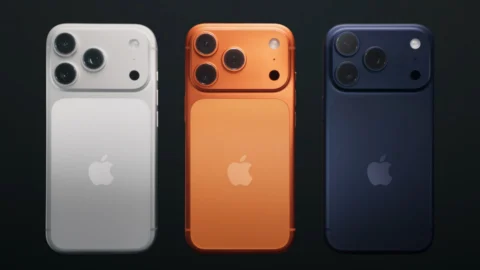
Il The real driving force of the quarter is once again the iPhoneSmartphone sales have reached 85,3 billion dollars, with a 23% jump that demolished analysts' forecasts. The difference was made by the success of the iPhone 17, launched in September, with a question that Apple CEO Tim Cook asked Cnbc he didn't hesitate to define “stunning”"Demand has been simply extraordinary," Parekh said. The product mix is also striking: over half of iPhones sold are the Pro and Pro Max versions, the highest-margin models, an unprecedented figure that has inflated revenues and profits.
China once again takes center stage, user base reaches 2,5 billion
After difficult months, the China returns to the forefront. In the area that also includes Hong Kong and Taiwan, revenue jumped 38% at $25,5 billion, breaking a string of declining quarters. The Asian rebound is fueled by a continuing expansion of the installed base. Active devices surpassed 2,5 billion units, a new all-time high.
A basin that feeds also the growth of services, which rose above $30 billion in the quarter, with Apple TV seeing a strong increase in viewership.
Limited shadows: Mac down, investments up
Not everything runs at the same speedMac sales totaled $8,39 billion, below the $8,95 billion forecast, a 7% decline. iPad sales totaled $8,60 billion, above the consensus of $8,13 billion. Wearables, home devices, and accessories contributed less, with revenues of $11,49 billion, below the $12,04 billion estimate.
In parallel, Apple has significantly increased spending on research and development, up 19% to 10,9 billion dollars. A clear signal of the will to bridging the gap in artificial intelligence, while maintaining lower investment levels than other giants in the sector.
AI coup: Q.ai acquired for around $2 billion
A strategic move is coming precisely on artificial intelligence. Apple has acquired Israeli startup Q.ai, specialized in technologies capable of interpreting facial movements and silent communication, with key applications in audio and human-machine interaction. The value of the operation has not been made official, but it is estimated at around $2 billion, making it the second largest acquisition in the group's history after Beats.
Also founded by Aviad Maizels, the man behind PrimeSense, Q.ai brings expertise that could strengthen products like AirPods, Siri, and future augmented reality platforms. And so, while the iPhone is breaking records, Apple is paving the way for the next technological frontier.
The operation is part of a broader change of pace. In January, Apple in fact signed a multi-year partnership with Google, choosing the Gemini models as the technological basis for Apple Intelligence and the new SiriNot a complete delegation, but a deep integration: Gemini-derived models will be customized and run on Apple infrastructure, with full control over the user experience and security architecture.
The move signals a pragmatic approach in an AI race that has become industrial. Cupertino aims to quickly bridge the technological gap without giving up its pillars, starting with data protection and on-device or private cloud processing. In this context, the acquisition of Q.ai and the alliance with Google are not alternatives, but complementary pieces: while the iPhone continues to break records, Apple is preparing the ground for remain central even in the next phase of innovation.