Andy Burnham defeats the Eurosceptic right e puts Keir Starmer against the wallThe former Mayor of Greater Manchester has won the Makerfield by-election by a wide margin, in the North West of England, gaining the parliamentary seat he needed to formally challenge the Prime Minister for the leadership of Labour and, consequently, the British government. The clear and convincing result saw Burnham obtain the 54,8% of the votes, against 34,5% for the candidate of Reform UK, the populist, Eurosceptic and conservative party of Nigel Farage. Restore Britain, an even more radical formation on the right, stopped at around 7%.
The majority on the second place is over 9 thousand votes and reinforces the political message constructed by Burnham during the campaign: the Labour Party (Labour Party) can still beat Farage, but it can hardly do so by remaining stuck with the current leadership.
The vote that changed the game in London
In other times, a by-election in Makerfield would have had local weight. This time it has become a referendum on the future of the Labour Party, the centre-left British political party. Burnham did not simply defend a seat but demonstrated that he could stop the advance of Reform UK In an area where the populist vote and discontent with Westminster have been weighing heavily for years, turnout, close to 59%, was higher than in the last general election. A sign that the challenge was being felt well beyond the constituency's borders. Makerfield, a popular college in the Manchester area, has become the first national testing ground for the man many Labour people see as themore credible alternative to Starmer.
In the victory speech, Burnham claimed the political value of the result: “Tonight could, just could, be the turning point. From now on, I will give everything I have to make that happen, to ensure that the Makerfield name is forever synonymous with the change this country needs, with the recovery of something we have lost: hope. A hope for the future.” He then added: “We will not have a second chance to bring about the change this country truly needs. But tonight's outcome offers us the opportunity to build a new politics based on unity and hope, moving away from the path that leads to the divisive and dark politics we see in the United States.”
Andy Burnham, who is the “King in the North”
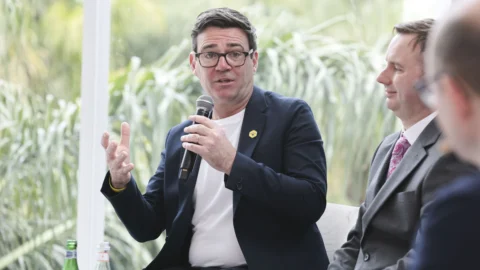
Andy Burnham is 56 years old and is one of the most recognizable faces of the left British Labour MP. A member of the so-called soft left, before building his popularity away from London, he spent years within the Westminster machine: MP for Leigh from 2001 to 2017, he held senior positions in Labour governments, becoming Chief Secretary to the Treasury between 2007 and 2008, then Secretary of State for Culture, Media and Sport between 2008 and 2009, and finally Secretary of State for Health from 2009 to 2010, during Gordon Brown's premiership.
Since 2017 he has led Greater Manchester, transforming the role of metropolitan mayor into the platform for his national relaunch. From there he earned the nickname “King of the North”, the King of the North, thanks to his ability to reach out to England's post-industrial areas and counter London's political and economic clout with a demand for greater regional power. During his years as mayor, he focused on urban regeneration, innovation, and greater public intervention in services, starting with transportation. His image was further strengthened during the pandemic, when he clashed with Boris Johnson's Conservative government over regional funding.
Burnham is not an outsider. He is a long-time politician, raised in Labour, has already been a candidate for the party leadership in the past. But in recent years he has tried to present himself as something different from London's ruling class: an administrator capable of speaking to the North, to working-class voters, to those disillusioned with traditional politics, and to that part of Labour that fears defeat in the next elections.
Starmer increasingly isolated
Makerfield's victory comes in most fragile moment for Keir StarmerTwo years after the electoral triumph that brought Labour back into government, the Prime Minister is being hit by negative polls, internal divisions, accusations of indecision, political backtracking, and significant resignations from the government team. A growing number of Labour MPs he fears losing his seat at the next national round, with RFarage's UK eform on the rise in the polls. Local defeats in recent weeks have increased pressure on Starmer, already challenged by a significant portion of the parliamentary group.
The Prime Minister, at least so far, has excluding the idea of stepping asideHe asserted the mandate he received from voters and warned the party of the risks of a long and divisive internal battle. After Burnham's victory, however, the congratulatory message published on X seemed inevitably ritualistic. Starmer wrote that voters had chosen Labour's hope and optimism over division and hatred. But that very formula now risks being used by Burnham's supporters to argue that Labour can only win by changing leadership.
The battle for Downing Street heats up
Burnham is now an MP, necessary condition to apply for the Labour leadership. To formally open the challenge, however, he will need to secure the support of at least 20% of the parliamentary group, equal to 81 MPs. His strength lies in the consensus among members and the increasingly widespread perception within the party that he is the only leader capable of regaining ground in the Northern regions and containing Farage. His victory against Reform in Makerfield provides him with a powerful argument: not only did he win, but he received more votes than the populist right and the far right combined.
It remains to be seen whether Starmer will accept a formal showdown or be pressured to negotiate an orderly exit. Some Labour members would like to avoid months of internal primaries and achieve a swifter transition. Others fear that a traumatic change at Downing Street would fuel the image of a politically unstable Britain, already marked by a rapid succession of prime ministers over the past decade.
Labour faces a crossroads
Burnham's victory does not resolve Labour's crisis by itself, but it makes it impossible to postpone. governing party must choose whether to stay with Starmer, trusting in the mandate obtained in the last elections, or to surrender to a more popular leader, more deeply rooted in the North and capable of offering a disruptive narrative. Burnham promises a policy based on hope, unity, stronger public services, and greater balance between London and the regions. He has criticized the effects of decades of neoliberal economics and defended the idea of a more robust role for the state, while recently seeking to reassure markets that fiscal rules will be respected.
His national climb starts from Makerfield. starmer, instead, opens the most delicate phase of his premiershipUntil now, the Prime Minister had been able to resist, partly because the Labour parliamentary group lacked a rival with sufficient political weight, territorial roots, and personal consensus to transform the discontent into a real challenge. Now that rival He entered Westminster. And his name is Andy Burnham.