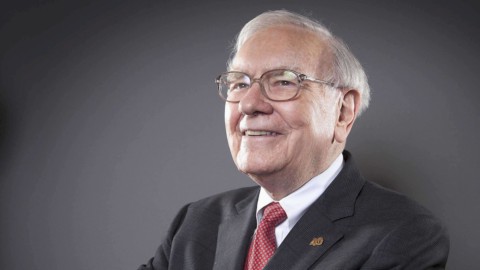
“The first rule of investing is never to lose money. The second rule of investing is never to forget the first rule. There are no other rules.” This is one of the famous quotes uttered by Warren Buffet, the most famous investment essay in the world which today, August 30th, celebrates its 95th birthday. But what are the teachings he passed on to investors, with those intuitions that beat the markets and made him achieve astonishing results?
Buffet's art actually seems simple, but at the same time very difficult: knowing uncover companies undervalued by the market e keep them in your wallet until their shares grow exponentially in value, without ever panicking in the collapses, but rather taking advantage of them to do purchases at discounted prices: aTime will take care of the rest because, inevitably, prices will start to rise again.
Buffett's investments have produced a 20% compound annual return between 1965 and 2024. Better than Wall Street
Warren Buffett has been nicknamed “theOracle of Omaha” stemming from his financial divinatory arts and his hometown, Nebraska. His mentor, at Columbia Business School, was his professor, Benjamin Graham, author of the book from which Buffett will take inspiration, namely “The intelligent investor”. After graduation he accepted Graham's invitation to work in New York for the Graham-Newman Corp, considered by many the first hedge fund in history.
Back in Omaha in 1955, friends and relatives asked him to manage their money. So, almost by accident, he founded the Buffet Partnership, an investment fund with which he immediately applies strategies of the value investing taught him by Graham. He then decided to take the Buffett Partnership public, merging it with a publicly traded textile company, Berkshire Hathaway. And from there, it was a series of successes that brought him fame.
Now his company is valued at more than $1,16 trillion and he himself became a famous billionaire. The group acquired a incredible variety of companies which Buffett believed should reflect the U.S. economy: a bet on Berkshire, he said, was a bet on America. Buffett always caught the attention of other CEOs and presidents around the world and was able to draw attention every year in Omaha a crowd of tens of thousands of shareholders for the annual meeting. His investments have earned him a 20% compound annual earnings between 1965 and 2024, compared to about 10% for the S&P 500 Index. last May Buffett has announced that he will retire, passing the baton to Greg Abel, 62, Buffett's longtime deputy.
The eight golden rules of the intelligent investor
Buffett has adopted the teachings of Graham, a supporter of "value investing", distinguishing between speculator and investor: the former tries to anticipate market movements and take advantage of them, while the investor is only concerned with purchasing stocks and companies at a reasonable price.
In summary, you can find eight golden rules used for its signals and investments
- One: Value investing. Buffett seeks companies with solid fundamentals that are trading at a discount to their intrinsic value. He looks for a moat, which is a company's competitive advantage over its competitors, because it allows him to identify its potential long-term success. In other words, he seeks undervalued stocks with long-term growth potential.
- Two: Long-term mindset: Buffett has a patient approach to investing: he's always been a "drawer-dealer," practicing a long-term "buy and hold" strategy based on fundamental analysis. For investors, this example translates to "set up your investment portfolio and then give it time to work for you."
- Three: Control your emotionsEmotions like fear and greed can lead to irrational decisions. Following a strategy or trading plan without being swayed by short-term market sentiment therefore becomes crucial. In his 1986 letter to shareholders, he wrote a maxim destined to become legendary: “Occasional outbreaks of these two super-contagious diseases, fear and greed, will always occur in the investment community. The timing is unpredictable. And the market aberrations they produce are equally unpredictable, in duration and degree. Therefore, we never try to anticipate the arrival or end of either disease. Our goal is more modest: we simply try to be fearful when others are greedy, and to be greedy only when others are fearful.” How can we follow this example? Simply by remaining clear-headed both when others are greedy and when they are fearful.
- Quattro: Quality over quantity. Buffett emphasizes the importance of investing in high-quality companies with strong, experienced management and a history of consistent performance. He is selective in his investments and does not over-diversify.
- Five: Invest in what you undestand. It's best to avoid complex or speculative investments by investing in companies and sectors you know well.
- Six: Don't stop learning. Buffett is a voracious reader and believes in the importance of continuous learning. He studies financial reports, annual reports, and books to stay informed about the companies he invests in. To find companies with a sustainable competitive advantage, such as a unique product or service or a strong brand, it's important to analyze the company's market position and compare it to its competitors. These companies need a solid business plan, a strong management team, and possibly long-standing customers, as having many loyal customers over time gives them an edge over their competitors. These companies usually have a better reputation for customer service and reliability.
- Seven. Be contrarian. Buffett isn't influenced by sentiment, short-term market trends, or forecasts. He's willing to go against the grain when he believes his assessments justify it. "Forecasts may tell you a lot about the forecaster, but they tell you nothing about the future," Buffett wrote in a 1980 letter to shareholders, regarding short-term forecasts on stock and bond prices. In other words: once the most suitable investment portfolio has been identified, short-term forecasts make little or no difference, because what matters is the long-term objective.
- Eight. Hold cash. Buffett has always chosen to hold a good amount of cash At your fingertips to capitalize on investment opportunities: you need to be ready to "push the button" when an opportunity presents itself. But beware, Buffett also says that the worst investment you can make is to hold onto cash and not invest it, because money loses value over time. For example, in 2021, Buffett had $147 billion in cash, but this liquidity was held primarily in US Treasury bonds. Part of that cash was then used to buyback, or repurchase shares already held in the portfolio.