Unicredit continues the journey exit from Russia through targeted salesAccording to the Russian newspaper Kommersant, the group led by the CEO Andrea Orcell sold almost the entire portfolio of leasing contracts long-term loan from the subsidiary Unicredit Leasing, amounting to approximately 3 billion rubles (approximately 33,5 million euros), to Russian company Pr-Leasing.
At Piazza Affari the Unicredit title, started on the rise up to 66,16 euros at mid-session, reducing its gains to 65,27 euros (+0,15%)
The purchase was made through theanchoring of payments to the US dollarTo finance it, Pr-Leasing used, among other things, the issuance of virtual currency bonds with amortization synchronized with the leasing payments, the company explained to Kommersant.
After all Orcel in Finance Commission In the Senate, he said: “We now have €3,5-€3,7 billion in capital in Russia. The question I often get is, why don't you throw away the keys and close everything down? In the end, I can cut everything and close it down, but who benefits? The country we don't want to help. Why should I give away over €3 billion to the country?” Since the war with Ukraine began, Orcel recalled, “we had about 6% of our loans and deposits in Russia. Today, we have 0,2% of our loans in Russia and 0,2% of our deposits. Furthermore, we haven't granted any new loans since the invasion. We have about €700 million in loans, €4.500 million of which are mortgages. Another €200 million will probably decrease and then stop there, and we won't renew them.” UniCredit has reduced lending by 95%, leaving €700 million in local loans already disbursed. Local deposits, which were €7,7 billion in 2022, are now around €900 million.
Pr-Leasing – which confirmed the deal but declined to disclose the amount – is part of the Simple Solutions Capital fund. According to the Expert Ra ranking, at the end of the first half of 2025, it ranked 29th in terms of new business volume (3,159 billion rubles). The company confirmed that it is "continuing its portfolio acquisition strategy, adapting to high interest rates, changing conditions, and market stagnation." It then added: Kommersant that “the growth strategy through mergers and acquisitions was already defined in 2018”.
With the exit of Unicredit Leasing the top of Russian society they are reorganizing. Kommersant, citing an internal source, reports that Kirill Zhukov-Emelyanov, who has worked at the bank for over 20 years, having held the position of president for the last five years, has left his post, as have Vadim Aparhov, advisor and head of the corporate and investment sector, and Yulia Petrova, chief operating officer.
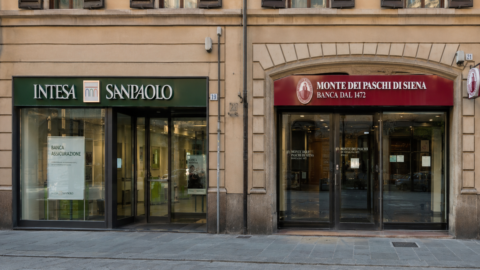
According to the ranking data Interfax, in the third quarter of 2025 the Bank Intesa (the Russian subsidiary of the Italian Intesa Sanpaolo Group) reduced its assets by 17,7%, to 141,8 billion rubles, ranking 50th in this indicator and 23rd in terms of capital (54,2 billion rubles). At the same time, UniCredit Bank ranked 20th in terms of assets (a decrease of 8,52% in the quarter, to 731,4 billion rubles) and 12th in terms of capital (337,9 billion rubles).
In Russia it is less expensive to sell wallets than an entire company
The move by Piazza Gae Aulenti, which offers the advantage of being less expensive, is similar to that of Intesa Sanpaolo on his way out of Russia, he comments Kommersant. If a Russian company wanted to buy an entire foreign company he would need theapproval of the President of the Russian Federation or a government commission, as well as regulatory authorities. In addition, a foreign shareholder must sell a Russian asset at a price not exceeding 40% of the market value and pay into the budget of the Russian government a 35% contribution of the value of that activity, as imposed by the authorities in Moscow. Finally, the head of state could always nationalize the company if he deems it a systemic threat. However, in the case ofpurchase of just one wallet there are no such dangers in contracts.