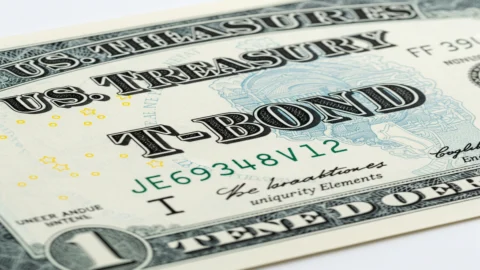
They debated for 22 hours and at the first light of dawn in the United States the Republicans US House of Representatives they found an agreement on the tax package of Donald Trump which should lead to a vote of approval later today.
The bill, which Trump called “big and beautiful” would extend the tax cuts which Trump himself had already started in 2017, but what worries the markets is that it will result in a further increase in debt and that, like even the Secretary of the Treasury The US said it is on an “unsustainable” path. And investors are on alert.
What's in the Republicans' Tax Package
The fiscal package wanted by Trump essentially bites off more than he can chew, with expenses without coverage which could also be supported if thesaving galloped. But, thanks to Trump's own policy on duties, the economy is even seen by many observers to be sliding towards a recession.
The bill would create new tax breaks for wages and auto loans, eliminate many green energy subsidies, and increase spending on the military and immigration. It would also tighten eligibility requirements for food and health programs benefiting millions of low-income Americans.
The main point of disagreement among Republicans themselves was the health care program. Medicaid for low-income families, with some wanting to drastically reduce them, while more moderates saw this as a detriment to the voters whose support they will need in the 2026 congressional midterm elections. But after last night's meeting at the White House, Republicans unveiled a package of amendments containing agreements between Johnson and various Republican factions.
The President of the Chamber Mike Johnson He expressed confidence that the House would approve the bill after a meeting at the White House with Trump and uncompromising conservatives, angry because they would have wanted even more tax cuts that were not in the document. The measure after the vote in the House will be sent to the Senate, led by Republicans. Today's approval would achieve Johnson's self-imposed goal of advancing the bill by Memorial Day May 26th.
Investor Fear Is Worth Returns Over 5%
But what matters most for the markets is that this “happy finance”, as some analysts have called it, would lead to a further increase in debt of the United States, already risen to about 37 trillion dollars, by another 3,8 trillion dollars, according to the independent office of the Congressional Budget Office. According to other independent analysts, the burden would be between 3000 trillion and 5000 trillion dollars.
Last week, the rating agency Moody's revoked the U.S. government's top-tier credit rating, citing the nation's growing debt, and bond market investors got spooked: they are pulling back from funding the Trump administration and they ask for higher returns.
Yesterday a20-Year Treasuries Auction for $16 billion that attracted surprisingly tepid demand. The auction, while not a particularly significant maturity, saw debt sold at a yield that rose to 5,047%, about a basis point above the market level before the sale. Indirect bidders, including governments, fund managers and insurers, took a higher-than-average share of 69%, suggesting that foreign demand remained solid. But overall demand was slightly below average, at 2,46 times the amount of debt on offer, the lowest level since February. After the auction, yields on 20-year debt rose to 5,127%, the highest level since November 2023. Yields on 30-year treasury bonds, which is a gauge of the U.S. government's very long-term borrowing costs, hit 5,108%, the highest level since October 2023.
Tests of the next auctions
Today the focus will be on a new auction on US government bonds, those indexed to inflation with a duration of 10 years. The appointment with the US Treasury auctions moves to the end of May for the medium maturities (two, five and seven years), while in mid-June are scheduled those that most signal the affection of investors: those with maturities of three, but especially 10 and 30 years.
The contagion also spreads to other bond markets
The extent of the concerns for US bonds is such that it cannot fail to infect other similar markets in the world. The focus is on Japanese bond market, as the country has the highest debt-to-GDP ratio among all major economies. The yield on 30-year Japanese government bonds stood at 3,155%, not far from the all-time high of 3,185% reached in the previous session, while the 20-year yield hit 5,126%, the highest level since November of that year. But yields on European bonds: those of the German government bonds long-term bonds hit their highest level in two months, with the 10-year rate rising to 2,64%. The Btp to 10 years rose to 3,64%
Even Bessent considers the debt path "unsustainable"
Il bad mix of increased debt due to increased spending to which is added the increased cost of maintaining it due to the increase in yields leads to unspeakable scenarios. A few days ago the same Secretary of the Treasury Scott Bessent told U.S. lawmakers that “the path of the national debt is unsustainable“, adding that it is “very difficult to know” the turning point where investors will “rebel.”
While current U.S. yields, in the 4% to 5% range, are close to the levels prevailing prior to the 2007 financial crisis, the real the difference is made by the debt and the deficit which are now exponentially larger.
A look at the fiscal deficit reinforces why the bond market is anxious. public debt ratio total of the United States and size of the economy is around 100%, according to the Congressional Budget Office. The only interest payments amounted to about $880 billion in 2024, according to CBO data, even exceeding the defense budget.
The amount of Treasury securities outstanding has soared to nearly $30.000 trillion from less than $14.000 trillion at the end of 2016, following tax cuts passed during Trump’s first term and a surge in borrowing during the Covid pandemic under both Trump and former President Joe Biden. Gross annual sales of government bonds hit a record $2.600 trillion last year, according to bond market watchdog Sifma.
A much more significant deadline looms this summer, when the Treasury Department will run out of funds to cover its obligations unless Congress increases thedebt ceiling self-imposed. Failure could trigger a devastating default. Republican lawmakers argue that the bill will pay for itself by stimulating growth. Which in turn looks set to run into trouble because of tariffs imposed by Trump himself.