A few months for the first field tests, a few years (maybe a couple) for the official large-scale debut. The new revolution of TV broadcasts takes shape: goodbye to digital terrestrial which will be replaced by transmissions with technology new cellular networks fifth generation (5g). It is good news? Yes, for a number of reasons. Digital terrestrial uses a old technology and not very efficient: it allows a relatively small number of bits to be transmitted, occupying many radio channels, which in the meantime have been reduced precisely to feed the growing need for cellular telephone frequencies.
So why not take advantage of fifth generation telephony, more modern and efficient and in any case destined to enter everyone's homes, to also convey television signals? There “5G broadcast” revolution it can be explained like this. But when will it really arrive, how and with what practical consequences and related tasks for all of us?
The advantages: more quality and TV always with us
No new sim card to buy but just a decoder-modem costing a few tens of euros at most, to be placed alongside our current television before the new TVs directly integrate the 5g interface. And the new transmissions will be also visible from our cell phones even if we don't insert a SIM. Simple “receivers” in short, which will use 5G networks but with the same principle of the "only direct transmission to all" (broadcast, in fact) which can be unencrypted or encrypted, in the case of current and future pay TVs.
In terms of convenience, the advantage is clear: television will follow us faithfully even on our mobile phone or tablet. The quality will increase, considering the critical issues of current technology, pressured by the need to use increasingly advanced compression algorithms with the increase in TV channels and the decrease in the radio band available for digital terrestrial.
Will the current latest generation mobile phones be suitable or adaptable to the new television? Probably yes, experts say. Those equipped with the latest Qualcomm chips (Apple and many high-end Android devices) could be enabled with a simple software update.
The times: debut with the Jubilee and Milan-Cortina
The international specifications of the transmission system and use by the devices were definitively established in March 2022 with the 5g-3GPP Release 17 specifications, which include, among other things, the dedicated use of specific portions of the 5g band for TV broadcasts between 470 and 694 MHz, independent of the radio channels dedicated to 5G telephony, also to avoid any danger of saturation of "normal" 5G cellular services. Resources judged by the technicians to be more than abundant even for the Future developments, thanks to the limited bandwidth requirement of a single radio channel transmission for a transmission that can be used by all compared to the use of a single channel for each user which characterizes 5G voice or data communications.
Le experiments have already begun by many European cellular and television operators. The first practical applications are expected as early as the beginning of next year across Europe, starting from the tests already carried out with the current LTE cellular networks with rather disappointing results given the problems of latency and average speed in data transmission. Problems that 5G technology should largely solve.
France and Germany they promise to burn the times, the first with the summer Olympics next year and Germany with the European football championships. In Italy an experimental launch of 5G broadcast is announced in parallel with the current digital terrestrial broadcasts with the Jubilee of 2025 and in any case with the Winter Olympics Milan-Cortina of 2026. A taste could arrive very soon, as early as the middle of this month with a live demonstration of the system during the UltraHd Forum Italia in Milan.
The opportunities: one market six integrated services
Revolution in technology, but also in the telecommunications services market. The integration of 5G with television opens up the development of new services and new convergences between the two contiguous worlds, both in the products to be offered to customers and in the synergies and corporate alchemy between TV and TLC operators. Even more advanced infrastructure management than what is already being implemented, combined offers, packages between minutes of conversation and Internet and payTV connections. But also a push for organic alliances between the two business families or even integrations and consolidations between them.
The unknowns: nets to complete, the fear of the waves
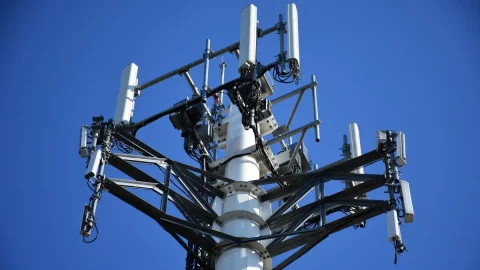
5G broadcast can be used both with an adaptation/extension of the current mobile phone "towers" and repeaters and with dedicated transmission systems, even if the first solution would seem the most natural. But there are some problems. There is no point in hiding it: in Italy, as in many European countries, 5G is still far from full coverage of the entire territory even if in the last 12 months the acceleration of infrastructure has been evident. The financial problems of the operators, strangled by the 5G license costs sustained in the past and the competitive dynamics which have led to a containment of final tariffs, reducing the profitability of companies in the sector with a consequent brake on investments in networks.
Of course, the 5G television infrastructures will have to be remunerated: the mechanism is still to be defined in detail and this could give some oxygen to both the mobile phone operators, for whom the implementation of 5G broadcast is all in all simple and relatively inexpensive. expensive, both for television operators who will be able to abandon their current commitment to digital terrestrial towers after a necessary period of coexistence and transition.
The problem remains perception of dangers (or presumed to be so) linked to the proliferation of 5G transmissions. Delicate issue, still very current, prey to meetings and clashes under the banner of certainly legitimate arguments but often undermined by lack of knowledge of the topics and by evident pseudoscientific speculation.
With a minimum of technical awareness, it can however be stated that the migration of digital terrestrial to 5G will not lead to an overall increase in emissions to which the population is subjected, precisely due to the "broadcast" characteristics of this technology which does not provide no emissions of electromagnetic waves from the user's device, which receives but does not transmit anything. Indeed, it is plausible that the evaluations of the technicians, with related measurements in the field, could even demonstrate that with 5G technology the overall electromagnetic pollution, in the case of the dismantling of the current digital terrestrial and related transmission stations (which especially in large urban centers have sparked quite a few protests in the past, even those with proven merit) may even decrease.