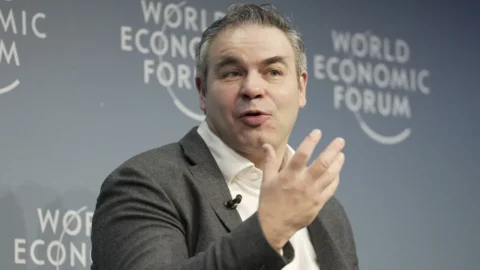
We are well beyond the four, five weeks of the conflict that Donald Trump had predicted at the beginning of Operation Epic Fury. The scenarios are therefore beginning to incorporate a deadline for the end of hostilities well beyond the middle of the year. Strait of Hormuzz will continue to remain the nodal point for the global economy and the world of transportation, from maritime logistics to air travel, will consequently become the seedbed for the effects of the ongoing energy war. Marc Levinson, historian and economist from Washington, is one of the best-known commentators on issues related to globalization, and is the author of the best-seller “The Box: How the Shipping Container Made the World Smaller and the World Economy Bigger”, who explained how shipping containers have revolutionized world trade and the more recent Outside the Box: How Globalization Changed from Moving Stuff to Spreading IdeasRising oil and gas prices are already squeezing consumer spending around the world. Freight rates will adjust very quickly to changing market conditions, while the disruption to fertilizer shipments risks having a truly profound impact on food production in the coming months.
The naval blockade around Hormuz could last well beyond the middle of the year.
“Fertilizer price increases could prove the most long-lasting, especially if there is physical damage to production facilities or associated natural gas infrastructure.”
If the conflict is resolved, how long would it take for energy-related transportation and logistics to return to normal?
It will depend on the extent of minelaying in the Persian Gulf and how quickly the routes can be cleared to a level that reassures shipowners and insurers. Shipping adapts very quickly to changing conditions, but repairs to damaged pipelines and terminals could take much longer.
Would a prolonged energy shock hit Western consumers the hardest, or would it hit emerging economies with more fragile balances of payments first?
We're already seeing some countries feeling the effects of rising oil prices more than others. Some emerging economies have invested heavily in renewable electricity generation, and this will protect them from higher oil prices. Conversely, there are emerging economies where gasoline and diesel are heavily subsidized; their governments may not be able to maintain prices at those levels if the market price of oil remains high.
In a scenario of open global energy competition, will China still act as a systemic stabilizer or does it risk becoming a potential shock multiplier itself?
China has many domestic concerns, including slowing growth, high youth unemployment, and a fragile financial system. Under these conditions, it is not in a position to act as a systemic stabilizer. The best thing it could do to stabilize the global economy would be to limit local and provincial subsidies to manufacturers, which have generated massive overcapacity in many industries. This would help reduce China's massive trade surplus, as well as its demand for fossil fuels, and would ease pressure for protectionist measures in other countries. However, I do not expect the Chinese government to take such an initiative anytime soon.
Financial markets have so far reacted relatively calmly to the Gulf crisis. Are stock market prices reflecting all the real risks to the global economy?
“I believe one of the reasons why stock markets have generally held up well lately is that fears about inflation and high levels of government debt are making bonds less attractive to investors.”
Will energy supplies reshape the globalization of world trade?
In the short term, energy supply constraints will impact globalization in several ways: by reducing international tourism due to higher jet fuel prices, by limiting food trade as rising fertilizer costs slow production, and by squeezing demand for consumer goods as households devote a greater share of their income to gasoline and electricity. I don't expect these effects to last long or to significantly impact trade in manufactured goods.
Why?
“Significant capital appears to be flowing into the energy sector, and if energy exports from the Persian Gulf countries remain depressed, we could expect increased oil and gas production elsewhere, along with greater investment in renewable energy sources.”