I European and American retailers they look to the future with growing concern. Their market share is being eroded at an accelerated rate by the advance of Chinese online marketplaces. From platforms like Shein e Temu arrive on global markets, clothing, household items and all kinds of products at ultra-competitive prices supported by punctual deliveries and often free even for orders of minimum amount and one simple and advantageous returns policy. This is an offer that is winning over more and more consumers: these marketplaces not only guarantee rock-bottom prices, but also build customer loyalty with services such as credit in the event of non-delivery by the promised date, an indemnity which may even exceed the value of the purchase.
Shein, what it is and how it works
Born in 2008 in Nanjing on the initiative of chris xu, Shein has established itself as one of the e-commerce platforms of fast fashion most popular in the world. Initially specialized in the sale of wedding dresses, has been able to expand its offering to include clothing for men, women and children, as well as accessories and household items. Thanks to intense activity on social media and collaborations with internationally renowned influencer, Shein has managed to gain a large audience globally. It therefore happened that Shein took away market shares from traditional clothing giants such as Zara e H&M. Shein's growth has been such that it is scheduled to be listed on the stock exchange by 2024, probably on the London list.
Temu, what it is and how it works
Temu, founded in 2020 by the same people chris xu it is a social commerce platform similar to Shein, but with a wider and wider variety of products ranging from stationery to electronics up to everything imaginable. Its intensive marketing strategy, which includes successful advertising campaigns such as the commercial broadcast during the Super Bowl this year, has helped increase its visibility well beyond its domestic borders (see Figure 1).
The key factor of competitive advantage
The campaigns targeted on TikTok and streamlined supply chains have helped increase the appeal of Temu and Shein, fueling their rise in the social commerce landscape. However, this success aroused fears among Western sellers, which identify some unfair competition practices in these platforms.
A key factor in Temu and Shein's competitive advantage lies in their shipping policy. Shipping the orders in small packages directly to consumers, they manage to evade the customs duties, thus maintaining prices that are difficult to match. However, this practice is based on the circumvention of “de minimis” regulations implemented by the EU, US and UK. These rules establish a value threshold below which imported goods are exempt from duties.
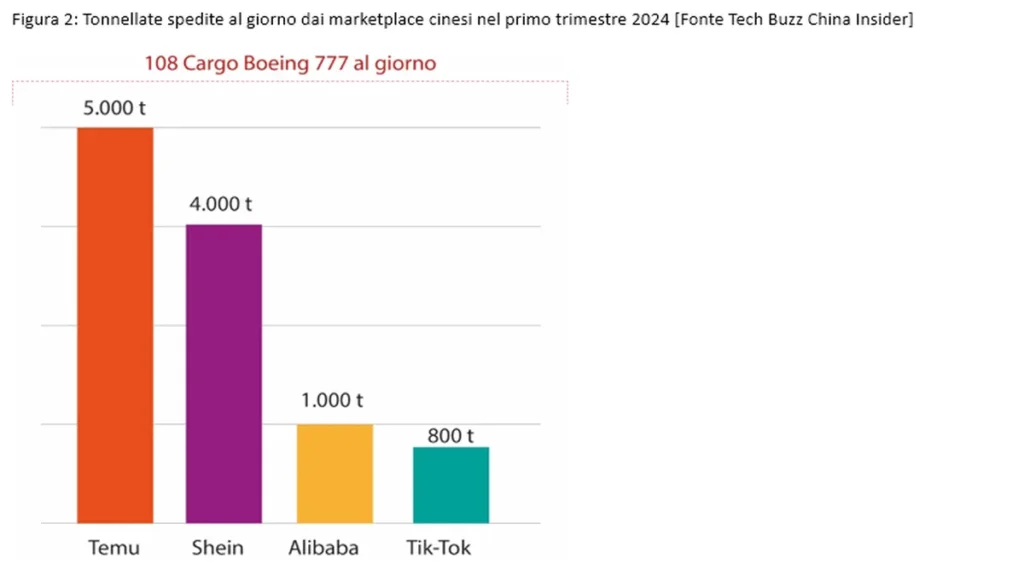
While designed to ease the burden on small businesses and households for low-value shipments, these thresholds are often used to circumvent customs charges, creating an unequal playing field between the various players. In addition to the economic aspect, the concerns also extend to the social and environmental implications of this business model. Frequent shipments of small packages generate significant shipping volume (see Figure 2) to packaging waste, with a huge impact on the environment. Furthermore, the working conditions in the distribution centers of these companies are often criticized for being lacking and lacking the strict regulations that apply in the West.
The EU and the idea of reviewing the "de minimis"
The European Commission is now evaluating the abolition of the 150 euro threshold. US politicians are also considering lowering or removing their generous $800 limit.
There are two reasons for these considerations. The first is to avoid what is considered unfair competition against national retailers.
The second is counter Chinese suppliers, who may be circumventing product safety, human rights and environmental regulations, to the extent that their packages are subjected to fewer border checks. The fact that the West is engaged in a broader trade dispute with Beijing This is perhaps another reason. The authorities, however, have a more solid position on the ethical and safety level than on that of unfair competition towards local retailers. Which is not unfair, in fact Shein and Temu have simply perfected a business model that exploits a sort of legal exemption based on well-founded reasons.
An example of this is the announcement, released last week by Amazon, of plans to replicate the same model with direct shipments from Chinese warehouses. This strategy offers consumers – especially in times of economic difficulty – access to cheaper products and a wider range of choice. However, competition in the retail sector remains strong.
The question of security
It is essential to protect consumers from purchasing potentially dangerous products. A European toy industry organization recently found that 18 out of 19 toys purchased on Temu presented real safety risks for children. The “de minimis” rules must not become one shortcut to entry into Western markets of articles coming from unethical sources. Shein, for example, has faced allegations of forced labor within its supply chain, allegations the company firmly denies.
However, a significant restriction of the "de minimis" relief would lead to inevitable negative consequences. In fact, they would increase costs for domestic consumers, small businesses and families, hindering trade even with developing countries. Furthermore, the adoption of retaliatory measures by the nations concerned cannot be ruled out.
How to protect yourself
To combat the entry of potentially dangerous products into the European Union, actions such as the following should be implemented. Accelerate proposals that place responsibility on platforms like Shein and Temu. The latter should ensure that sellers on their platforms comply with EU standards. Consider marketplaces as official importers. This would entail the obligation to carry out due diligence on the quality of products and their sources of supply. Strengthen the EU's control capacity so as to introduce sanctions for platforms that violate the rules. Sanctions could include fines, reductions in privileges and product bans, until compliance is demonstrated.
Despite the intentions of the European bloc, the British Labor Party does not intend to eliminate the "de minimis" exemption. Shein, which is considering a listing in London, will still have to meet high standards corporate governance, also due to pressure from shareholders. Ultimately, persuasion is believed to be the most effective tool for convincing people Chinese e-commerce giants to adapt to Western standards of product and work safety. Eliminating customs exemptions may be too drastic an approach.
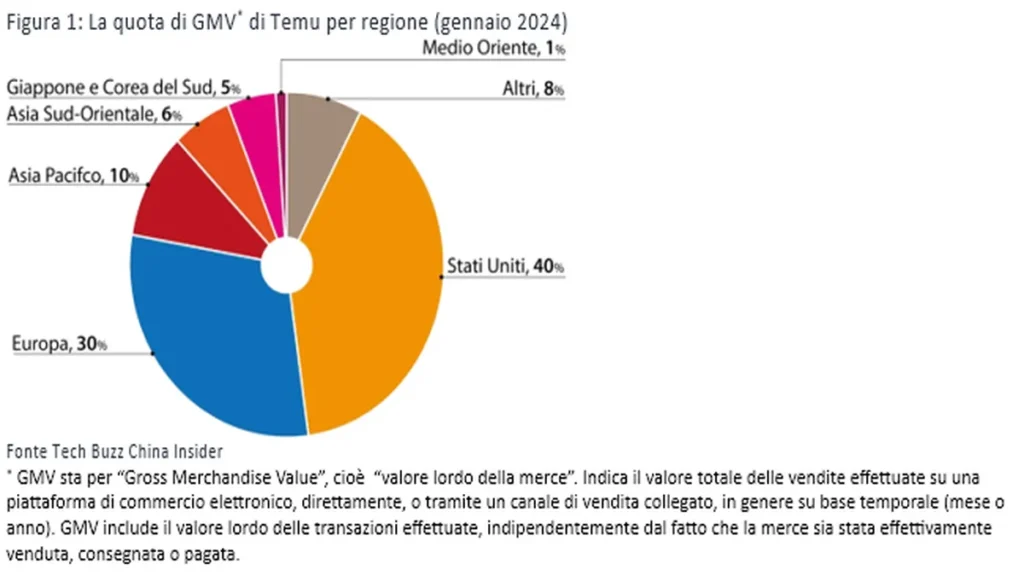
Source Tech Buzz China Insider
- GMV stands for "Gross Merchandise Value". Indicates the total value of sales made on an e-commerce platform, directly, or through a connected sales channel, typically on a time basis (month or year). GMV includes the gross value of transactions made, regardless of whether the goods were actually sold, delivered or paid for.