The squeeze on border between Italy e Spain continues. The government by Giorgia Meloni has decided to extend for another 15 days, until September 15th, the border controls air and sea restrictions for travellers arriving from Spain. The measure, introduced on August 1st following the migration crisis in the Spanish exclave of Ceuta, which was due to expire today. Madrid, for its part, has chosen to extend controls on travelers from Italy for the same period.
Italy's decision was expected on the eve of the deadline. The Ministry of the Interior announced it, explaining that the extension was adopted based on the analysis of the Committee for the Analysis of Immigration and Border Security. According to the government, the factors that led to the reintroduction of controls in early August remain in place, although Rome recognizes the initiatives already undertaken by Spain, together with the European Union, to gradually restore the situation to normal.
The migration crisis in Ceuta
The Italian decision was prompted by the migration crisis that has affected Ceuta, the Spanish exclave located on the North African coast and surrounded by Moroccan territory. At the end of July, over 70 people arrived in Ceuta in a single day, mostly by sea but also by land. Most returned to Morocco within hours.
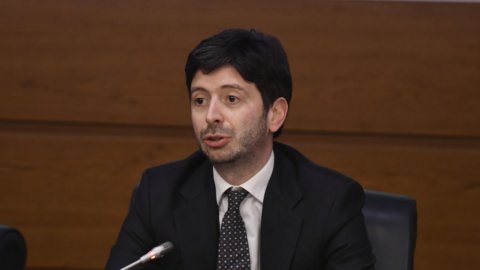
For the Italian government, however, the situation had not yet been sufficiently normalized and the risk associated with the migration crisis remains sufficient to justify temporarily maintaining controls. The assessments underlying the extension were outlined by the Minister of the Interior. Matteo Piantedosi to his Spanish counterpart Fernando Grande-Marlaska During a phone call described by the Interior Ministry as "constructive." "I trust this could be the last" suspension of free movement, Piantedosi said on the sidelines of an event in Naples, explaining that a further extension would not be necessary if the situation were to return to normal. The minister also reiterated Italy's willingness to "work in any way with Spain and the European Union."
Even the foreign minister Antonio Tajani He defended the extension, calling it a temporary measure motivated by the need to ensure the security of Italian and European borders and prevent possible infiltration, "starting with jihadist infiltration." Tajani reiterated that Italy will continue to collaborate with European Union countries and Spain to combat illegal immigration and instead promote controlled and regular migration flows.
The clash between Rome and Madrid
Italy's decision had already sparked a bitter diplomatic confrontation with Madrid. The Spanish government had strongly criticized Rome's decision, even summoning the Italian ambassador, and had rejected the idea that the events in Ceuta could justify the controls introduced by Italy. According to the Spain, the measure it would have been above all policyMany of those who arrived in Ceuta had in fact returned to Morocco in the following hours, and furthermore, there is no land border between Italy and Spain. Madrid also emphasized that specific document control regulations already exist for those leaving Ceuta and wishing to reach mainland Spain. The exclave does not have a commercial airport, and connections to the mainland are primarily by ferry.
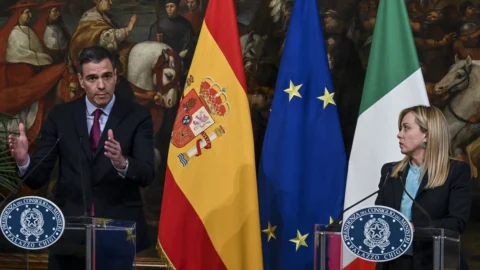
After Rome rejected Spain's request to withdraw the controls, Madrid he had responded by introducing in turn checks on travellers coming from Italy from August 8th, initially for a month. The measure would have expired on September 7th, but the new Italian decision has pushed the government to Pedro Sánchez to extend it for another 15 days, for reciprocityThe standoff between the two countries thus dragged on into September, while the Ceuta migration crisis, which triggered the initial measure, remained in the background.
A political choice too
The affair also has a domestic political dimension in Italy. The reintroduction of controls allows the Meloni government to demonstrate a particularly rigid line on fight against irregular immigration, on a theme that continues to be central in the political debate and on which the executive is being pressed on the right by the general's new party Roberto VannacciMadrid, on the other hand, has repeatedly accused Rome of exploiting the Ceuta crisis for political gain. For now, therefore, free movement between Italy and Spain remains formally in effect, but with temporarily reinstated controls: the extension will last another 15 days. The hope is that this will truly be the last.