The long-awaited trade agreement is signed in Paraguay today. between the 27 countries of the European Union and the 5 that make up the South American bloc of Mercosur (Brazil, Argentina, Uruguay, Paraguay, and recently Bolivia). An agreement sought for over 25 years and now finally put down in writing in the country holding the rotating presidency of Mercosur, in the presence of the President of the European Commission Ursula Von der Leyen and her South American colleagues, with the exception of Brazilian President Lula, who was among the great supporters of the agreement and who, on the eve of the agreement, claimed the "victory of multilateralism" when receiving Von der Leyen in Rio. Pending ratification by the European Parliament and the parliaments of various countries, including Italy, the treaty must be viewed in perspective, given that the elimination of customs tariffs which scares some production categories In reality, it will happen very gradually, only coming into full swing in about fifteen years.
The world's largest free trade area is underway
For now, we only know that the world's largest free trade area is about to be created, representing over 700 million people and a quarter of global GDP, or more than $22.000 trillion when all the economies involved are combined. For our part, there will be the opportunity to more easily export industrial products, from automobiles to machinery to pharmaceuticals. On the other hand, we will be able to import food raw materials at lower costs, although this understandably worries our agricultural sector, which fears competition from low- or very low-cost products on the domestic market. Indeed, South American agricultural production benefits from lower labor costs and, more importantly, is not subject to strict health and environmental regulations—although it will be with the agreement. Just to give you an idea, currently 37% of the pesticides used in Brazil, Mercosur's largest economy, are banned in Europe.
Parma Ham and Prosecco Banned, Parmigiano Reggiano and Others Are Reserved
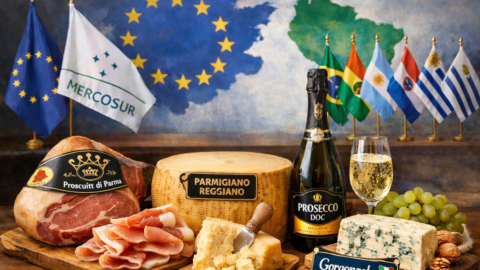
For this reason, import quotas have been established to protect our businesses, as well as so-called "emergency brakes": Brussels will be able to reintroduce duties if the price of South American goods were to fall below a certain threshold, preventing fair competition. A further provision has been established:the protection of 358 European PGIs, of which 57 are Italian, including 31 wines And then there's cheese, cured meats, and other Made in Italy products: goodbye to fake Parma ham, whose name will be strictly prohibited in supermarkets in Brazil, Argentina, Bolivia, Uruguay, and Paraguay. Also banned are mortadella Bologna, salami Milano, and Prosecco. A handful of our specialties, however, will continue to be sold under their own name, but without indicating their Italian origin on the packaging: these include Gorgonzola, Grana Padano, Parmigiano, and Fontina. On the other hand, genuine Italian products will find an attractive new outlet: just think of wine, which currently faces a 27% tariff to enter the South American market.