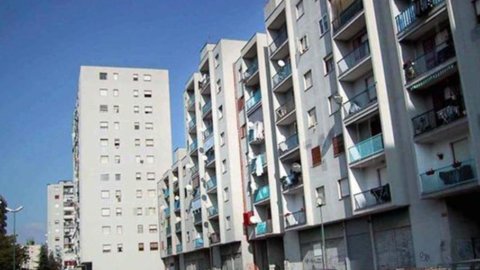
Signs for rent in Italy are increasingly rare, but few have noticed it. Everyone is discussing Imu, the fruit of the sin of the current executive. But the rental market, although less important than the sales market, remains a key issue both economically and socially. The real estate crisis, with owners who paid over 51 billion euros in taxes on their homes last year, has also sunk the rental market, which collapsed by 30 percent. This is why the government has decided to put the revival of rents on the agenda
The executive should already take care of it at the end of the month, when the housing plan will be discussed by the Council of Ministers. Total cost of the operation, according to estimates cited by Corriere della Sera, 500 million euros. The goal is to ensure housing for that segment of the population that is not well-off, but not even poor enough to be included in the allocation of social housing.
Three proposals are currently on the table, accepted in part by the Senate Finance Commission, in part by an agenda supported by the government during the examination of the work decree at Palazzo Madama, all discussed with Confedilizia.
The priority seems to be the restoration of the 15 per cent deduction for Irpef purposes for rented properties. This move alone could cost the state 365 million euros.
The second proposal concerns the dry coupon, the single tax which, if chosen, replaces the other taxes. In this case the operation is much less burdensome for the public finances – a few tens of millions of euro – and has already been successful (lease contracts have increased significantly since its introduction in 2011), but it should be reformulated and simplified.
Dulcis in fundo, the Imu. The tax on rental houses for landlords has increased. The proposed solution is to fix the IMU rate for rented houses by law at 4 per thousand. Cost of the manoeuvre: 70 million euros.
The government's housing plan, which will be able to start as early as the autumn, is divided into three fronts: the implementation of the banking system, for the release of mortgages to families and construction companies; the subsidy fund for young couples and families with unstable incomes; rental incentives.