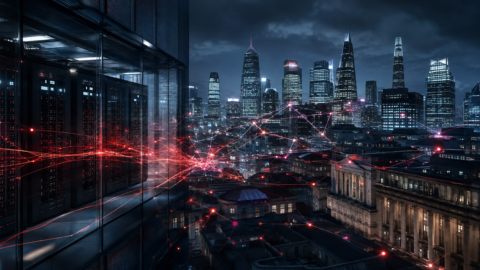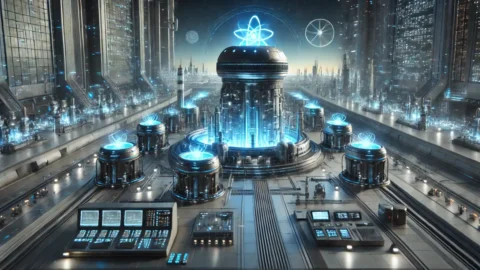
To each his own SMR nuclear reactor. To be placed near the new energy-hungry hubs of artificial intelligence. These are the new and incredibly powerful data centers. But they won't be left alone. In the new techno-territories, they will act as aggregators for the relocation of traditional industrial hubs, from automotive to steel. They will need to work in synergy with traditional power plants, and will be combined with the hoped-for new development of renewable energy, which, however—EU strategists warn—will certainly not be enough to satisfy the hunger. This is also because Europe will need to be protected from the much-feared energy instability triggered by the geopolitical scenarios of the new millennium.
The European Commission has therefore launched a four-week public consultation – which will formally end on 4 December but extensions are not excluded – to define a common strategy among three member countries on the technology that should mark a concrete return of Europe to nuclear energy, that of Small Modular Reactors (SMR) which fortunately sees Italy in a good position, thanks to ENEA, both in research and in the creation of industrial prototypes.
Our current government believes in it, and has launched the new Italian nuclear strategyEven some fringes of the opposition parties believe in it, albeit with a thousand timidities, despite the fact that the challenge appears arduous, on the technological front but also (and perhaps above all) on the consent of a population accustomed to looking with distrust and suspicion at any major project, even more so when it comes to critical infrastructures.
The path traced by EU strategists
A commitment is taking shape among EU member states to develop a comprehensive plan for the installation of new SMR reactors, including combinations to build new large-scale power plants. Indeed, the National Energy and Climate Plans (NECPs) themselves are being updated in this direction. This has a significant shared strategic and technological focus: the emergence of new nuclear power must also serve to develop hydrogen production and storage as a solution for efficient and cost-effective energy storage. Only in this way—they emphasize in Brussels—can we build a truly "green" energy system that maximizes the use of renewables, addressing their structural limitation, namely their limited programmability.
The hunger is great. It foresees the last Agici study on the sector scenarios that by the end of this decade the growth of data centers in our country will multiply their demand for installed electrical capacity at least threefold, going from around 600 megawatts (MW) today to at least 2 gigawatts (GW) thanks to cumulative investments between 17 and 28 billion euros with a proportional positive impact on GDP also thanks to the creation of at least 70 thousand direct and indirect specialized jobs by 2030.
An energy hunger lacking in alternatives
The pressure on national electricity demand appears manageable, considering overall consumption. Growth in the sector will drive an estimated increase in electricity demand from 7 terawatt-hours (TWh) last year to at least 20 TWh in 2030, representing an increase of approximately 6% in national electricity consumption. However, this is a qualitatively delicate and sophisticated requirement. Data centers require a constant and uninterrupted supply of energy, which is difficult to reconcile with the characteristics of electricity generated from renewable sources unless a powerful battery storage system is used to ensure reliability and consistency.
This is why leading analysts are entrusting nuclear with the task of providing a vital "base load" to meet this new energy demand, naturally in synergy with the growing reliance on renewables to feed into the national electricity system. And it is precisely the characteristics of the new SMR mini-reactors that constitute the ideal solution, according to Brussels strategists, to most cost-effectively accommodate the growth of artificial intelligence infrastructure, and more generally the shrinking world of telematics networks.
The new mini-reactors could be gradually installed right next to the new hubs, to feed them directly, avoiding the uncertain costs of complex national grids. But they will naturally be connected to the national grids, supplying part of the country's general needs. And this is precisely one of the critical elements of the challenge: the harmonious planning of the new IT infrastructure and the territorial planning of the new nuclear power plants. all the unknowns linked to the plans for Italy's return to nuclear energy, which the current government seems to support with great determination.
Hot operational advice coming from abroad
Let's take a tech giant, Google. Let's take the colossus of hunger for science and its applications, America. While waiting for new reactors, this hunger is evidenced by a seemingly dangerous, yet bold, strategy: meanwhile reopening the old, closed or "suspended" nuclear power plants.
Google has just announced an agreement with the American group NexEra Energy to restart the Duane Arnold nuclear power plant in Iowa, which was commissioned in 1974 and shut down in 2000 at the end of its theoretical lifespan, by the first half of 2029, after necessary testing and modernization. This industrial resurrection operation will serve—they reassure us in a joint statement—to "meet AI's growing energy demand with reliable, nuclear power."
This is the third such operation, following the planned reopening of the Palisades plant in Michigan in 2023, and even (in 2024) the Three Mile Island plant in Pennsylvania, sadly infamous for having afflicted America in 1979 with the most serious nuclear accident in the history of the most technologically advanced and energy-hungry country on earth. Reactor 1, the last to be shut down in 2019, will be reactivated – Google and its partners announce – by 2027, after a series of projects costing $1,6 billion. Energy hunger is expensive. But evidently it's worth supporting.
A push that comes from the entire planet
The interest in new nuclear power, even among countries traditionally dependent on hydrocarbons, such as Saudi Arabia, is no secret. They are looking ahead. However, starting from a solid foundation. Global nuclear power generation capacity stands at 369 GW this year, covering approximately 10% of global electricity demand. It will soon begin to grow again, strongly, thanks to the plants currently being reopened (not only in the United States but also, for example, in Japan) and thanks to new projects in over 40 countries involving new small modular reactors. Overall, nuclear power plants with a new capacity of 70 GW are under construction or reactivated, reaching one of the historic peaks of the last 30 years.
Europe remains a key player in all of this, despite the real or perceived demobilizations of the past two decades. Member states have an installed nuclear capacity of approximately 36,5 GW with 100 reactors, just over a quarter of the global capacity, which rises to approximately 32% when including the United Kingdom, Switzerland, and Ukraine. France remains the undisputed leader, still generating over 70% of its electricity from nuclear power. And even Germany, which stopped producing nuclear power in April 2023 after much hesitation, may now seriously reconsider.