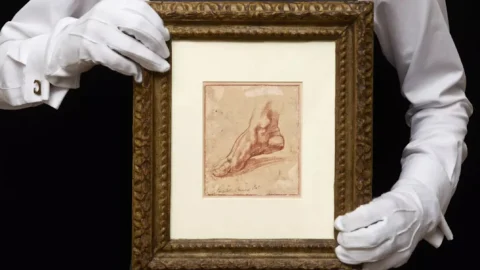
The drawing depicts the right foot of the Libyan Sibyl, one of the most famous and complex figures of the vault, located in the eastern part of the Chapel. This discovery is particularly significant for several reasons. It is the first study for the Sistine Chapel ever to appear on the market It is one of only ten drawings by Michelangelo known to be in private hands. Of the artist's approximately 600 surviving drawings, only about fifty concern the Sistine Chapel, making this drawing an extraordinary document of the preparatory phase of one of the most celebrated masterpieces in the history of art. Christie's will offer the drawing on February 5, 2026, during the live auction of Old Master Drawings in New York, with an estimate of $1,5 to $2 million. Prior to the auction, the drawing will be exhibited in Christie's free galleries at Rockefeller Center and will also be on view in London from November 27 to December 2, 2025.
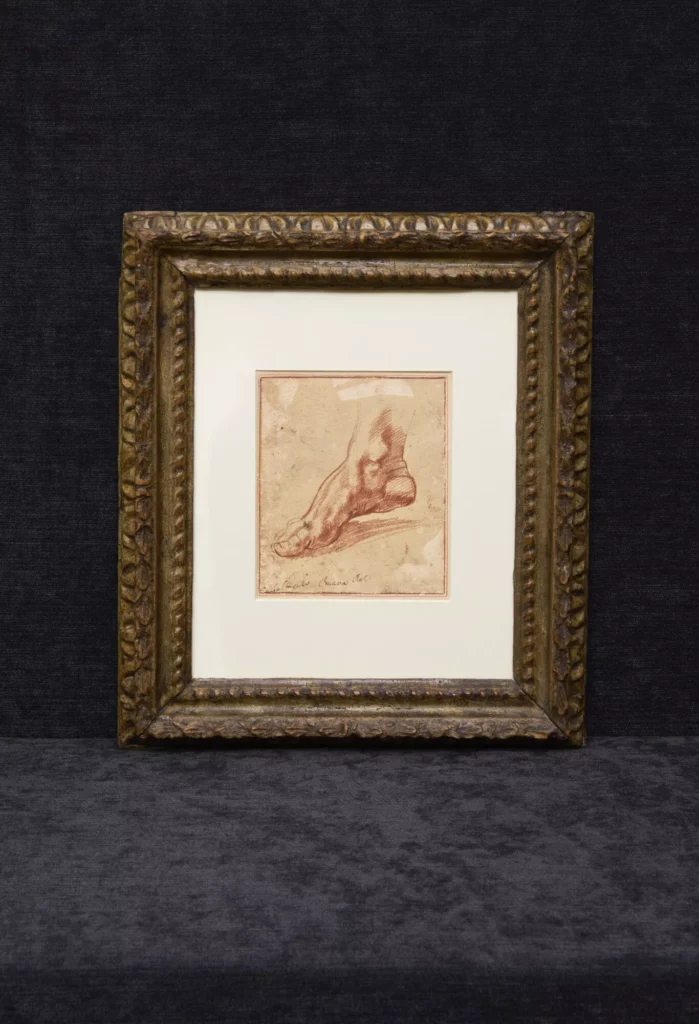
The drawing: Sibyl's right foot
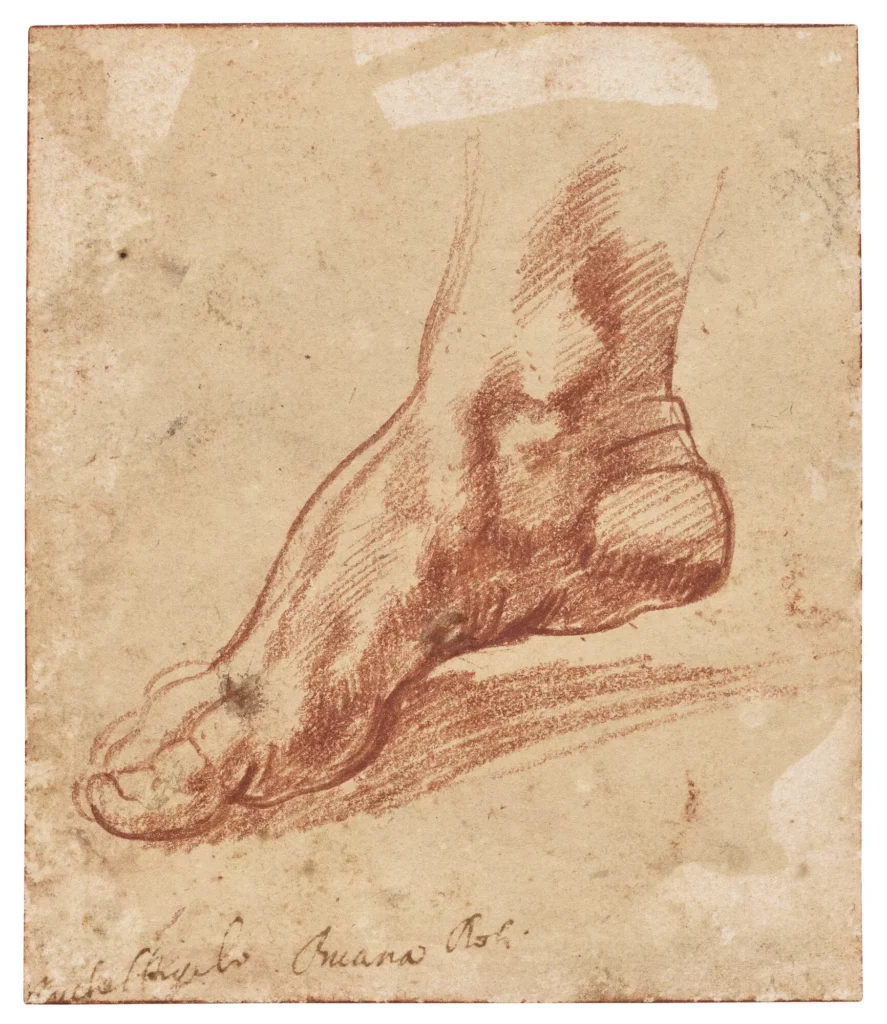
The sheet, datable around 1511-1512, shows the Sibyl's right foot in an extraordinarily complex pose, with her toes pressing against the supporting platform, expressing the weight and monumentality of the figure, which measures three times human size. Made in red sanguine, the drawing is distinguished by its anatomical precision, bold lines, and Michelangelo's typical expressive power. Subtle corrections are also visible on the sheet, a sign of the artist's creative process as he studied and adapted the position of the foot in relation to the Sibyl's body.
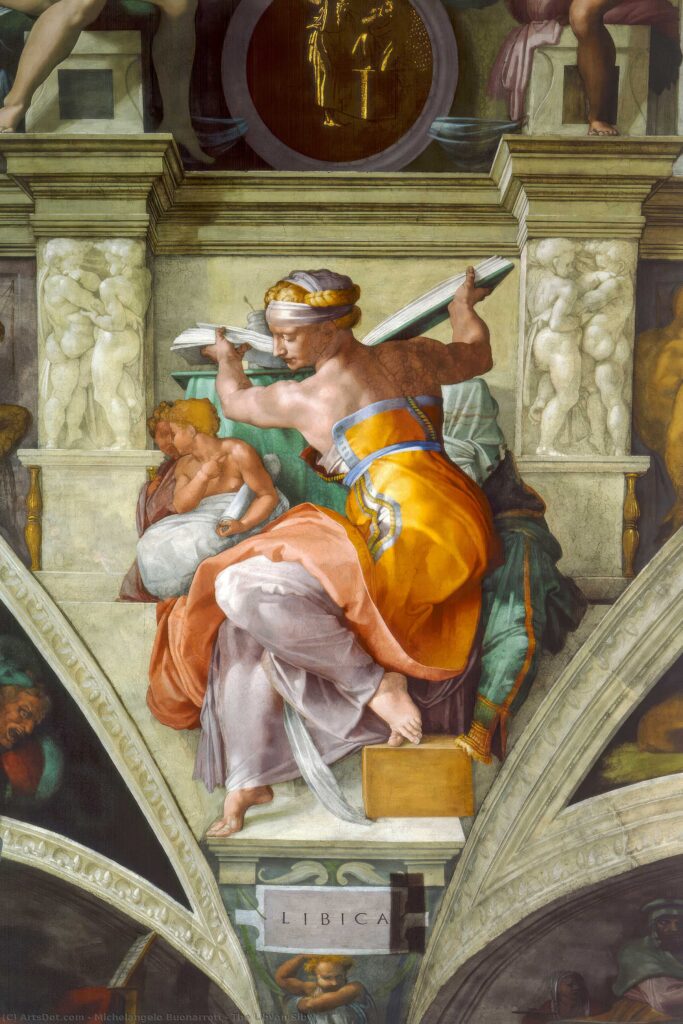
The Discovery: An “Incognito” Masterpiece on the West Coast
The story of the discovery is as fascinating as the work itself. In March 2025, Giada Damen received an alert on Christie's website: a person had requested an appraisal of a drawing, submitting a photograph. The drawing depicted a foot, mounted and framed alongside another drawing, and originated on the West Coast of the United States. The current owner, who chose to remain anonymous, had inherited it from her grandmother, unaware of the artist, although the sheet had been passed down in her family in Europe since the 18th century. As soon as Damen saw the photograph, she sensed the exceptional quality of the drawing, but decided to proceed with caution. After flying to examine the work in person, her excitement only grew. With the owner's permission, Damen took the sheet to Christie's New York, beginning six months of in-depth investigation. The drawing was photographed using infrared reflectography, revealing hidden studies on the back of the sheet, invisible to the naked eye. These studies were consistent with those of a 16th-century Italian artist close to Michelangelo and showed similarities with a famous sheet in the Metropolitan Museum of Art in New York, containing studies of the Libyan Sibyl. After careful comparisons, Damen noted that the foot depicted in the Christie's drawing complemented the studies already known at the Met. Final confirmation came when placing the two sheets side by side: the similarities in technique, linework, and sanguine are unmistakable.
Evidence and history of ownership
The drawing bears on the back further anatomical studies in black charcoal, similar to those present in the Met sheet. Furthermore, bears a distinctive inscription in brown ink: “Michelangelo Bona Roti", The same one that appears in other drawings by the artist, including those held at the Metropolitan Museum. The drawing's provenance can be traced from Michelangelo's circle in the 16th century, through 17th-century Italian collections, and finally to Armand Louis de Mestral de Saint-Saphorin (1738–1806), a Swiss diplomat in the service of the King of Denmark, before reaching the present-day American family. For centuries, the sheet remained in private hands, unknown to scholars and never appearing on the market.
A unique opportunity for scholars and collectors
The discovery of this drawing is not merely a commercial rarity: it represents a significant contribution to the study of Michelangelo's creative process and the creation of the Sistine Chapel. It offers rare firsthand evidence of the preparatory phase of one of the most complex figures in the ceiling, allowing us to better understand the master's approach to the human body, posture, and dynamics of movement in his monumental compositions. In a world where most of Michelangelo's drawings are held in museums, the opportunity to admire a previously unseen drawing like this on public display, and subsequently see it enter a new private collection, is an extraordinary event, capable of stirring emotion among scholars and the general public alike.