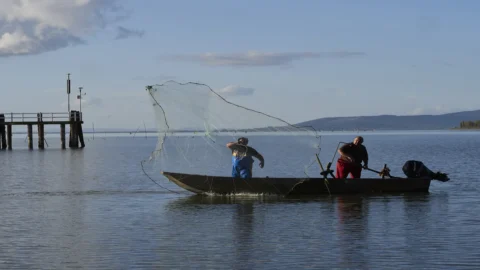
For three thousand years now nothing seems to have changed in the traditional fishing of Lake Trasimeno which yesterday as today occurs with a type of passive fishing, the nets are spread and the fish, as it moves, is expected to remain trapped in the meshes. “It has worked like this since man began to inhabit the shores of the lake and go out by boat” underlines Aurelio Cocchini, a fisherman for forty years.
The fourth largest lake in Italy, Trasimeno is a particular freshwater basin, characterized by an average depth that does not reach five metres: a lake that suffers from water scarcity but where there is no shortage of fish precisely because there is no intensive fishing has never been practiced.
Due to these historical and cultural characteristics, the traditional fishing of Lake Trasimeno has become part of the family of Slow Food Presidia of Umbria. «The opportunity to become a Slow Food Presidium – says Guido Materazzi, – comes at an important historical moment, in which the fisherman's profession needs to combine tradition and innovation, good practices and economic sustainability». Doing economics keeping future generations in mind, as recalled by Ivo Banconi, president of the Cooperativa Stella del Lago, which joins the Presidium, underlining that «the Presidium is a further step towards the correct sharing of common strategies to safeguard the environment, in intent on preserving that image left to us as a legacy by those who gave their life to the lake".
Royal perch, carp, catfish, silverside, tench, largemouth bass, eel and capitone are the fish species included in the specifications that regulate the Slow Food Presidium and are, above all, the protagonists of the lake. «Depending on which fish you want to catch, you use nets with more or less large meshes – add the fishermen -. Carp is fished with a mesh size of 90-100 millimetres, while for smaller species mesh sizes ranging from 25 to 40 millimeters are used."
The rest is done by intuition, knowledge of the lake and the habits of the fish. But it doesn't mean that the fishing trip is always a success: it can happen that you go out for days and come back empty-handed. The fisherman must be able to maintain the same spirit even when the days are bad. Of course, he also needs some familiarity in driving the traditional craft. It is narrow and long, just over one meter by five and a half, and has a flat bottom because, in the past, fishing activities mostly took place near the coasts and in the reed beds. But today we also fish offshore, where the waves can make it difficult to maneuver the boat. «Since ours is a wait-and-see, non-aggressive fishery, it is also highly sustainable – explains the project coordinator Aurelio Cocchini -, and it is almost impossible for the activity to intensify to the point of affecting the fish reserves in the lake». For the same reason, however, it is also highly unpredictable: «I cannot predict what I will supply the restaurants, shops or our inn with, because I am not sure what I will catch. If, on the one hand, this represents an economic handicap, on the other it hides an advantage: that of not risking putting fish stocks, our source of work and livelihood, into crisis."
There are around fifty professional fishermen active on Lake Trasimeno today, most of whom belong to two cooperatives: «In recent times the average age has dropped considerably – concludes Cocchini -. Thanks to many young people who, struggling to find work in other sectors due to the economic crisis, have approached the world of fishing". This is why the cooperatives continue to work, even with new investments in the fish processing chain, in the marketing of the product and also in catering.
The participation of new young fishermen, echoes Cinzia Borgonovo, Slow Food representative of the Presidium and trustee of Slow Food Perugia, has «restored enthusiasm and motivation to talk about lake fish in the area and to make it known to even the youngest. Like Slow Food, it seemed right to help them support their commitment and effort. If I look to the future, I believe that recognition as a Presidium also fits well into the project to protect the lake ecosystem, understood both from an environmental point of view and as a resource for those who live in the lakeside villages."
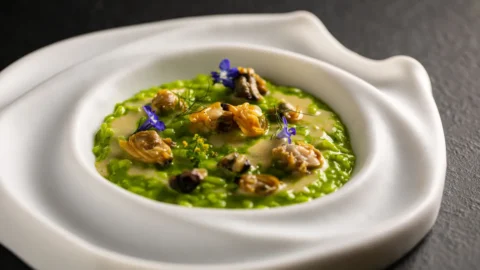
In fact, collaboration with the communities of the lake area will be fundamental, also for the recovery of traditional recipes and their re-proposal. «We, for our part – concludes the president of Slow Food Umbria, Monica Petronio – will be happy to contribute to valorising the cooking recipes (traditional and modern) linked to fish, which are not always easy to prepare for those who are not originally from these places, but certainly appreciated by consumers and tourists, also thanks to the collaboration we have started with hotel institutes throughout the region, which we will immediately involve in the project. The kids, both aspiring chefs and dining room staff, will be able to test themselves by comparing themselves directly with the fishermen and lake catering professionals, and certainly with their gaze and their imagination they will be able to reciprocate what they learn from the generations that preceded them".