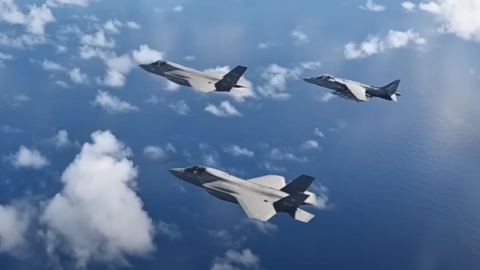
La Tensions between the European Union and Russia remain highMoscow continues to challenge the West with new provocations. Three Russian MiG-31 fighters violated Estonian airspace, venturing up to five nautical miles inland and heading toward Tallinn. For twelve interminable minutes they flew over the Baltic skies with their radios turned off and without submitting flight plans. It was the Italian F-35s that intercepted them and forced them to return deployed in Estonia as part of NATO missions.
According to the Tallinn government, which has NATO Article 4 invoked, it was about the fourth violation of Estonian airspace since the beginning of the year and the third Russian incursion into NATO space in a matter of days, following the drone strikes in Poland and Romania. An escalation that Estonia called "unprecedented in its brutality."
Tallinn raises its voice: "Unprecedented violation"
Estonian Foreign Minister Margus Tsakhna ha Russian chargé d'affaires summoned to formally protest. "Russia has already violated Estonian airspace four times this year, which is unacceptable. But today's incident, with three fighter jets entering our skies, is of unprecedented brutality," he said, announcing an official protest.
Tallinn sees in this episode a qualitative leap in Russian provocations: no longer isolated episodes, but real “frontier tests” designed to put NATO under pressure.
Brussels' response: firmness and new sanctions
The European Union stands united behind Tallinn. The President of the Commission, Ursula von der Leyen, spoke of “provocation that will not go unanswered" and called for swift approval of the 19th package of sanctions against Moscow: "The more the threats increase, the more our pressure will increase. Europe stands in solidarity with Estonia and will strengthen NATO's eastern flank."
The Kaja kallas, former Estonian Prime Minister and now EU High Representative for Foreign Policy, denounced the gravity of the episode: “It is a extremely dangerous provocation, the third violation of European airspace in a few days. Putin is testing the West's resolve. We must not show weakness."
Tajani: "No one is intimidated by Russia."
A double response came from Italy: on the ground, with the F-35s that took off to intercept the Russian jets and on the political level, with the words of the Foreign Minister Antonio Tajani.
“Russian jets over Estonia? It's history repeating itself, but these are dangerous gamesPutin must avoid provocations. No one is intimidated by Russia, but we must work to build peace,” the deputy prime minister declared.
NATO: "Reckless behavior"
The spokeswoman of the Atlantic Alliance confirmed that thethe interception took place quickly and that the Russian jets have been moved away. "This is yet another example of Russia's reckless behavior and the Allied ability to respond." A signal that the NATO remains vigilant and ready to react, but which cannot erase the growing tension on the Eastern European front, where any border crossing risks turning into a diplomatic crisis.
Analysts see these raids not as simple accidents, but as part of a Russian strategy of attrition: to test NATO's readiness, accustom European public opinion to living in a state of permanent alert, and send a message of strength to Kiev and the West. For Tallinn and Europe, however, each new overflight is a wake-up call because it demonstrates that the war in Ukraine is not confined to the southeast, but directly touches the Union's borders.