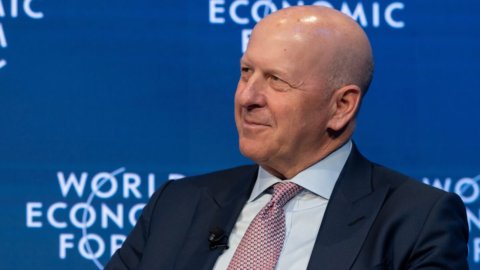
As stock markets around the world tumble in the wake of tensions in the Middle East, the CEO of Goldman Sachs, David Solomon, it is even said surprised from the reaction “volunteer” of financial markets, adding that it may take “a couple of weeks” before investors fully digest the consequences.
“I look at the market reaction and I'm actually surprised that the market reaction has been more benign than you might think, given the scale of the situation,” Solomon said in a speech tonight at an Australian Financial Review business summit in Sydney, reported by Reuters.
Solomon explained that markets tend to react mutedly to geopolitical events unless they have a direct impact on economic growtha. “There's a cumulative effect of everything that's happening and a much harsher response. We haven't seen that cumulative effect yet,” he said. “But it's very difficult to speculate because there's so much we don't know right now.”
“I think it will take a couple of weeks before the markets have really digested the implications of what happened in both the short and medium term, and I can't speculate on how that will play out,” he said.
I oil prices have increased dramatically since thewidening of the conflict fueled supply concerns, exacerbating investors' fears about inflation. global stock indices they collapsed, while the dollar The U.S. stock market strengthened, as investors sold riskier assets and flocked to traditional safe havens. However, Wall Street's losses were relatively mild, with the S&P 500 falling less than 1% this week after paring early losses at the close on both trading days.
The US economy is in good health
Solomon said a combination of factors, including an easing monetary cycle and a significant easing of regulatory practices, had helped keep theUS economy in good health.
“Let's leave aside what's happening in the Middle East right now,” he said. “We have a confluence of strong favorable macroeconomic factors which make the growth trajectory US economy, in my opinion, quite interesting“There's certainly a reasonable chance that the US economy will heat up a bit this year. And, as a result, is it possible that inflation could end up being slightly higher than consensus expectations? Yes.”
This is Sectors Up Close and we're talking about South Korea.
La resilience of the economy It also made the wallets of private credit in the United States have been "generally pretty good." However, a slowdown in growth during a long credit cycle could lead to a weakening of lending standards. "Lending standards fall because there's competition for capital," he said. "I'm a little concerned about that... when we have a slowdown, if we have a recession, we'll have more visibility into some of those sectors where lending standards have weakened."
AI's impact on bank staff will be "complicated" after Antropic deal
Solomon also said that theArtificial intelligence will disrupt the job market in the short term, particularly in white-collar jobs, but will not lead to an “employment gap” in the long term.
In February, Goldman signed a deal with the artificial intelligence company anthropic to develop AI-based agents for automate processes, including customer onboarding. The immediate effects on bank employees It's going to be "complicated," he said. "I'm not going to sit here and speculate and say the staffing numbers will be exactly like this, because we don't make them public," he said. "But what we're trying to do is create more capacity to move people to different locations." "The number of employees won't necessarily be that different. It will just be more productive."