Learning to protect yourself from scams and risks, managing your “pocket money”, better understanding the economy and starting to think about future investments: these are the topics that, in the last year, have captured the attention of Italian students thanks to theIntroducing financial education at school. A change that is helping to build a new awareness among the desks, supported by a broad consensus of teachers and families.
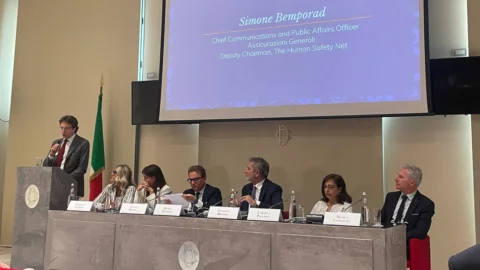
A twelve months since the start of the reform provided for by the "Capital Law", which made thefinancial education curricular subject from 2024-25, the time has come to take stock. The occasion was the event “Financial education at school. Let's take stock!”, held on June 26 at the Sala Matteotti of the Chamber of Deputies. Promoted by Insurance Alliance, company of Generali Group, and Aif (Italian Association of Financial Educators), with the support of Mario Gasbarri Foundation, the collaboration of BVA Doxa and sponsored by the Ministry of Economy and Finance, the event brought together institutions, schools and operators from the insurance and financial world.
One school out of two has started financial education courses
Just nine months after its debut of the reform, the numbers appear encouraging: one school out of two has already activated financial education courses. In 53% of cases the topic was integrated into the 33 hours of civic education, in 42% within disciplines such as mathematics or law. A flexibility that reflects the commitment of the institutes, but which also highlights the need for a greater coordination at national level.
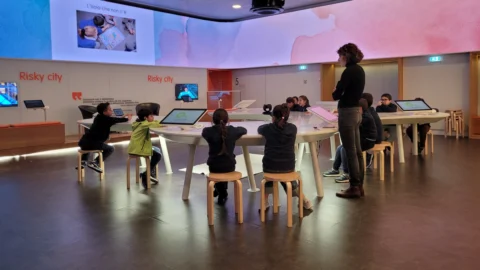
But when the subject actually enters the classroom, the results are visible. This is the case of “Edufin at school” program, promoted by Alleanza Assicurazioni and Aief, where the teaching effectiveness is evident: the 98% of students actively participate, stimulated by the concepts addressed with a practical approach and adherence to everyday reality.
On the front of the regulatory knowledge, the progress is evident: teachers who declare they know the law well have gone from 24% in 2024 to 42% in 2025. Only 8% today say they have never heard of it. In the training courses launched by Alleanza and Aief, regulatory awareness reaches 63%, a sign that targeted training can make the difference.
For the president of Aief, Nunzio Lella, financial educators represent “the operational branches of the institutions, ready to support teachers in this transition”.
Parents Supportive, Students Involved
La school is gaining the trust of families. A trust that, as the school principal observed Nicola Latorrata, requires today a paradigm shift: it is no longer enough to transmit notions as in the past, we need toto train aware citizens, capable of facing the challenges of the present and the future.
On a scale of 1 to 10, the average approval rating for the introduction of financial education is 8 and theinterest is growing. 81% of parents note that children, after class, show greater curiosity towards economic issues, and 88% evaluate the initiative positively. For 70%, the presence of the subject represents an element that could influence the choice of the school.
An attention that also finds its reason in the fact that theeconomic education, in the family context, it still remains marginal: only 23% of parents say they often discuss the topic with their children. School is therefore confirmed as an essential educational tool to fill this gap.
Le teaching priorities expressed by parents are simple. 57% believe it is essential for children to learn how to defend themselves from scams, especially online; 53% hope for greater competence in managing daily money; 35% emphasize the importance of understanding how the economy works. In high school, furthermore, there is a growing demand to address more technical topics such as the risk/return ratio and the conscious use of financial instruments.
The Achilles' heel: teacher training
While on the one hand the students' enthusiasm is high, on the other hand the Teacher training struggles to keep pace. Only four out of ten teachers have participated in training courses promoted internally by schools. 42% declare themselves little or not at all ready to teach personal economics content, and over half of the institutes have not yet activated structured initiatives in this area. Even where courses are present, six out of ten teachers report the lack of concrete tools, updated case studies and practical examples to transfer to the classroom.
The photograph taken by Doxa research confirms thethe misalignment between the demand for skills and the actual training supply. Interest in financial education is strong, both among teachers and students, but the lack of resources and the absence of an adequate support system are slowing down its implementation.
The scenario, however, changes radically when they come activated paths in collaboration with external specialized bodies. In the “Edufin a scuola” program promoted by Alleanza Assicurazioni and Aief, nine out of ten teachers declare themselves very satisfied with the content received and six out of ten hope for a stable collaboration with the financial sector. A virtuous model that demonstrates how the involvement of qualified actors can make the difference in strengthening teachers' skills and ensuring the quality of teaching.
The challenge: consolidate and harmonize
La there is still a long way to go, but there is no shortage of encouraging signs. Be careful, however, don't let your guard down. The Edufin Index 2024 data elaborated by Insurance Alliance speak clearly: only 40% of Italians reach a sufficient level of financial literacy, while 12% are in a condition of real economic illiteracy. the situation is even more critical among young people. In the 18-24 age group, the average score stops at 50 out of 100, well below the passing threshold. A figure that confirms how financial education has become an essential citizenship skill. If left to the sole cultural heritage of families, it risks widening existing inequalities.
The Senator Dario Damiani, rapporteur of the “Capital Law”, underlined how economic education is “a tool for inclusion, awareness and prevention of indebtedness, essential for dealing with the complexity of the contemporary world”. A message also reinforced by the Ministry of Economy and Finance, with the institutional greeting of the undersecretary Sandra Savino, who reiterated the institutional commitment to prevent the reform from remaining confined to a few territories.
"L 'financial education at school is a lever to contribute to social well-being and the reduction of inequalities, through the formation of future citizens who are more informed and able to make informed choices. The report presented today gives us the great satisfaction of students and parents for the introduction of the teaching of these issues in school curricula. It is thestart of a journey which has the ambitious goal of making the dissemination of these subjects homogeneous throughout the country. The choral action between public and private institutions and the world of associations can contribute to bridging the gap that still distinguishes our country. In Alleanza we have been involved for years in a National Financial Education Plan that has materialized in over 10 thousand events on the territory with the involvement of over 500 thousand participants" commented David Sparrow, CEO of Insurance Alliance and Country Chief Marketing & Product Officer of Generali Italy.
La the challenge now is to consolidate what has been started. We need to strengthen teacher training, provide schools with adequate teaching tools, harmonize courses on a national scale and build solid alliances between schools, institutions and the private sector. The law has paved the way. But Transforming financial education into a widespread culture will require vision, investments and an educational direction that is up to today's social and economic challenges.
At the round table, moderated by the journalist Giuseppe Brindisi, they took part Carolina Lussana (President of the Council of the Presidency of Tax Justice), Dario Damiani (Senate Budget Committee), Nicola Latorrata (school principal), Carmella Palumbo (Head of Department of the Ministry of Education) and Julia Raffo (CFO of Generali Italia).
The opening was attended by Anthony D'Alessio (Secretary of the Presidency of the Chamber), Nunzio Lella (AIEF President), Andrea Mencattini (President of the Mario Gasbarri Foundation), Simone Bemporad (Chief Communications and Public Affairs Officer of Generali and Deputy Chairman of The Human Safety Net) e Claudia Ghinfanti (Marketing and Communications Manager of Alleanza Assicurazioni), who presented the results of the Doxa research.