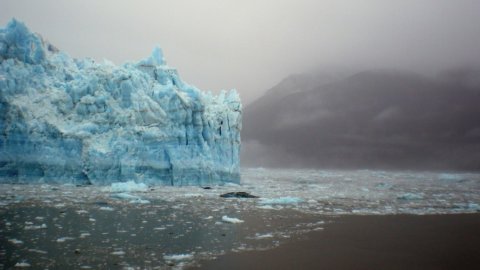
What does the climate emergency, and in particular the melting of glaciers (and permafrost) have to do with our health? Much more than you think, and not just due to the effects of heat waves and extreme weather phenomena. Just in the weeks when the world goes crazy the psychosis for the chinese coronavirus epidemic, Was published a study which exhibits the results of a research project already started in 2015 by a team of US researchers.
Scientists have analyzed the microbial content of ice cores taken in the northwest plateau of Tibet, drilling a layer of glacier up to 50 meters, and the result was impressive: while we worry (partly legitimately) about the spread of a virus that does not register a significantly higher mortality rate than that of a normal flu, we are oblivious to the fact that stored in the glaciers are 33 groups of viruses, of which 28 are unknown and of ancient origin, and for this reason even more dangerous.
In fact, the risk is that, due to climate change which hits hardest at the poles, the melting of the ice will free the bacteria trapped for all this time. By causing even the great Himalayan glaciers to retreat and thin out, the climate emergency can therefore release unknown and therefore potentially dangerous ancient viruses into the atmosphere: not having to deal with those viruses and bacteria for some time, man is no longer equipped with the necessary antibodies to face them.
Furthermore, some of these pathologies have never spread since modern medicine has existed, which therefore does not have reliable studies on which to base the production of treatments and vaccines. The danger does not come only from the glaciers: according to the biologist Jean-Michel Claverie, professor emeritus of Genomics and Bioinformatics at the University of Aix-Marseille, the northernmost regions of the planet, until now uninhabited, due to the thaw are increasingly interested in oil and rare earth mining research. But by digging, you can bring back to the surface not only the minerals, but also the buried diseases.
Particularly worrying is the melting of permafrost, i.e. the layer of frozen ground made up of vegetable biomass stratified over time: it is the perfect environment for keeping bacteria and viruses even for millions of years because it is frozen, deprived of oxygen and dark. Among other things, those responsible for the global epidemics of the past could also be found there, which could therefore concretely return to the present day, such as smallpox (which has a mortality rate of 35%) or the bubonic plague, according to Professor Claverie.
With permafrost thawing now occurring at a rate of 50 centimeters every summer, and the Arctic losing about 13% of its ice cover every ten years, there is a serious risk that these pathogens could release into the air and come into contact with groundwater. And not just viruses. The study published by the American team shows that even bacteria that produce spores, such as those responsible for tetanus and botulism, can survive for thousands of years (and strike again).