No more good intentionsthe. The conflict over oil is more bitter than ever. The president of COP 28, the Sultan of the Emirates Al Jaber, put aside the role of the referee to state that there is no scientific proof which demonstrate that eliminating fossil fuels can stop global warming. “There is no development prospect in the case of a rapid exit from fossil energy,” she added, “unless don't want to bring the world back into the caves”. In short, despite the commitments made by many States to finance the Loss Damage fund to compensate poor countries for the damage caused by global warming, an effective agreement to limit oil damage is nowhere near. Indeed, criticism of a green vision of the world is multiplying. And not only from the sheikhs.
The new strategy of the big oil companies
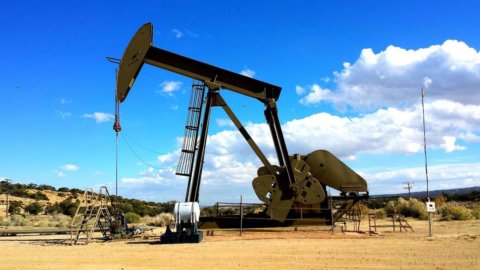
Over the last few months the black gold majors have radically changed their strategy: enough with the attempts to convert from fossil fuels. We're back to pumping crude oil,
“We are increasing value by increasing production from our preferred resources to meet global demand,” said the CEO of Exxon, Darren Woods explaining the reasons that pushed the giant to enter fracking, i.e. shale oil, and to develop production in Guyana.
The return to tradition, according to the boss, does not mean abandoning plans related to carbon capture and storage. On the contrary. Efforts are multiplying: “the $7 billion program” is growing rapidly as it signs up new customers for capture and storage services. Maybe, but the new policy has guaranteed Exxon the highest profits in its history, (55 billion dollars at the end of 2022) and Woods has led in the wake of these numbers the front of the no longer repentant oilmen: “The UN negotiations on how to limit climate change – he said in an interview with Financial Times – have focused too long on renewable energy and neglected it the role of hydrogen and biofuels".
According to Wood, countries should focus on reduction of emissions rather than on saying goodbye to fossil fuels (i.e. oil, gas and coal).
A line that Western oilmen have in common with sheiks of the Middle East and to the Russian allies. Also, European competitors have revised their plans, Eni and Total Energies including, up to Shell already at the forefront of the green revolution.
Saudi Arabia: rain of investments with oil money
Of course, the 50 largest oil producers in the world, including Exxon and the Saudi Aramco, have committed to reducing their emissions, including those of methane gas. But in line with the approach expressed by Woods there is no commitment to decrease crude oil production. Even less so from Emir Al Jaber, head of the world's seventh largest oil producer, who is also committed to increasing extraction and ties with customers, especially in Asia.
The position of the Gulf countries, moreover, reflects the orientation of the giant of the region, Saudi Arabia, determined to make its political and financial strength count in the new international balances. Riyadh is determined to make its role as a major player count financier of the Monetary Fund as well as supporting the ambitions of Vision 2030, the plan to get the economy off the ground before oil's momentum runs out.
Even before the awarding of Expo 2030 at the expense of Rome, the country invested 800 billion dollars to build 400 thousand hotel rooms already assigned to all the major operators in the sector, engaged in a fight against the times for the take-off of ai Al-Ula, the tourist center that is being built near a Nabataean archaeological site. It will open its doors here in 2025 Marriot with a 250-room hotel, four restaurants, a spa with pool and spa flanked by a business center. Nothing comparable though El Sharaan: 40 rooms and as many apartments overlooking the rocks. “A glass elevator will allow a unique geological experience, thanks to the view of the archaeological finds.”
Tourism is only one aspect, flashy but not unique, of Mohammed Bin Salman's country's desire for power, courted despite the assassination of journalist Adnan Khashoggi.
Saudi Arabia, strong in oil revenues, is today a major financial player, with strong interests in technology, both civil and military, determined to fully exercise its role as the leading oil power. Like the other Gulf countries.
And so the suspicion arises (or something more) that the willingness demonstrated at the start of the work was hidden behind it a leopard-like intent: encourage, at least apparently, the search for medium-long term solutions to the climate emergency, while promoting the maintenance of primacy of fossil energy. The objective that unites sheikhs, Russian boyars and Houston oilmen.
The Blue Carbon case: Dubai buys African forests
Exemplary in this regard is the story of Blue Carbom, a company owned by Sheikh Ahmed al Maktoum, a member of the ruling family of Dubai, who purchased one million hectares of land in Liberia, 10 percent of the country's surface area. Dubai thus acquired control of rights to pollute on one million hectares of forest (operation repeated in Zimbabwe and Zambia). For the next thirty years the Blue Carbon company will be able to sell its polluting rights on the market in accordance with the Paris Agreement. In short, just pay to be in compliance with environmental regulations. Forest dwellers are unlikely to agree. But, alas, Tarzan doesn't vote. The oilmen yes.