Tensions between Canada and the auto industry erupt after decision by Stellantis and General Motors di move some production to the United States, also driven by the renewed protectionism promoted by Donald Trump.
Mark Carney's government reacted harshly. Ottawa has duty-free import quotas for the two groups cut, reducing them 50% for Stellantis and 24,2% for GMA move that drastically limits the number of U.S.-produced vehicles that can enter the Canadian market without additional tariffs.
The Minister of Industry Francois-Philippe Champagne accused the car manufacturers of taking “unacceptable decisions that violate legal obligations towards Canada and Canadian workers”, announcing that the government is ready to “enforce its contractual rights” and even to request the return of public funds received over the years. Stellantis alone, for example, had secured over 100 million Canadian dollars to convert its Windsor and Brampton plants to electric power generation.
The reasons for the restrictions: broken promises and postponed productions
The measure is direct consequence of the transfer of part of Canadian automotive production to the United States, decided in recent weeks by the two groups.
Stellantis, within a mega-investment of 13 billion dollars in the USA, the largest in its history, has announced that the Jeep Compass will no longer be produced in Brampton, Ontario, but in Belvidere, Illinois, where the group plans to create more than 3.000 new jobs. General Motors, for its part, has decided to discontinue production of BrightDrop electric vans in Ingersoll, Ontario, and to move part of its Chevrolet Silverado production from Oshawa, Ontario, to Fort Wayne, Indiana.
For Ottawa, all of this represents a betrayal of industrial commitments made under the North American Trade Agreement (USMCA) (Canada–USA–Mexico) is a direct blow to the heart of the national auto sector, which employs over 125.000 Canadians and involves half a million workers in related industries.
Tariffs, exemptions and the trap of neo-protectionism
Already last April, the Canadian government had introduced 25% tariffs on vehicles imported from the United States that did not meet the USMCA criteria. However, it had granted customs exemption quotas to car manufacturers conditional on the maintenance of investments and employment on Canadian soil. Those same clauses now become the legal basis for the crackdown. "We made it clear that quota revisions would be inevitable if companies reduced production in Canada. Now it's happened," commented a spokesperson for the Ministry of Finance.
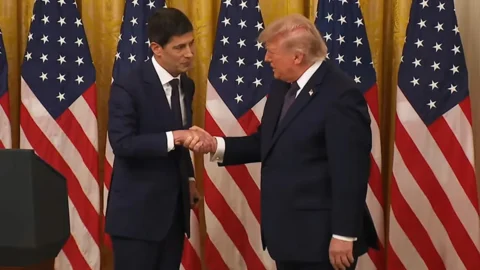
Behind the decision of Stellantis and GM also weighs the pressure from US President Donald Trump, which for months has been pushing manufacturers to "bring production back home" to strengthen the American industrial supply chain.
Carney responds to Filosa: "Jobs at risk, honor your commitments."
The escalation comes after the words of Prime Minister Mark Carney, which in recent days had warned Stellantis to "respect the commitments made to Canadian workers," recalling that the closure of the Brampton plant puts 3.000 jobs at risk. The protest was also fueled by the Unifor union, the largest auto industry union in Canada, which stated that "governments cannot stand by and watch our jobs move to the United States."
La political tension is palpable: The Carney administration sees Stellantis' move as a dangerous precedent that could encourage other companies to reduce their presence in the country, weakening a sector that represents Canada's second largest export.