August 15 2011. It's the height of summer. Silicon Valley, already red-hot from the patent war between giants, receives an unexpected jolt: Google buys Motorola Mobility for 12,5 billion dollars. Alightning operation, unanimously approved by the boards of directors, which catapults the search giant into the world of hardware.
But there was a precise plan behind the move. Motorola brought with it 17.000 registered patents and another 7.500 awaiting approval: a legal arsenal to shield Android, just as Apple, Microsoft and Oracle were taking everyone to court. Larry Page, then CEO of Google and co-founder together with Sergey Brin, he admitted bluntly: “We want to protect the Android ecosystem.”
Motorola: an icon under the wing of Mountain View
Motorola was not just any brand. He had invented the first portable cell phone and defined the style of an era with the Razr V3, the flip phone that became a status symbol in the mid-2000s. In 2011 it attempted the leap into tablets with the Motorola Xoom, but the commercial success did not live up to the media hype.
With the arrival of Google, the logo was renewed, the signs were lit up near the Mountain View campus and a season of relaunches began. But already in 2013 the first downsizing signal with the sale of the Home division to Arris for 2,35 billion dollars.
The parable under Google: dreams and frictions
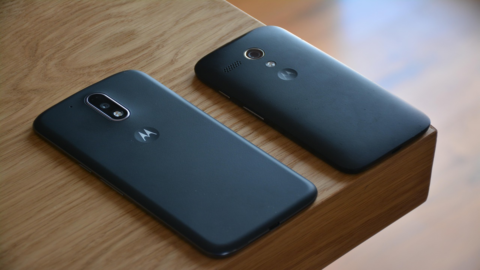
The marriage between the two companies was not easy. Google was aiming for high-end smartphones like the Moto X, but it was the budget models, like the M, making inroads into emerging markets and Europe, where in the UK Motorola went from 0 to 6% in a single quarter.
There was even a patriotic experiment: a factory in Fort Worth, Texas, to assemble customized Moto Xs in the U.S. An ambitious idea, but it was scrapped in less than two years due to high costs and lower-than-expected demand.
Meanwhile, in that period the tensions with SamsungThe Korean giant, the world's leading Android maker, feared that Google might give Motorola preferential treatment. A potential breakup would be disastrous for Google: losing Samsung would mean jeopardizing the entire Android ecosystem.
January 29, 2014 – The (almost) loss-making exit
Eventually Google took a step back. Motorola Mobility Moved to Lenovo for $2,91 billion, but with the condition that most of the patents would remain with Google. The actual losses? Around 2 billion, less heavy than it seems, considering that Google had already resold parts of the company and kept the real loot: the Intellectual Property.
Il the timing was not accidental. A few days earlier, Google and Samsung had signed a ten-year patent sharing agreement, a pact that guaranteed stability to the Android ecosystem.
Lenovo and the rebirth of Motorola
Lenovo chose not to to overturn the Motorola philosophy: "Almost pure" Android, competitive prices, and a focus on emerging markets. 2017 saw the brand's grand return with the slogan “Hello Moto”And the revival wasn't just aesthetic:
- In 2019 he returned Razr, this time with a foldable screen.
- In the 2020, the Motorola edge plus marked the return to the top tier.
- In the 2022, the Motorcycle x30 pro brought the world's first 200-megapixel camera.
Today Motorola is back in the running: +7% global shipments in Q1 2025, third place in Australia and New Zealand, AI integrated into the new Razr and extreme durability in the 2025 Edge range.
From the Motorola coup to the Wiz record
For years, the Motorola acquisition remained the largest in Google's history. Until March 18, 2025, when Alphabet, the parent company, announced the coup 32 billion dollars for the Israeli cybersecurity startup Wiz, more than double the 2011 operation. Today, instead of playing the game in hardware, Google prefers to do it where it is the undisputed queen: the cloud.