There are those who have their roots in history and those who, like theEnantio, he just kept them. Literally. This ancient vine, which still grows ungrafted lungo the Adige between Avio and Brentino Belluno, It has gone through two centuries of agricultural changes, wars, borders and replantings, remaining essentially itself. Despite having become Slow Food presidium in 2022, its story begins much earlier.
Enantio: an ancient name and a double identity
It is written Enantio, but pronounced Enanzio, in the Latin way. Pliny the Elder he already mentions it in the Naturalis Historia of the 1st century AD, suggesting a very ancient origin. In the Valdadige countryside it is also known as Lambrusco with jagged leaves, or "zicolada” in the Trentino dialect.
The similarity with Emilian Lambrusco is only linguistic: genetically, Enantio belongs to the Ambrusche family, native vines of the Alpine arc that are now almost extinct.
When phylloxera spared a corner of the world
At the end of the nineteenth century the phylloxera, the insect which devastated nearly all European vineyards, wiping out entire generations of plants. To save them, many producers resorted to grafting onto American roots, which were resistant to the parasite. Along the sandy bends of the Adige River, however, the soil conditions prevented the insect from taking root. Here, the Enantio vineyards remained ungrafted, a rarity rarely seen in Europe today.
Even today new plants are born with the offshootA buried shoot takes root and grows like a new vine. An ancient, simple, and natural method that preserves the genetic heritage.
Family rescue
The recent history of Enantio is linked to three companies: Roeno Winery (Cristina Fugatti), Lorenzo Bongiovanni Agricultural Company e Vallarom Agricultural Company, between Verona and Trento. In the 1980s, while many local vineyards were being replaced with more profitable varieties like Pinot Grigio, these estates maintained their historic vines.
A curious episode concerns Silvio BongiovanniLorenzo's grandfather: in 1908, he purchased four hectares in Brentino, then Italian territory, to recover the "rasoli," vine shoots destined for replanting the vineyards of Sabbionara d'Avio, then under Austrian rule. A small gesture of conservation that today has historical significance.
Ungrafted Enantio: Alpine character and Mediterranean spirit
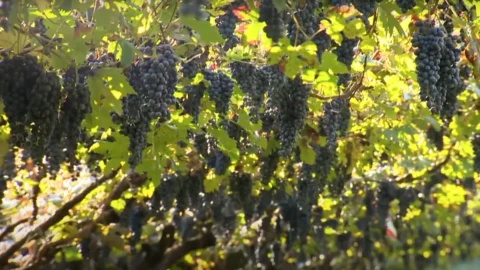
Enantio's ungrafted vines are rustic e long-lived, relatively resistant to disease. The bunches are sparse and the berries are small, but their natural vigor requires precise pruning. The traditional training system is double Trentino pergola and the harvest manual takes place between mid and late October, with low and selective yields.
In the cellar, the approach is respectful: fermentations spontaneous, no selected yeast, few interventions. Yet the result varies from producer to producer. There are those who bottle Enantio after one year, others wait up to four years, offering different interpretations of the same grape variety.
In the glass, the Enantio presents itself intense ruby red, tending towards garnet with aging. full small red fruits, wild herbs and light spicy notes emerge. palate It's dry, full-bodied, and harmonious, with crisp acidity and balanced tannins. It's a simple, unpretentious wine, suitable for rustic dishes, meats, game, cured meats, and aged cheeses.
A garrison born from research and patience
Il Slow Food recognition, which arrived in October 2022, was the culmination of two years of work coordinated by Thomas Martini: soil mapping, bibliographic study, historical analysis, tastings of old vintages from the three estates.
Today, the Presidium covers approximately 15–20 hectares in the Terra dei Forti, but it can be extended to other producers with similar soil conditions. It's a mosaic of centuries-old vineyards that continue to exist without the need for rhetorical declarations or passing fads.